
Outsourcing teams increasingly rely on distributed workflows, remote access, and multi-account operations. Whether working in customer support, QA testing, marketing, or operations, teams often need consistent access to US-based platforms and tools.
This demand continues to grow at scale. According to Grand View Research, the global outsourcing services market was estimated at $4.17 trillion in 2025 and is projected to reach $7.11 trillion by 2030, growing at over 11% annually. At the same time, North America remains one of the largest outsourcing markets, with companies heavily relying on distributed teams for daily operations.
As outsourcing expands, maintaining stable, compliant access to US-based systems becomes increasingly challenging – especially when teams operate across multiple regions. This is where proxy infrastructure becomes essential.
Why Do Outsourcing Teams Need USA Proxies?
They allow teams to operate as if they were physically located in the US. Without them, access becomes inconsistent, and workflows break due to verification and restrictions. USA proxies ensure stable access, prevent account conflicts, and support multi-user environments across distributed teams.
Access to US-Based Platforms
Many tools, marketplaces, and services behave differently depending on location. USA proxies allow teams to access platforms as if they were operating locally.
Multi-User and Multi-Account Management
Outsourcing teams often manage multiple accounts across clients. Assigning different IPs to each user or workflow helps prevent account linking and restrictions.
Consistent Workflow Execution
Stable proxy connections reduce login issues, verification loops, and interruptions in daily operations.
What Makes a Proxy Good for Outsourcing Teams?
A reliable proxy must maintain stable sessions, support multiple users, and reduce detection risk. Weak infrastructure leads to account bans, workflow interruptions, and reduced productivity.
The key factors that define proxy performance in outsourcing environments include:
- US Coverage: Reliable IPs across key US regions.
- IP Quality: Residential or mobile IPs for lower detection.
- Session Stability: Sticky sessions for consistent access.
- Scalability: Support for multiple users and concurrent tasks.
- Security: Private and isolated IP usage.
- Ease of Integration: Simple setup across tools and teams.
What Proxy Types Work Best for Outsourcing?
Different outsourcing workflows require different proxy types depending on sensitivity, scale, and task structure. The right choice improves stability, reduces detection risk, and keeps operations consistent across teams.
Residential Proxies
They are best suited for account-based workflows such as customer support tools, dashboards, and marketplaces. These IPs are linked to real users, which reduces detection risk and helps maintain stable access across sessions.
Mobile Proxies
They provide the highest level of trust because they use carrier IPs shared among many users. This makes them effective for high-risk platforms or actions that trigger stricter anti-bot systems.
Rotating Proxies
They are useful for distributed workflows, automation, and data-related tasks. By frequently changing IPs, they prevent detectable traffic patterns and allow multiple users or processes to operate simultaneously.
In practice, outsourcing teams often combine these types depending on the task. For example, sticky residential proxies are used for account access, while rotating or mobile proxies support scaling and automation.
How Do Proxies Improve Team Productivity and Performance?
They reduce friction in daily operations and allow teams to work without interruptions. Without stable infrastructure, workflows slow down and become inconsistent.
Proxies improve performance by stabilizing access, reducing verification issues, and enabling parallel work across multiple users.
- Faster onboarding of new team members. Each user can be assigned a dedicated IP environment without affecting existing workflows.
- Reduced downtime. Stable sessions and fewer verification issues keep teams working without interruptions.
- Better task distribution. Multiple users can operate simultaneously without interfering with each other.
- Improved data consistency. Teams see the same localized version of platforms, reducing errors and confusion.
- Lower operational risk. Proper IP management reduces the chance of bans, restrictions, or account loss.
What Challenges Do Teams Face Without Proxies?
Teams face increased risk of account bans when multiple users operate from the same IP, which triggers platform restrictions. Access to US-only tools and services becomes limited or inconsistent, especially for distributed teams working from different regions.
Verification checks and repeated login requests interrupt workflows and reduce productivity. As a result, operations become unstable, and teams struggle to maintain consistent performance at scale.
Which Are the Best USA Proxy Providers for Outsourcing Teams in 2026?
The strongest providers combine reliable US IP availability, stable session handling, and infrastructure designed for multi-user environments. These factors directly affect how efficiently teams can manage accounts, maintain access, and avoid interruptions in daily workflows. At scale, differences in session duration, IP allocation logic, and rotation behavior become critical, as they impact both stability and risk levels.
The comparison table below highlights the key technical differences between providers, followed by a more detailed breakdown of each solution.
Comparison Table: USA Proxy Infrastructure for Outsourcing Teams
| Proxy Provider | IP Types | Rotation | Session Duration | IP Allocation Model | Protocols |
| 1. Live Proxies | Residential, Mobile | Rotating + Sticky | Up to 24h | Target-level isolated | HTTP, SOCKS5 |
| 2. Oxylabs | Residential, Mobile, Datacenter, ISP | Rotating + Sticky | Configurable | Shared enterprise pool | HTTP, HTTPS, SOCKS5 |
| 3. SOAX | Residential, Mobile, ISP, Datacenter | Configurable rotation | Adjustable | Shared pool with filtering | HTTP, SOCKS5 |
| 4. IPRoyal | Residential, Datacenter, ISP | Rotating + Sticky | Configurable | Shared network | HTTP, SOCKS5 |
| 5. ProxyEmpire | Residential, Mobile, Datacenter | Rotating + Sticky | Configurable | Shared with targeting layers | HTTP, SOCKS5 |
| 6. Rayobyte | Residential, Mobile, Datacenter, ISP | Rotating + Sticky | Configurable | Mixed infrastructure | HTTP, HTTPS |
1. Live Proxies
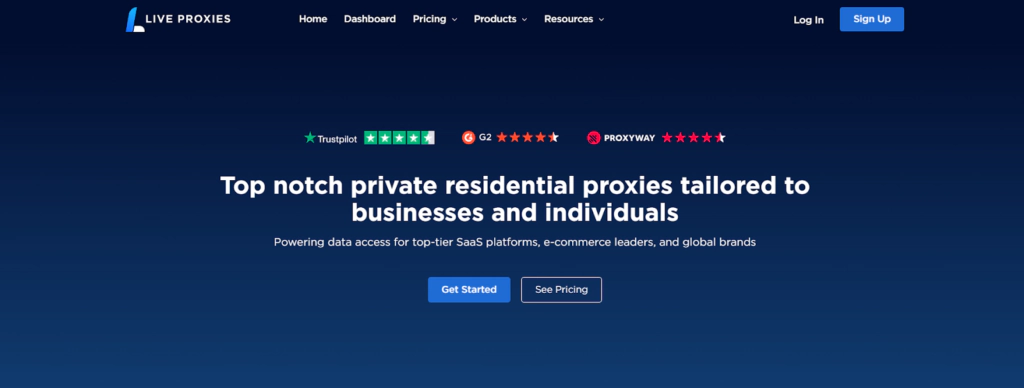
Live Proxies focuses on controlled proxy infrastructure designed for stable multi-user environments. It supports workflows that rely on private residential proxies for consistent account access, as well as a rotating mobile proxy setup for tasks that require higher trust levels. Its network includes millions of IP addresses across more than 55 countries, with strong availability in the US market.
The system distributes IP resources at the target level, which minimizes overlap between workflows and reduces the risk of account linking. Session persistence can last up to 24 hours, which supports long-running tasks such as dashboards, account management, and shift-based operations. A built-in proxy testing tool allows teams to validate IP performance before execution, improving reliability in production workflows.
Advantages for Outsourcing Workflows
- Isolated User Environments: IP allocation is separated per target, which prevents account overlap across team members.
- Extended Session Duration: Sessions can remain stable for up to 24 hours, which supports shift-based workflows.
- Pre-Use Validation: Built-in proxy tester helps verify IP performance before execution.
- Consistent Identity Behavior: Stable session signals reduce login issues and verification loops.
Considerations
- Structured Usage Model: Works best in organized workflows with defined task allocation.
- Protocol Focus: Designed around HTTP-based integration for standard setups.
2. Oxylabs
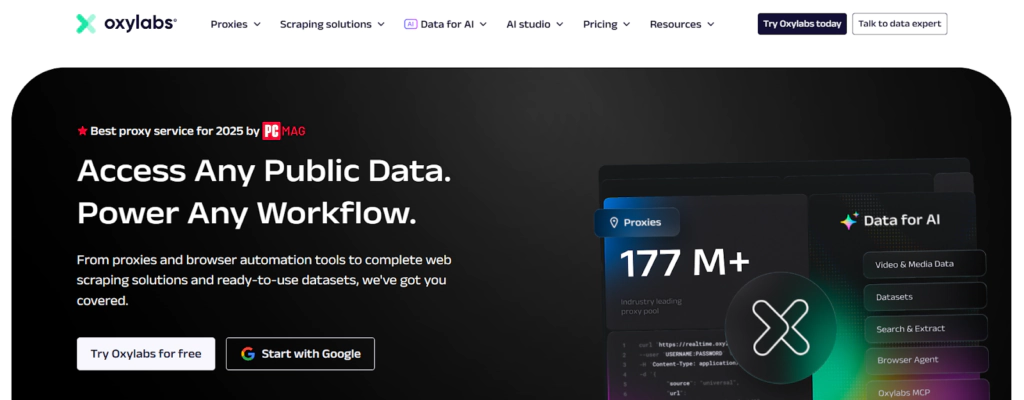
Oxylabs operates one of the largest proxy networks, with over 100 million IP addresses across 195 countries. Its infrastructure supports high concurrency, allowing teams to run thousands of parallel requests without performance degradation.
The platform provides advanced geo-targeting, including city and ASN-level filtering, which improves accuracy for location-sensitive tasks. It is widely used for large-scale data collection and enterprise-level operations that require stable performance under continuous load.
Advantages for Outsourcing Workflows
- Large-Scale Infrastructure: 100M+ IPs support multi-user environments and high-volume operations.
- Precise Targeting: City and ASN-level filtering improves access to localized US platforms.
- High Concurrency Support: Handles parallel workflows across multiple team members.
- Stable Performance Under Load: Maintains consistent access during continuous operations.
Considerations
- Enterprise-Oriented Setup: May require more time to configure for smaller teams.
- Feature Depth: Full capability depends on proper configuration and usage.
3. SOAX
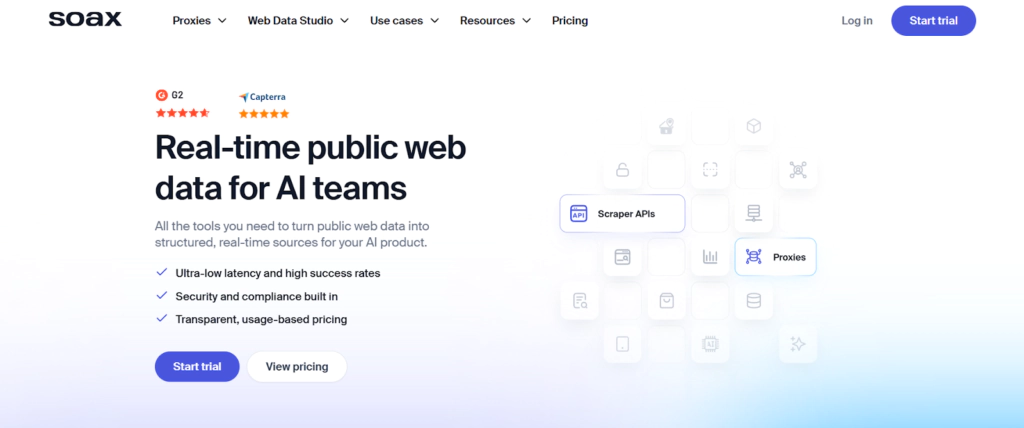
SOAX provides a highly configurable proxy network with coverage across more than 195 locations. Its infrastructure allows precise control over rotation intervals, session duration, and targeting parameters.
Teams can filter traffic by country, city, and ISP, which is useful for workflows that depend on localized access. The system is designed for adaptability, making it suitable for environments where proxy behavior needs to change depending on the task.
Advantages for Outsourcing Workflows
- Flexible Rotation Control: Adjustable IP rotation supports different task types.
- Granular Geo Targeting: Country, city, and ISP filtering improve platform accuracy.
- Session Customization: Teams can define session duration based on workflow needs.
- Adaptive Configuration: Suitable for changing and multi-layered operations.
Considerations
- Manual Configuration Required: Optimal performance depends on proper setup.
- Learning Curve: More effective for teams familiar with proxy management.
4. IPRoyal
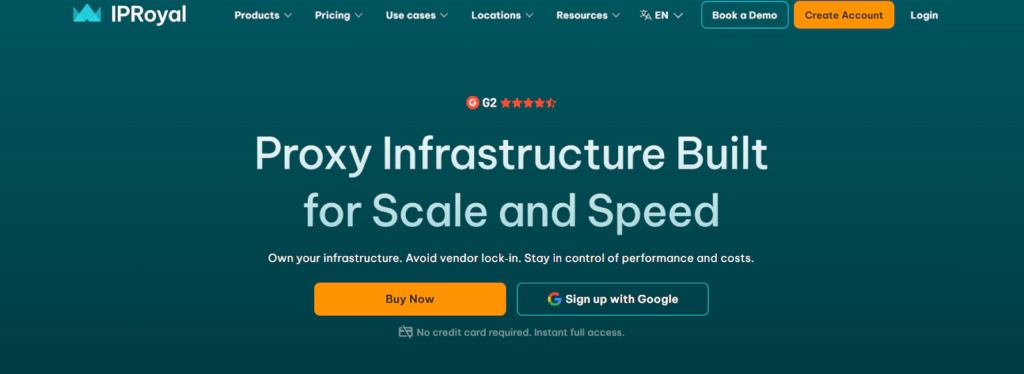
IPRoyal offers residential proxy access across more than 195 countries with support for both rotating and persistent sessions. Its infrastructure focuses on predictable performance for steady workloads such as monitoring and account management.
The setup process is straightforward, which reduces integration time for teams without advanced proxy requirements. It is commonly used in scenarios where stability and simplicity are more important than large-scale customization.
Advantages for Outsourcing Workflows
- Accessible Setup: Easy to integrate into existing team workflows.
- Reliable US Access: Stable residential IPs support account-based tasks.
- Flexible Session Options: Supports both rotating and persistent sessions.
- Predictable Performance: Suitable for steady daily operations.
Considerations
- Simplified Infrastructure: Better suited for moderate workloads than large-scale environments
- Limited Advanced Controls: Fewer customization options for complex workflows
5. ProxyEmpire
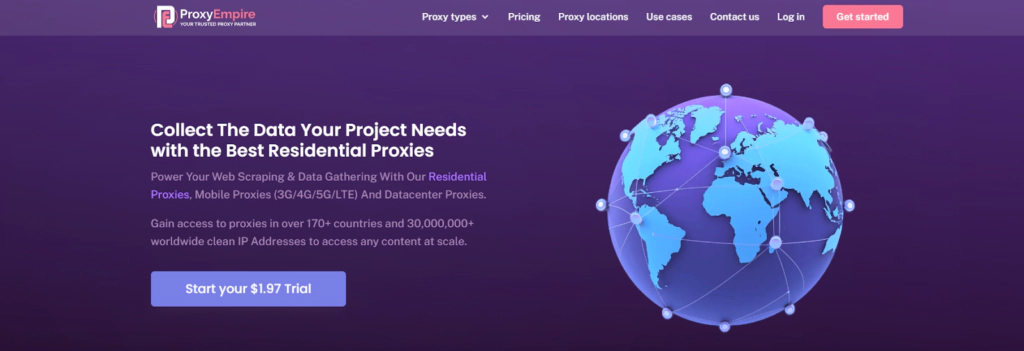
ProxyEmpire operates a network of over 30 million IPs across more than 170 countries. Its infrastructure supports advanced targeting, including ISP and carrier-level filtering for more precise control.
The platform allows users to adjust rotation behavior depending on the task, which improves efficiency in different workflows. It is often used in projects that require a balance between geographic precision and flexible proxy configuration.
Advantages for Outsourcing Workflows
- Advanced Filtering Options: ISP and carrier targeting improve workflow precision.
- Flexible Rotation Settings: Customizable IP behavior per task.
- Strong US Availability: Supports region-specific platform access.
- Adaptable Workflow Support: Suitable for varied outsourcing tasks.
Considerations
- Configuration Dependency: Requires setup to match specific workflow needs
- Less Standardized Setup: May need adjustments across different use cases
6. Rayobyte
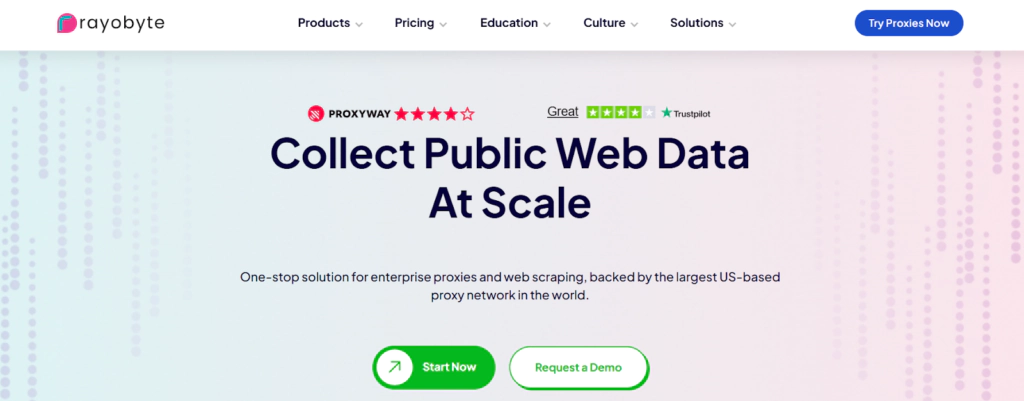
Rayobyte provides access to multiple proxy types, including residential, mobile, ISP, and datacenter IPs. Its network spans more than 150 countries and supports high concurrency for parallel workflows.
The infrastructure allows teams to combine different proxy types depending on the task requirements. It is commonly used in environments where flexibility and the ability to run multiple strategies are important.
Advantages for Outsourcing Workflows
- Multi-Type Proxy Support: Residential, mobile, and datacenter options in one setup.
- High Concurrency Capability: Supports parallel workflows across teams.
- Flexible Deployment: Adapts to different outsourcing scenarios.
- Balanced Performance: Works across mixed task types.
Considerations
- Mixed Infrastructure Model: Requires selection of the right proxy type per task.
- Optimization Needed: Performance depends on proper configuration for each workflow.
Why Are Session Control and IP Allocation Important?
They ensure stable access across multiple users and prevent conflicts between workflows. Without proper session control and IP distribution, outsourcing teams face frequent interruptions, verification loops, and increased risk of account restrictions.
Sticky Sessions
They allow users to maintain consistent access to platforms over time, which reduces repeated logins and verification checks. This is especially important for dashboards, customer support tools, and tasks that require continuous interaction within the same session.
Rotating IPs
They distribute requests across different IP addresses, which helps avoid detection patterns in multi-user environments. This approach is useful for scaling operations, running parallel workflows, and reducing the risk of triggering platform restrictions.
Private IP Allocation
It ensures that each user or workflow operates in an isolated environment without sharing IP resources. This prevents overlap between accounts, reduces the risk of linking, and improves stability when teams manage multiple clients simultaneously.
How To Choose a Proxy for Outsourcing Teams?
The right proxy setup depends on how teams work, what platforms they use, and how many users operate simultaneously. A mismatched configuration leads to account conflicts, unstable access, and reduced productivity.
Choosing the right solution ensures consistent access, smooth onboarding, and reliable performance across distributed workflows.
Key Selection Factors:
- Workflow Type: Account-based tasks require stable sessions, while automation and scaling benefit from rotating IPs.
- Session Requirements: Long-running tasks need an extended session duration to avoid repeated logins.
- Team Size: Multi-user environments require infrastructure that supports parallel workflows without overlap.
- IP Allocation Model: Isolated IP usage prevents account linking and reduces conflicts between users.
- Platform Sensitivity: High-restriction platforms require residential or mobile IPs with higher trust levels.
- Scalability Needs: Growing teams need infrastructure that can handle increasing workload without performance loss.
Conclusion
Outsourcing teams in 2026 require infrastructure that supports distributed workflows without interruptions. Proxy performance directly affects access stability, account safety, and overall team productivity.
Different providers address different needs depending on scale and workflow complexity. Some focus on large IP pools for high-volume operations, while others provide more control over sessions and user environments. The most important factors are session stability, IP isolation, and the ability to maintain consistent access across multiple users.
When these elements are aligned with the task, outsourcing teams can operate more efficiently, reduce risk, and maintain stable performance across all workflows.