
Flexible outsourcing models produce the exact failure mode they’re designed to prevent: unpredictable costs, inconsistent quality, and teams that can’t retain institutional knowledge past a single project cycle. The problem is structural, and adding more elasticity makes it worse.
TL;DR: Flexibility in outsourcing typically means flexibility in headcount. But scaling digital marketing teams or dev teams without scaling processes, quality gates, and knowledge systems creates a ratchet effect — each expansion degrades output, each contraction destroys context. Gate scaling decisions on process maturity, not demand signals.
Headcount Math Is the Wrong Equation
Why does scaling digital marketing teams offshore break at the 10-to-25 person threshold? Because the math changes and nobody adjusts the model. According to Sourcefit’s offshore scaling playbook, once an operation reaches 75 to 100 employees, the challenges shift to organizational maturity: governance, culture, strategic alignment, and operational efficiency. But the rot starts much earlier.
The typical flexible outsourcing model works like a dial. Need three more content writers for Q4? Turn the dial. Campaign ends in February? Turn it back. The vendor bills per seat, you pay for what you use, and everyone calls it efficient.
Here’s what actually happens. Those three writers arrive without onboarding documentation. They don’t know your brand voice, your approval workflows, or your client’s content guidelines from 18 months ago that nobody wrote down. As Easy Outsource’s research on offshore team building found, the core problem isn’t the talent pool. It’s “lack of structure” where “roles are added reactively, without clear job scopes” and “new hires don’t get proper onboarding or quality benchmarks.”
The result: your senior team spends 6-8 hours per week re-explaining context that should live in a wiki. At $45-65/hour for a US-based marketing manager’s time, that’s $270-$520 per week in invisible management overhead per new offshore hire. Scale to 5 new seats and you’re burning $1,350-$2,600 weekly in drag before the new team members produce a single deliverable.
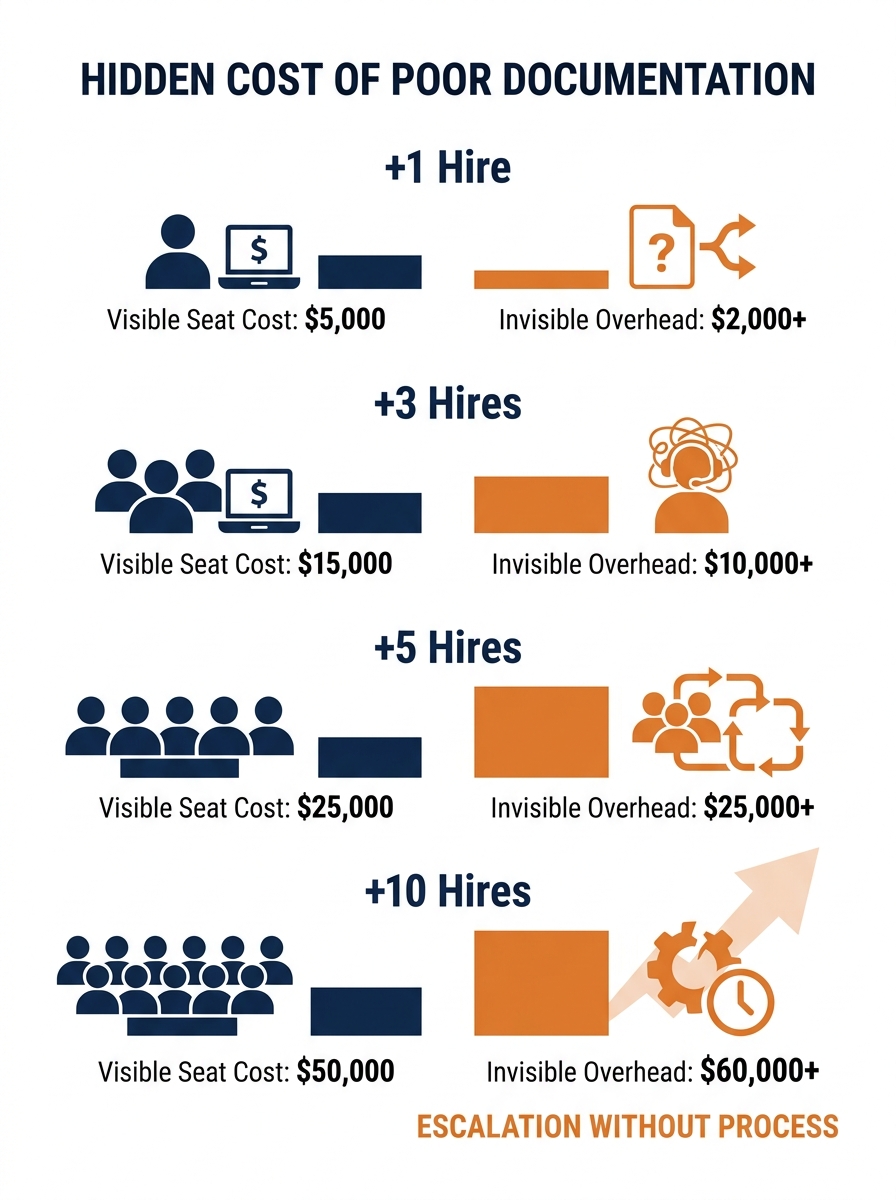
This is why many agencies find that common outsourcing mistakes cluster around the scaling moment, not the initial engagement. The first 2-3 offshore hires work fine because your in-house team can absorb the knowledge-transfer load informally. Seats 4 through 10 are where the model cracks.
Quality Doesn’t Degrade Gradually. It Collapses at Transition Points.
The second piece of evidence against conventional flexible outsourcing models is the quality curve. Outsourcing quality control at scale follows a step-function pattern, not a slope. You maintain acceptable output at one team size, then output quality drops sharply when you add capacity, and it doesn’t recover until weeks after the new team members are fully ramped.
ZealousWeb’s analysis of why outsourcing fails at scaling brands identified the root cause as system readiness: “Outsourcing rarely fails because of timing alone. It fails because of system readiness. It is too early to introduce outsourcing, or AI is introduced to fix foundational instability rather than to scale clarity.”
Think about what this means for a digital marketing agency running PPC, SEO, and content for 15 clients. You land 3 new accounts in a month and need to scale your offshore team by 40%. During the 3-6 week ramp period for those new hires, your error rates on existing accounts spike because senior offshore staff get pulled into training. Client satisfaction scores for your original 15 accounts drop. By the time the new hires are productive, you’ve already had two difficult client conversations about missed deadlines.
The flexible model promises you can scale without consequences. The data shows you can scale without consequences only if you’ve already built the systems that make scaling boring.
The agencies that handle this well typically invest 8-12% of their offshore team’s billable hours into documentation, process recording, and quality benchmark creation. That 8-12% looks like waste on a quarterly P&L. It’s the insurance policy that prevents a 25-30% productivity collapse during every scaling event.
This connects directly to how you set up measurable KPIs for offshore staff. If your metrics only track output volume (articles published, campaigns launched, tickets resolved), you’ll miss the quality degradation entirely until a client cancels.
The Knowledge Drain When You Flex Down
Scaling up gets all the attention. Scaling down is where flexible outsourcing models do their worst damage, and where offshore team scaling risks concentrate most heavily.
When you reduce headcount after a seasonal push or a client loss, you’re not removing fungible labor units. You’re removing people who learned your clients’ preferences, your internal shorthand, your approval quirks. Enhanced Growth’s research put it directly: outsourcing models fail because “they were built for volume, not value.” A volume-first model treats team members as interchangeable. A value-first model recognizes that a content writer who has spent 6 months learning a B2B SaaS client’s voice carries $15,000-$25,000 worth of accumulated context in their head.
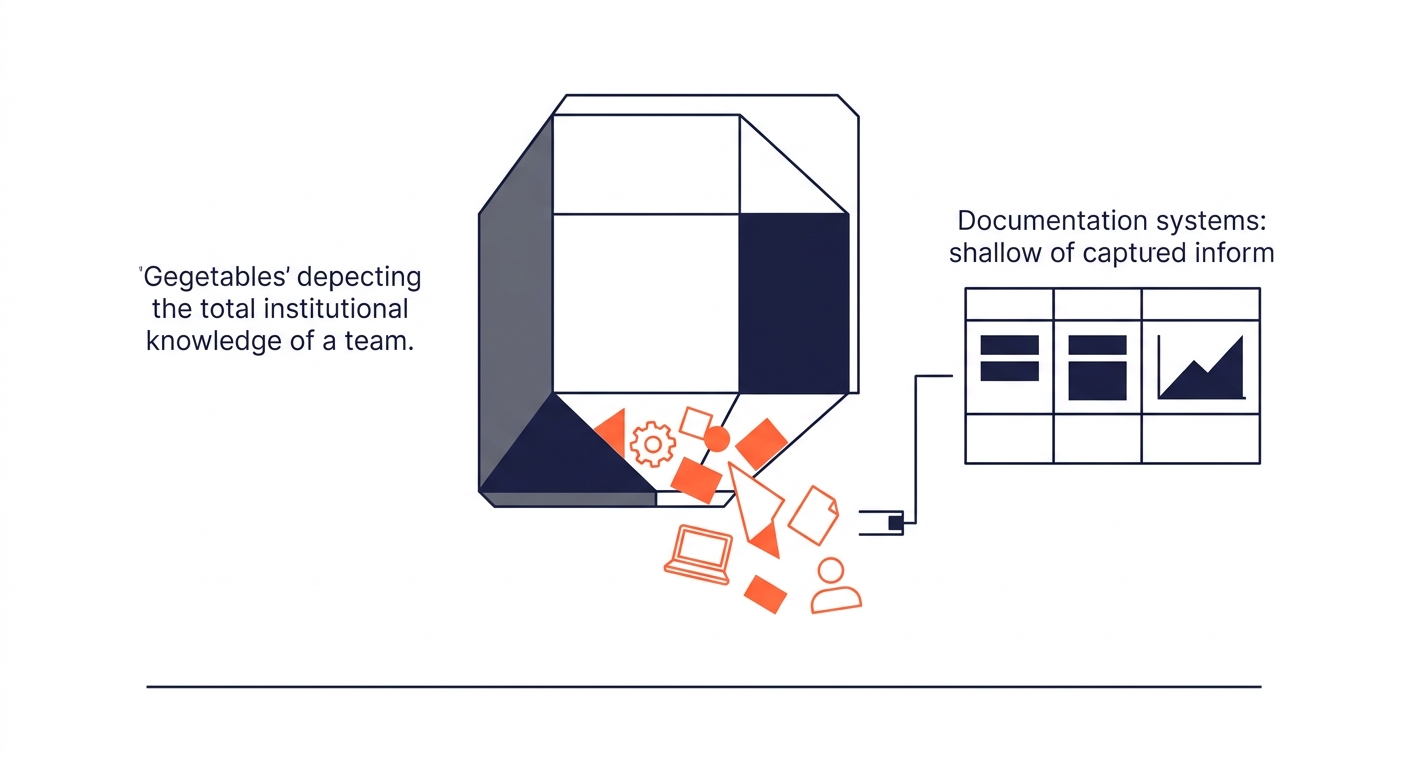
Flex the team down by 3 people and you’ve destroyed $45,000-$75,000 in institutional knowledge. When the next growth phase arrives and you flex back up, you’re starting from scratch with new people who cost the same hourly rate but deliver 30-50% less value for their first 60-90 days.
A Forbes analysis of outsourcing partnerships in difficult economies recommends “hybrid outsourcing, with real-time onshore project management and access to a cost-effective global labor pool.” The hybrid piece matters because it creates a knowledge anchor: someone onshore who maintains continuity even when offshore team size fluctuates.
This is the same principle behind the decision to outsource execution while keeping strategy in-house. The strategy layer holds institutional memory; the execution layer can flex. Without that separation, every contraction is a small amnesia event for your entire operation.
A Scaling Model That Survives Contact With Demand
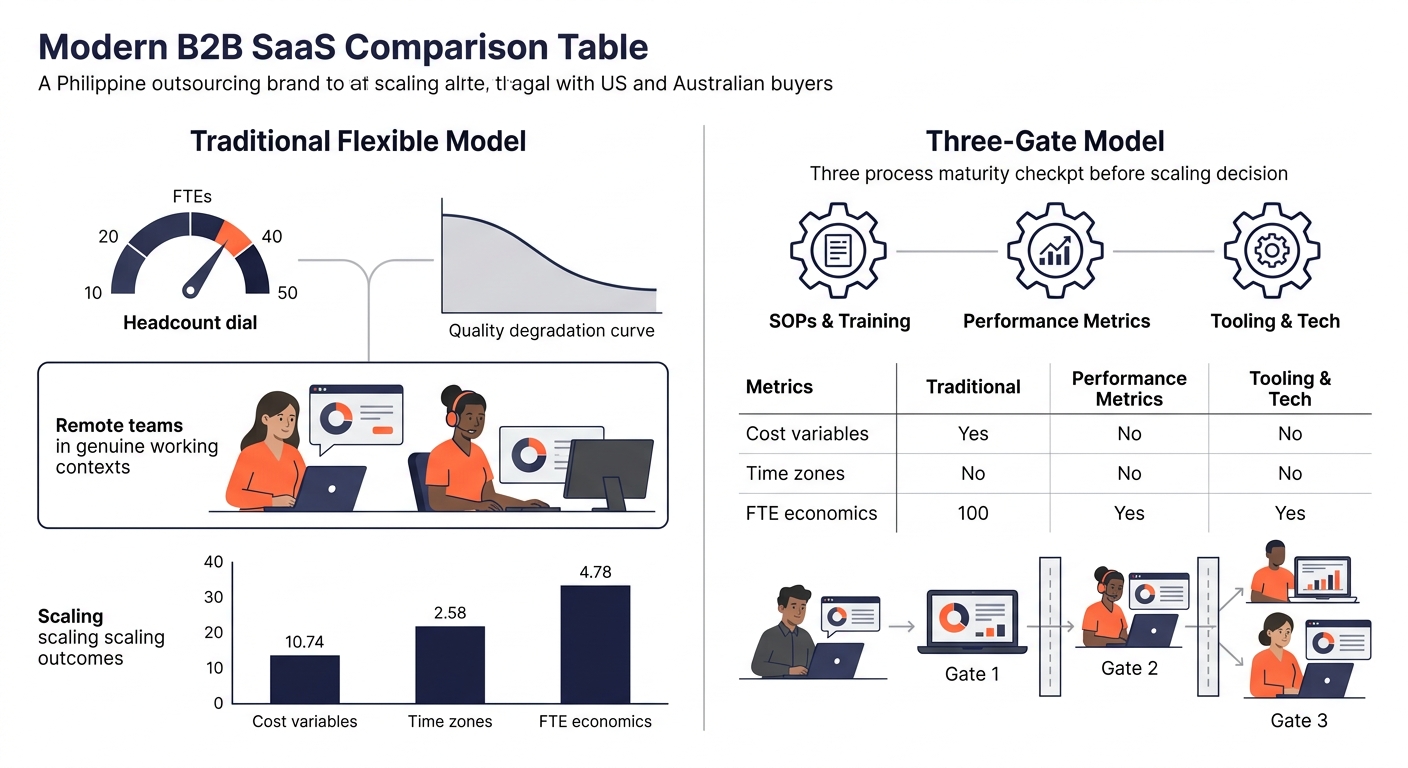
The three failure patterns above share a common fix. You need to gate scaling decisions on process maturity, not on demand.
Call it the Three-Gate Scaling Model. Before adding or removing any offshore capacity, evaluate three conditions:
Process Gate: Can a new hire reach 80% productivity within 2 weeks using only existing documentation, recorded walkthroughs, and written SOPs? If the answer is no, you’re not ready to scale. Build the documentation first. Every week you delay scaling to shore up process documentation saves you 3-4 weeks of ramp-related drag on the other side.
Quality Gate: Do you have automated or semi-automated quality checks that catch errors before client delivery, independent of who produced the work? For outsourced WordPress development teams, this might mean staging-environment checklists and peer-review workflows. For content teams, it means style-guide-driven editing with explicit scoring rubrics tied to client-specific standards. If quality depends on a specific person reviewing everything, you’ve built a bottleneck, not a process.
Knowledge Gate: Is critical client and project context stored in a system (wiki, project management tool, recorded video library) rather than in individual team members’ heads? The test is simple: if your top-performing offshore team member left tomorrow, could their replacement access 90% of the context needed to continue their work within 48 hours?
Tip: Run the Three-Gate assessment quarterly, not only when you’re about to scale. Teams that pass all three gates during steady-state operations can add 25-40% capacity with minimal quality disruption. Teams that fail even one gate will see productivity drop 20-35% during expansion phases.
GigaBPO’s partnership framework recommends evaluating providers on “proven expertise, cultural compatibility, strong communication, compliance certifications like ISO 27001 or SOC 2, and transparent governance.” Those are table stakes for selecting a vendor. The Three-Gate Model is what you apply internally before you engage that vendor’s scaling capabilities.
For companies evaluating whether they’re ready to move work offshore at all, the revenue threshold framework for outsource-vs-in-house decisions provides a useful starting point. The Three-Gate Model picks up where that framework leaves off, governing how you scale after the initial outsourcing decision proves sound.
Organizations running outsourced IT services alongside marketing and development teams face an additional complexity: the gates need to be assessed per function, not per organization. Your IT support team might pass all three gates while your content marketing team fails the Knowledge Gate entirely. Treating the company as a single scaling unit is how you end up with one well-run function and two chaotic ones.
The Claim, Revisited
Flexible outsourcing models fail because flexibility, as typically implemented, means flexibility in the wrong dimension. You get elastic headcount bolted onto rigid processes, undocumented workflows, and knowledge that lives in people rather than systems. The result is a scaling trap: growth produces chaos, contraction produces amnesia, and the cycle repeats every quarter.
The fix isn’t to abandon flexibility. It’s to redirect where the flexibility lives. Build documented, well-maintained processes and quality systems with real teeth. Then flex headcount within those constraints. The model that works is one where adding or removing 5 team members is a boring administrative event, because every new person walks into a system that tells them exactly what to do, how to do it, and what “good” looks like, and every departing person leaves behind a knowledge trail that their replacement can follow.
That requires 8-12% of team time devoted to documentation and process maintenance. It requires quality gates that function independent of any individual reviewer. And it requires treating institutional knowledge as an asset worth protecting rather than a byproduct of having people around long enough. The companies spending that time and money upfront are the ones whose offshore teams actually deliver the cost savings and quality that the flexible model promised in the first place. Everyone else is paying flexible rates for inflexible results.