
A project management framework comparison published today by Success Knocks identifies Kanban and adapted Scrum as the highest-performing approaches for asynchronous remote teams, according to an analysis released June 4 that evaluates frameworks against async communication requirements, meeting load, and cross-timezone coordination challenges facing US and Australian businesses managing offshore teams.
TL;DR: Kanban delivers continuous workflow with minimal synchronous meetings, while Scrum adapted for async work provides structure through written standups and documented sprint ceremonies, the guide shows.
The frameworks comparison arrives as async decision-making delays add 24 hours minimum to offshore web development engagements, a cost documented in prior operational analyses. Teams operating across US, Australian, and Philippine timezones face coordination bottlenecks when frameworks assume same-room availability.
Kanban Rated Excellent for Async Teams, Scrum Requires Adaptation
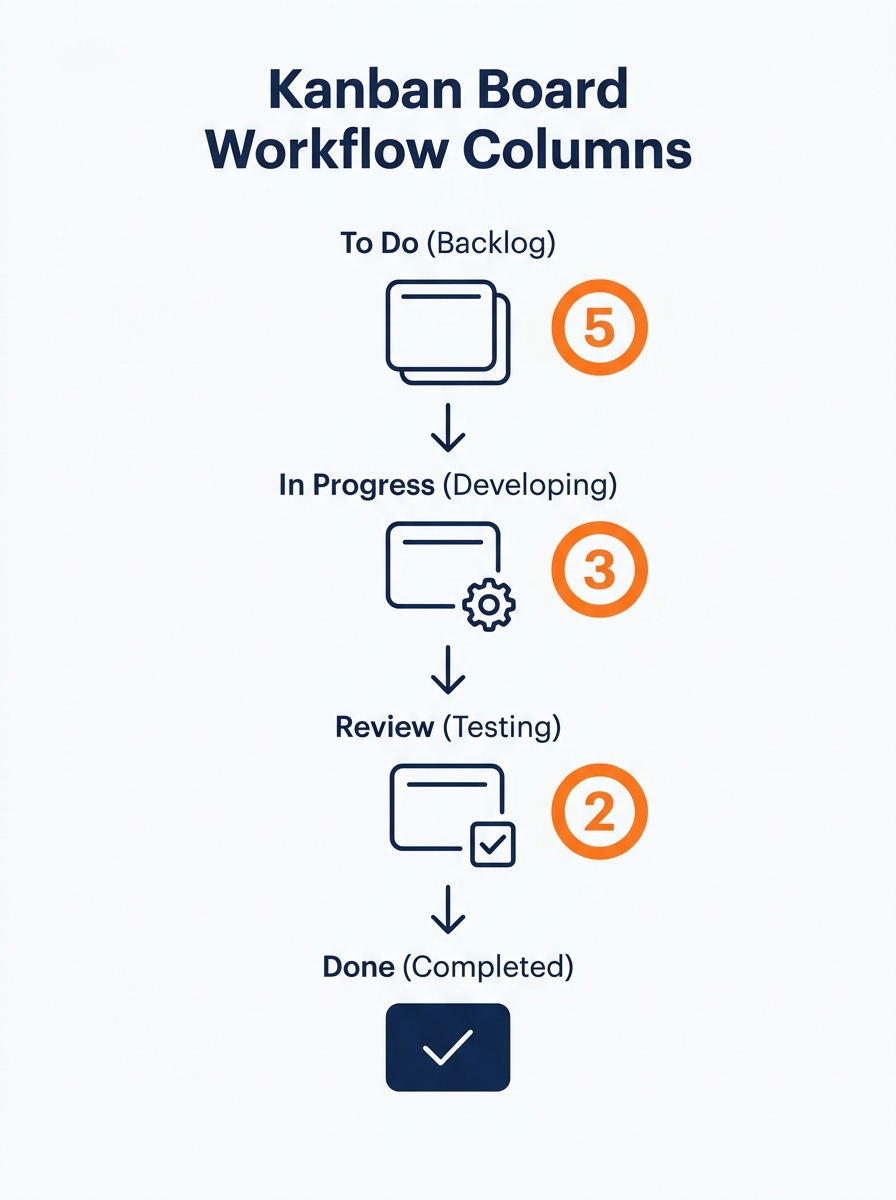
Kanban scored “excellent” async fit with “very low” meeting requirements in the framework comparison table, according to the published analysis. The continuous-flow approach visualizes work status without fixed sprints or mandatory daily calls, allowing team members to pull tasks when ready regardless of timezone.
“Kanban tops the list for most async remote teams,” the guide states, noting the framework focuses on work-in-progress limits and visual boards rather than synchronous ceremonies. Support, content, marketing, and ongoing operations teams see strongest fit, with updates handled through status changes and automated notifications rather than live meetings.
Adapted Scrum rated “good” async fit but requires “medium” meeting load and disciplined facilitation, the comparison shows. Teams convert sprint planning to shared documents, replace daily standups with written updates in Jira or Linear, and conduct retrospectives through recorded Loom videos or Notion pages rather than live video calls.
Product development teams needing predictable delivery cycles show highest success with async-adapted Scrum, the analysis found. The framework maintains sprint rhythm while eliminating the synchronous overhead that traditional implementations demand.
Hybrid Models and Shape Up Gain Traction Among Distributed Teams
Hybrid Scrumban approaches combining Kanban boards with Scrum-style backlogs rated “very good” async fit with “low” meeting loads, supported by tools including ClickUp, Notion, and Basecamp, according to the framework evaluation. These blended models apply Agile principles—iteration, feedback, adaptability—while flexing around remote work constraints.
Shape Up from Basecamp received “excellent” async ratings despite lower market awareness and steeper learning curves, the guide shows. The framework uses fixed time periods, appetite-based scoping, and async updates through dedicated platform features rather than meeting-driven coordination.
“Many distributed teams swear by [Kanban] because it respects individual schedules,” the analysis notes, contrasting continuous-flow approaches against time-boxed models requiring ceremony synchronization across timezones.
The framework comparison evaluated meeting load, tool compatibility, and async communication fit as primary selection criteria. Traditional project management approaches assuming co-located teams create bottlenecks when “time zones stretch from California to Europe,” the guide states, with deep work happening at varied hours across distributed teams.
Tool Selection Critical for Framework Success
Framework implementation requires platform support, with Basecamp rated strongest for async-first design through message boards and Hill Charts, according to the published tool analysis. Monday.com and Asana deliver automation capabilities supporting async workflows, while Notion serves as flexible documentation and task hub.
Jira dominates development teams but requires configuration adjustments for async optimization, the guide found. Effective implementations connect task updates to Slack summaries or email digests, eliminating status-hunting across tools.
Teams adopting async frameworks commonly “overcomplicate at first,” the analysis warns, recommending simple initial implementations with gradual refinement. Work-in-progress limits—restricting active tasks to three or fewer per person—prevent context-switching bottlenecks in distributed environments.
Written communication templates, 24-48 hour response expectations, and centralized decision documentation form critical async norms beyond framework selection, according to implementation guidance in the published material. Teams operating with offshore digital marketing specialists or Philippine web development teams face highest coordination costs when frameworks lack async-native structure.
Common Implementation Failures Center on Tool Proliferation
Teams implementing async frameworks repeatedly make identical mistakes, the guide identifies. Tool proliferation—spreading workflows across five or more platforms—creates information fragmentation requiring synchronous meetings to reconcile status. The recommended fix: select one primary system with minimal integrations.
Forcing synchronous habits within async frameworks represents the second most common failure pattern, according to the analysis. Required live standups or synchronous sprint ceremonies eliminate the timezone flexibility that async frameworks provide, recreating the coordination bottlenecks the framework change intended to solve.
“Projects stall. Burnout spikes. Good people quit,” the guide states regarding consequences of ignoring async team realities in framework selection.
Success measurement in async implementations tracks output velocity, bottleneck frequency, and meeting hours rather than traditional project completion metrics alone, the published framework comparison shows. Teams reporting highest productivity operate frameworks that enable work flow “around the clock” without waiting for next synchronous checkpoint.
What Happens Next
US and Australian SMBs managing Philippine BPO teams face immediate framework decisions as remote work coordination costs compound. The published comparison provides selection criteria beyond marketing claims, anchoring choice in async communication requirements and timezone distribution rather than framework popularity.
Operators running $3-30K monthly offshore budgets will likely test Kanban implementations first given low meeting overhead and minimal learning curve. Development teams with sprint-based client commitments face adapted Scrum evaluation, accepting medium meeting loads in exchange for delivery predictability.
The framework comparison’s June 4 publication timing positions it ahead of Q3 budget planning cycles, when agencies and SMBs typically review operational overhead including virtual assistant coordination and offshore team management structures. Teams that reduce coordination friction capture the 40-70% cost savings offshore models promise without sacrificing delivery quality to timezone bottlenecks.