
Outsourcing individual tasks works until the work stops being a task. Here is how to tell when a business has outgrown piecework and needs a real engineering team.
Outsourcing has quietly changed shape. For years the pitch was simple: hand off the work nobody on your team wanted to do, pay less for it, and move on. That still works for a huge range of jobs. But the reason companies outsource has shifted. In Deloitte’s 2024 Global Outsourcing Survey, access to specialized talent has overtaken cost as the top reason businesses outsource, named by 42% of executives, while cost reduction has slipped to third. Companies are no longer just buying cheaper hours. They are buying capability they do not have in house.
That distinction matters most when the work in question is software. Plenty of jobs break down cleanly into tasks: writing a batch of product descriptions, managing an inbox, running a paid ad campaign, cleaning up a spreadsheet. You can describe the task, hand it over, check the result, and repeat. Software rarely behaves that way. And when a business keeps treating software like a stack of tasks, it usually ends up frustrated, over budget, and no closer to a working product.
Here is how to tell the difference, and how to know when piecework outsourcing has reached its limit.
What task outsourcing does well

Task outsourcing is one of the most useful tools a growing business has. It shines when the work is:
- Well defined. You can write down exactly what “done” looks like.
- Repeatable. The same process produces the same kind of result each time.
- Low context. A capable person can pick it up without months of background on your business.
- Easy to check. You can look at the output and quickly judge whether it is right.
Bookkeeping, data entry, content writing, customer support, and routine marketing all fit this shape. The work can be split into pieces, distributed, and reviewed, and adding more people generally means getting more done. This is the model most outsourcing relationships are built on, and for the right work it delivers exactly what it promises.
The trouble starts when a business assumes every job fits this mold, especially building and maintaining software.
Why software work breaks the task model
Software is not a pile of independent tasks. It is one connected system where every part depends on the parts around it. A change to the login screen can quietly break the checkout page. A feature built last month shapes how the next feature has to be built. The knowledge of why something was done a certain way lives in the heads of the people who did it.
That is why handing software out as isolated tasks tends to fail. The data backs this up. The Standish Group’s long-running CHAOS research has found for years that only about a third of software projects fully succeed, while the majority are challenged or fail outright. Two of the most common reasons are incomplete requirements and a lack of ongoing involvement from the people who actually understand the goal. Both problems get worse, not better, when the work is chopped into pieces and spread across people who never share context.
Three things make software different from the kind of work task outsourcing handles so well:
- Context compounds. The longer someone works on your product, the more valuable they become, because they carry the history of decisions in their head. A new person on each task starts from zero every time.
- The work is connected. Pieces cannot be judged in isolation. A function that looks finished can still be wrong in the context of the whole system.
- Quality is invisible until later. A sloppy task is usually obvious right away. Sloppy code can look fine and pass every visible check, then surface as a costly bug or a system that cannot be expanded six months on.
When those traits collide with a task-by-task arrangement, the result is rework, finger pointing, and a product that never quite comes together.
The warning signs you have outgrown piecework
Most businesses do not decide to change models. They keep using task outsourcing until the strain becomes obvious. These are the signals that the work has outgrown the piecework approach:
- You spend more time explaining the work than the work takes. If every task needs a long brief because the person has no memory of the last one, the model is fighting you.
- Nobody owns the whole picture. Features get built, but no single person can tell you how the system fits together or why it behaves the way it does.
- Bugs keep coming back. Fixes solve the symptom in front of you and break something else, because no one holds the full context.
- You cannot plan more than one task ahead. Real products need a roadmap. If you can only think in single, disconnected jobs, you are managing tasks, not building software.
- Knowledge walks out the door. Each time a contractor finishes and leaves, everything they learned about your product leaves with them.
One or two of these can be a rough patch. All of them together mean the work has changed from a set of tasks into an ongoing product, and it needs a different kind of team.
What a dedicated development team changes
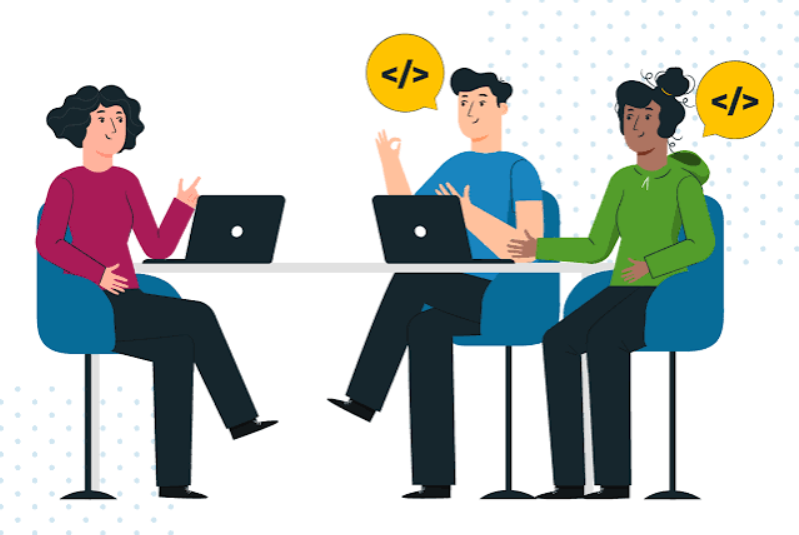
A dedicated development team is the opposite of piecework. Instead of handing out isolated jobs to whoever is free, a business works with the same engineers over time. Those people learn the product, hold the context, and stay accountable for how the whole thing fits together. The model is less “buy these hours” and more “embed this capability.”
This is the model many specialized software firms now offer, embedding the same engineers into a client’s team for the long term rather than completing one-off jobs. As an example, Full Scale, a software staffing company founded in 2018, places dedicated engineers inside client teams on long-term engagements and reports retention above 93%, which means clients keep working with the same people instead of starting over with strangers each quarter. That continuity is the entire point. It is also the thing piecework cannot provide, no matter how skilled the individual doing each task.
What a dedicated team gives a business that task outsourcing cannot:
- Accumulated context. The team knows your product, your customers, and your history, and that knowledge grows instead of resetting.
- Real ownership. When the same people are responsible over time, they care about the system holding together, not just closing a ticket.
- The ability to plan ahead. A standing team can commit to a roadmap, not just the next isolated job.
- Continuity. Knowledge stays inside the relationship rather than leaving with each finished task.
A simple comparison
| Task outsourcing | Dedicated development team | |
| Best for | Defined, repeatable, low-context work | Connected, evolving products |
| How work is assigned | Job by job | Ongoing engagement |
| Who holds context | No one in particular | The same team, over time |
| What you are buying | Cheaper hours | Capability and continuity |
| Biggest risk | Knowledge lost after each task | Higher commitment to get right up front |
Neither column is better in the abstract. They are tools for different problems. A business that needs its quarterly reports formatted does not need a dedicated engineering team. A business building a product its customers depend on every day cannot get there on isolated tasks alone.
How to decide
The clearest test is to ask one question: is this a task, or is this a product?
A task has an edge. You can describe it, hand it off, and judge the result on its own. A product is alive. It keeps changing, every part depends on the others, and its value comes from being maintained and improved over time, not finished once and forgotten.
If the work is genuinely a set of tasks, task outsourcing is the right call, and trying to staff a full team around it would be wasteful. If the work is a product, no amount of careful task-splitting will make piecework deliver it. The continuity and shared ownership of a dedicated team are not a luxury in that case. They are the thing that makes the difference between software that ships and software that stalls.
The smartest move is to be honest about which kind of work you actually have, and to stop forcing a product into a task-shaped box once it has clearly outgrown one.