
Nine in 10 retail executives expect AI recommendations to overtake search engines as the primary product discovery tool, according to Deloitte’s 2026 Retail Industry Outlook. This shift breaks the SEO-first playbook that most outsourced digital marketing teams still follow. Winning retail visibility now depends on feeding recommendation algorithms, not ranking for keywords alone.
TL;DR: Retail discovery is moving from keyword search to AI-powered recommendation engines across e-commerce platforms, social media, and AI assistants. Outsourced marketing teams built for SEO-first strategies need to rebalance toward product data quality, social-native content, and platform-specific engagement signals. The transition is gradual, not a hard switch.
Search Engines and Recommendation Engines Solve Different Problems
Search engines let shoppers find products by typing keywords. The engine crawls product pages, indexes the content, and ranks results by relevance. A recommendation engine works differently. It looks at user behavior, purchase history, and contextual signals to surface products a shopper never asked for but is likely to want. As Crossing Minds explained, search engines respond to queries while recommendation engines predict intent.
The difference matters for marketing strategy. Search marketing rewards keyword targeting, technical SEO, and content volume. Recommendation marketing rewards engagement signals, product data quality, and platform-native storytelling. When you’re running outsourced digital marketing for a retail brand, the daily work looks different depending on which system drives discovery.
NRF projects retail sales will grow 4.4% in 2026, reaching $5.6 trillion. But the path shoppers take to those purchases has changed. Walmart rolled out AI-driven recommendation engines across its app, website, and physical stores over the past 12 months, according to NRF’s 2026 retail trends report. Amazon, Shopify, and TikTok Shop have all built similar systems.
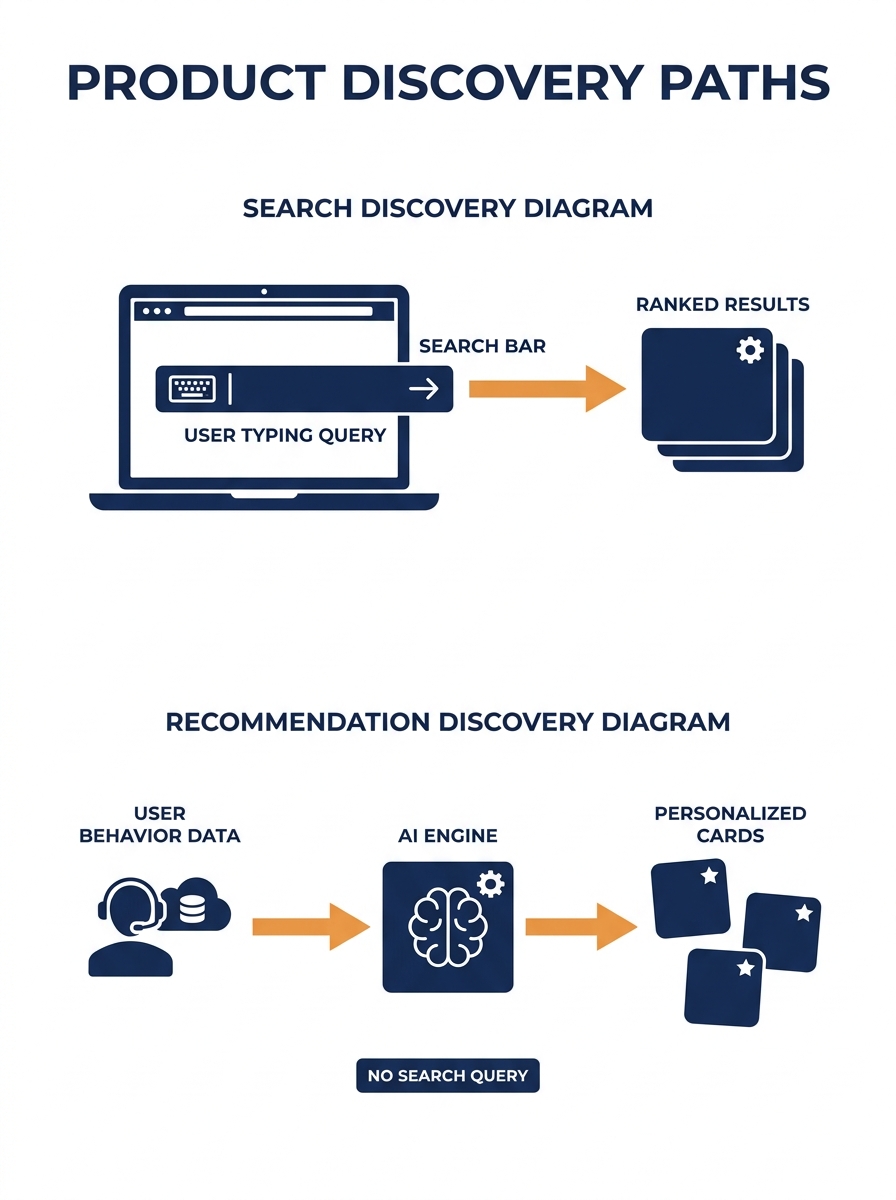
How Recommendation Algorithms Work Under the Hood
The global AI-based recommendation system market is projected to reach $3.71 billion by 2030 at an 8.6% annual growth rate. The technology splits into three core filtering methods:
- User-based collaborative filtering: People who behave like you also bought X. Needs thousands of behavioral signals (clicks, time-on-page, add-to-cart, purchases) to work.
- Item-based collaborative filtering: Products similar to what you viewed or bought. Needs structured product metadata like categories, attributes, and price ranges.
- Content-based filtering: Matching detailed product descriptions against a customer’s stated preferences and profile data.
Each method pulls from different data inputs. That’s the key insight for marketing teams. Your product feed quality, catalog metadata, and on-site engagement signals directly shape how often your products appear in recommendation slots. And those slots keep multiplying.
According to Deloitte’s survey of over 600 retail executives, AI-driven search has “fundamentally reshaped the customer journey” and “established a new, enduring paradigm for consumer engagement,” per the firm’s 2026 Retail and Consumer Trends report. Half of these executives expect the traditional multi-step shopping path to collapse by 2027.
Social Platforms as Recommendation Engines
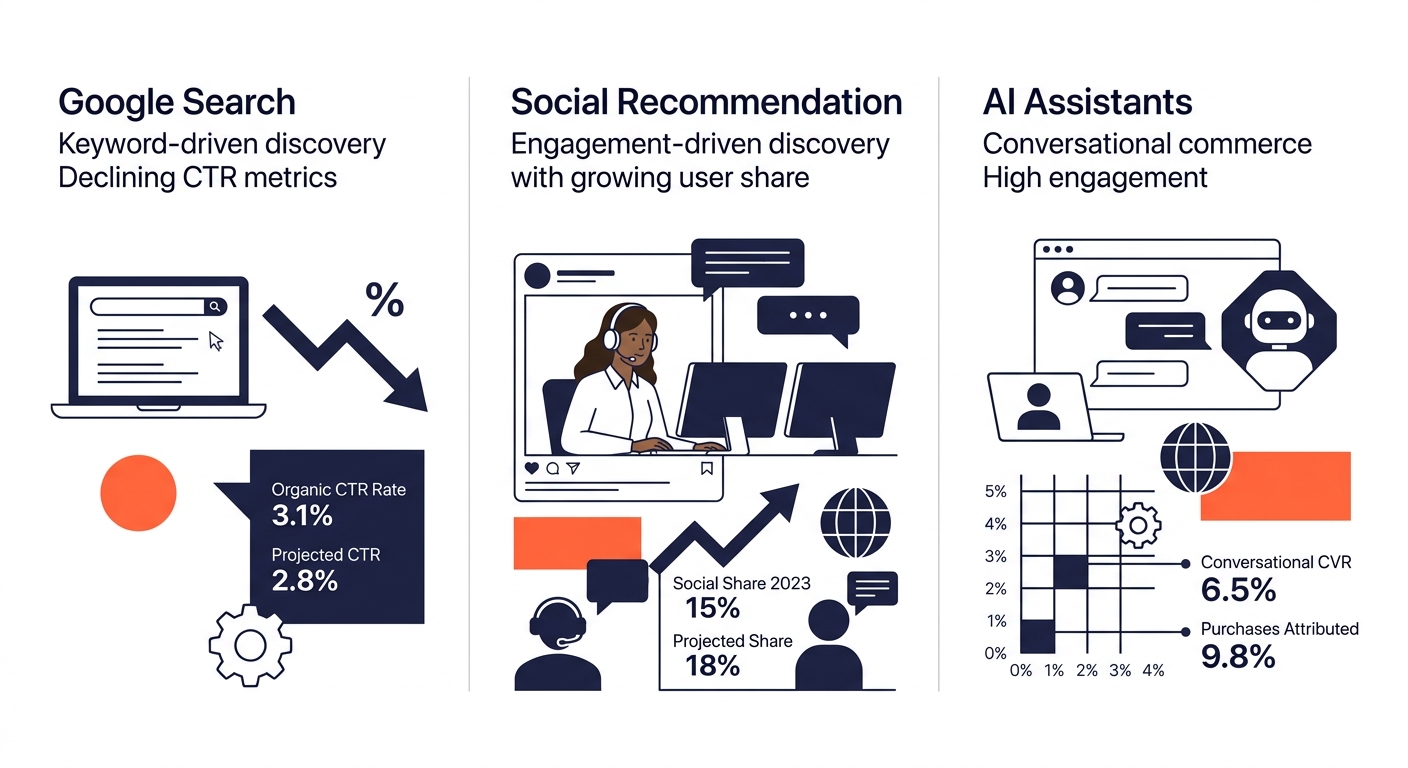
Why does TikTok keep showing up in conversations about recommendation algorithms 2026? Because younger consumers now start product research on TikTok, Instagram, and AI tools rather than Google. According to eMarketer’s retail outlook, “brands will need clear product stories, strong social proof, and presence where AI systems pull their recommendations from,” as reported in their 2026 recommendations analysis.
TikTok’s For You page is a pure recommendation engine. Instagram’s Explore tab works the same way. Neither depends on keyword queries. Both reward content that drives engagement: watch time, shares, saves, comments. The marketing work shifts from keyword research and link building to video production, creator partnerships, and platform-native content creation.
Google’s own AI Overviews have cut organic click-through rates by about 24% and paid clicks by 18%. If a quarter of your organic traffic vanishes because Google answers the query itself, the return on traditional SEO work drops by the same proportion. That single datapoint should change how you allocate hours across your outsourced SEO team.
What Changes in Your Marketing Stack
Here’s where the retail digital marketing shift turns into real workflow changes:
| Marketing Function | Search-First Approach | Recommendation-First Approach |
|---|---|---|
| Content Creation | Blog posts, landing pages for keywords | Short-form video, UGC, shoppable posts |
| Data Work | Keyword research, rank tracking | Product feed optimization, engagement analytics |
| Technical Work | Schema markup, site speed, crawlability | Structured product data, platform APIs |
| Paid Media | Google Ads keyword bidding | Performance Max, Advantage+, TikTok Spark Ads |
| Measurement | Rankings, organic traffic | Recommendation impressions, discovery-to-cart rate |
The table shows why outsourced strategy repositioning is more than a talking point. A team built for search-first retail marketing uses different skills than a team built for recommendation-first marketing. The writers need to produce video scripts and social content, not 2,000-word articles. The analysts need to read engagement dashboards and product feed health reports, not just rank trackers. The media buyers need to manage algorithmic campaign types where the platform controls most targeting.
Teams already keeping pace with algorithm changes have a head start. The shift to recommendation engines isn’t a cliff. It’s a gradual reweighting that has been building for several years.
Rebalancing an Outsourced Team Without Rebuilding From Scratch
You don’t need to replace your current team. The reposition works better as a phased reallocation.
Product data quality comes first. If your team handles catalog management or product copywriting, move 20–30% of those hours toward enriching metadata: better category structures, more detailed attribute fields, richer descriptions. This is the highest-return change because it feeds every recommendation system at once, from on-site engines to Google Shopping to TikTok Shop.
Shift content production next. US agencies that outsource digital marketing strategy to offshore partners access specialized planning capacity at 40–70% lower cost than domestic hires. Use that cost gap to build a dedicated content team producing platform-native assets: short-form video, product demos, UGC-style posts. Social content is volume-intensive. You need 15–30 pieces per week per platform, and that output is expensive at US agency rates.
Add a trust layer. With AI-generated content flooding every channel, verified reviews, real user content, and transparent privacy policies become critical conversion signals. Your outsourced team can run review campaigns, moderate UGC, and handle privacy compliance across borders. Zero-party data collection (quizzes, preference centers, loyalty programs) also feeds recommendation engines directly.
The teams that reposition fastest won’t abandon search. They’ll treat it as one discovery channel among several and build the muscle to feed recommendation engines everywhere products can surface.
Attribution Gets Harder
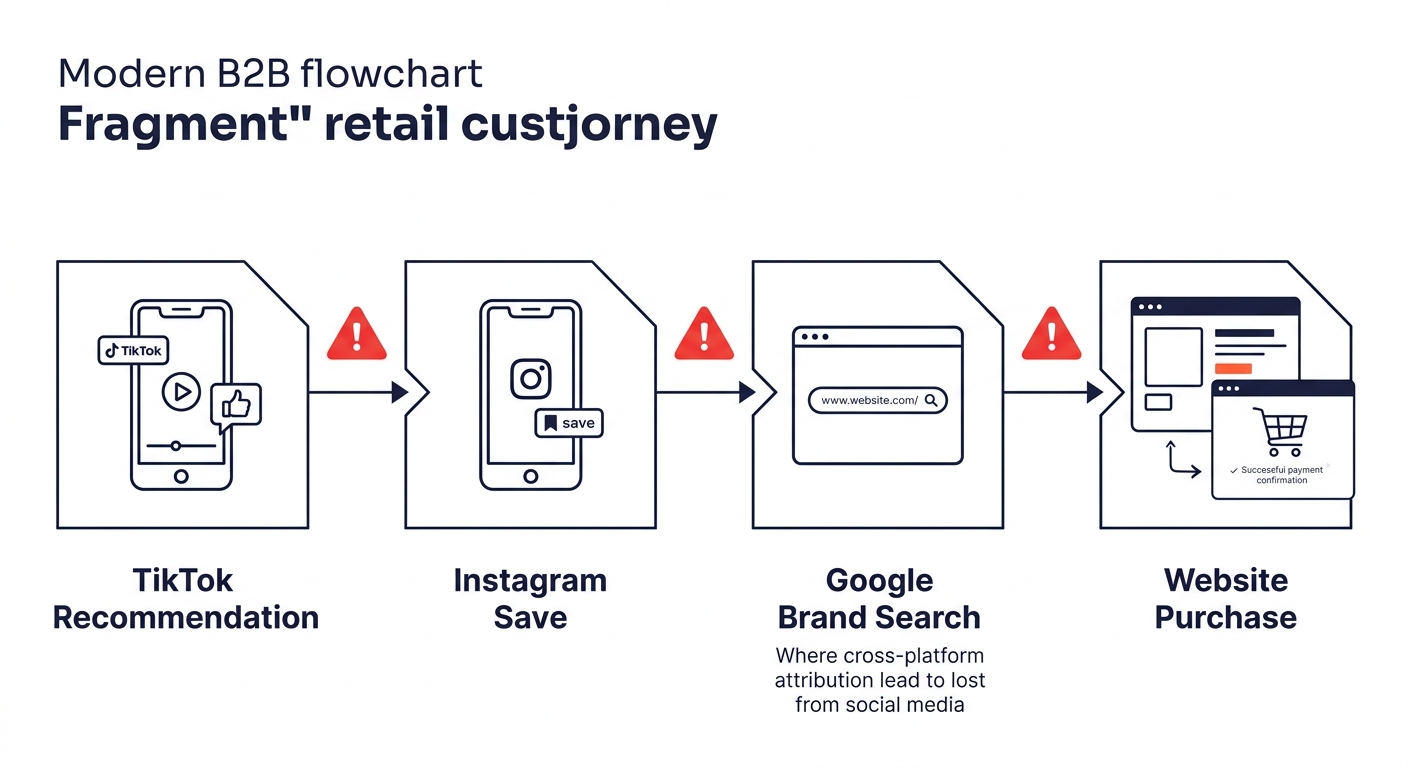
Recommendation-driven discovery is tougher to measure than search. When someone Googles “best running shoes under $150” and clicks your listing, the attribution path is simple. When someone sees your product in a TikTok recommendation, saves it, visits your site three days later through a Google brand search, and buys, the recommendation engine gets zero credit in most analytics setups.
This gap creates planning problems. If your pipeline quality dashboards are built around search metrics alone, you’ll undercount the value of recommendation-optimized work. The fix means adding platform-specific attribution (TikTok Analytics, Instagram Insights, on-site recommendation engine reports) alongside your Google Analytics setup. Without it, you’ll kill budget for the channels that are actually driving discovery.
Where The Model Breaks
The clean search vs recommendation marketing narrative has three real cracks:
Recommendation algorithms need scale. Collaborative filtering requires thousands of user interactions before it produces useful suggestions. Small retailers with limited traffic won’t see the same recommendation-driven lift that Walmart enjoys. For these brands, search stays the primary discovery channel, and outsourced SEO work keeps its full value.
Platform dependency means platform risk. When you optimize for TikTok’s algorithm, you’re building on rented land. Algorithm changes, regulatory action, or policy shifts can kill your visibility overnight. A search-optimized website gives you more control over your own distribution. Diversifying across recommendation platforms reduces this risk but increases the production workload.
The talent transition is gradual. An outsourced team skilled in technical SEO doesn’t become a video production squad in a sprint. Rushing the transition opens quality gaps that hurt performance in both channels.
The right position for most retail brands isn’t “drop search, go all-in on recommendations.” It’s a 60/40 or 70/30 reallocation, weighted toward the channels that match how your audience actually discovers products. Brands selling to shoppers under 35 should weight recommendation channels heavier. Brands selling complex or expensive products still see search dominate the research phase.
The mechanism holds up despite its fragility because recommendation engines and search engines feed each other in practice. Strong product data lifts both your search rankings and your recommendation placements. Good social content drives branded searches that improve your SEO numbers. The outsourced teams that understand this feedback loop, and rebalance their hours to serve both sides, will capture visibility that their search-only competitors lose month by month.