
Kogifi’s 12-critical-step migration checklist requires documentation of all system connections, dependencies, and integration touchpoints before any code moves. Philippine web dev teams that treat this inventory as a one-time exercise rather than an evolving handoff artifact routinely deliver working migrations that nobody else can maintain.
The Checklist That Everybody Downloads and Nobody Finishes
Rooted Software’s platform migration strategy checklist starts at the same place Kogifi’s does: list all applications, databases, data stores, and associated workloads. Identify business-critical systems. Determine which applications qualify for a lift-and-shift approach versus which ones need re-architecture. Both frameworks assume this inventory becomes the project’s source of truth throughout the engagement.
In practice, the inventory gets built during the first 1-2 weeks of a migration engagement, lives in a shared Google Sheet or Confluence page, and then stops getting updated around week 4 when the team shifts into active development. According to research published through ResearchGate analyzing knowledge transfer in offshore outsourcing projects, unsuccessful transfer of knowledge constitutes a major reason for IS offshoring failure. The study, drawing on work by Carmel and Tjia (2005) and Chen et al. (2013), identifies “unwillingness and disability to share knowledge and missing ba[sis for knowledge exchange]” as recurring blockers.
What does this look like on a migration project? The Philippine dev team builds the new platform correctly. The staging environment passes QA. Launch goes fine. And then 3 weeks later, the client’s US-side developer or a new contractor opens the codebase and can’t figure out why the legacy product catalog connects to 3 different API endpoints, why certain routes bypass the main authentication layer, or where the custom middleware for payment processing actually lives.
The migration worked. The knowledge transfer didn’t. Those are two different deliverables, and most statements of work only define the first one.
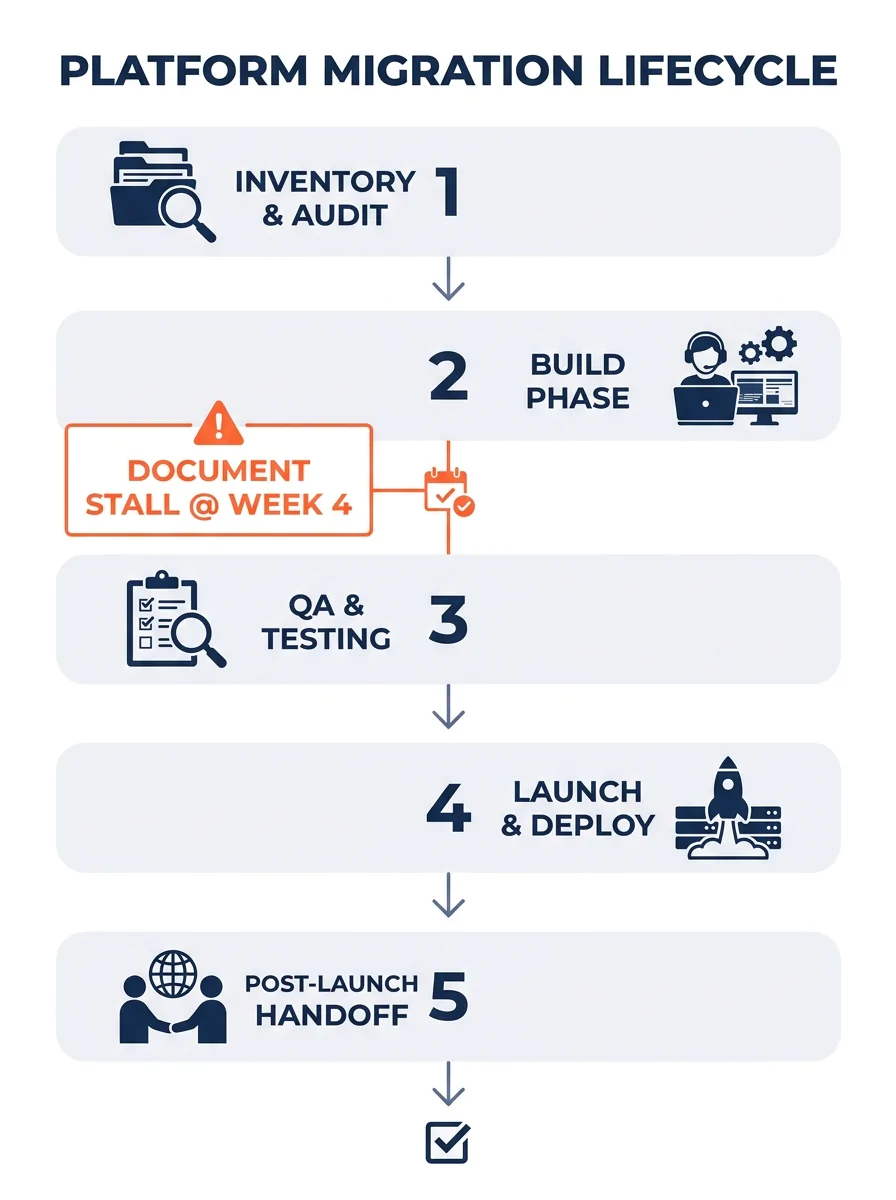
The Build Phase Documentation Debt
Riseup Labs’ offshore hiring framework recommends phased onboarding with documentation, shadowing, pair programming, interactive training, and well-defined milestones. That’s solid advice for standing up a new team. But migrations have a specific problem that standard onboarding can’t solve: the team doing the migration accumulates institutional knowledge at a pace that outstrips anyone’s ability to write it down after the fact.
Consider the scope of a typical mid-market migration. Kogifi’s checklist calls for documenting integration touchpoints, auditing feature utilization, and mapping processes to identify areas for improvement. A 40-page e-commerce site with 6 third-party integrations, 2 custom APIs, and a payment gateway generates roughly 80-120 discrete dependency decisions during a 10-week migration. Each decision, such as “we mapped the legacy coupon engine to the new platform’s native discount module but had to add a custom webhook for the loyalty program,” becomes invisible tribal knowledge the moment the developer who made it moves on to the next task.
The numbers pile up. Alation’s data migration framework describes legacy system challenges this way: old applications and data storage systems are often incompatible with the cloud, and while automation can help re-platform legacy code, careful inventory and dependency mapping remain vital to prevent costly disruptions or integration failures. “Costly disruptions” is the polite version. The real cost is the 40-80 hours a new developer burns reverse-engineering decisions that the original team made in 15 minutes each but never recorded.
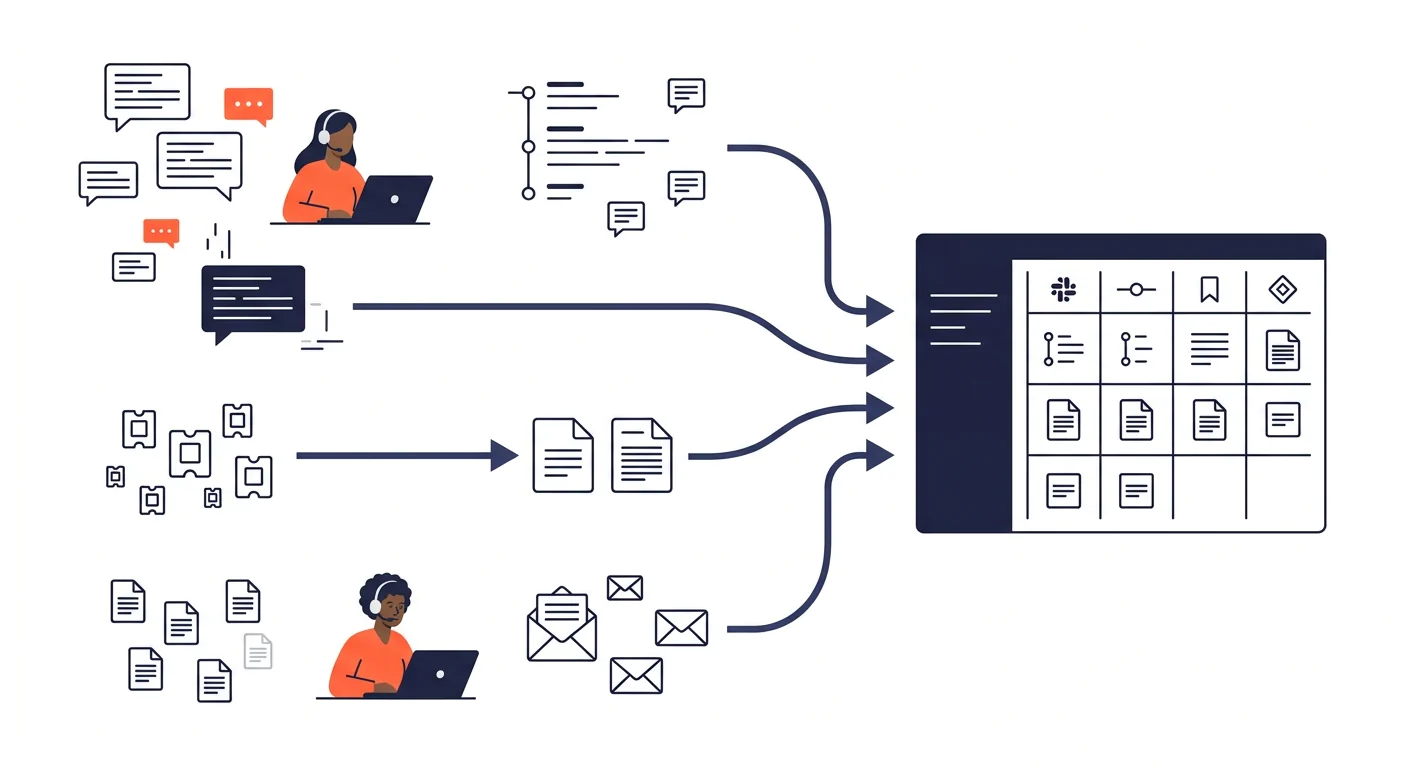
This is where async development handoff compounds the problem. When the Philippine team works 12-14 hours ahead of a US client, decisions get made, implemented, and deployed before the client’s morning standup. If those decisions live only in Slack threads and pull request comments, you’ve scattered your web development outsourcing documentation across a dozen channels that no search function can reliably surface 6 months later.
The Fourteen-Day Cliff After Launch
According to Morningscore’s 2026 analysis of migration outcomes, sites with correct redirects and sound technical SEO typically see initial organic traffic recovery within 2-3 months. That timeline assumes a three-tier URL priority model: Tier 1 pages (the top 10-15% by revenue) get exact URL preservation or 1:1 301 redirects. Tier 2 (30-50% of pages) gets mapped 301 redirects. Tier 3 (40-60%) gets consolidated or removed to improve site authority.
The first 14 days after launch are when 70-80% of issues surface. Redirect chains longer than one hop, incorrect canonical tags, missing structured data, broken third-party scripts that relied on the old DOM structure. Philippine SEO teams that embed into the development sprint cycle from sprint zero catch these problems in staging. Teams brought in after launch are debugging in production.
Warning: Post-launch monitoring requires a full 90-day window according to Google Search Console best practices. Most migration SOWs define a 2-week post-launch support period. That gap between 14 days and 90 days is where organic traffic bleeds out unnoticed.
Here’s the handoff documentation failure: when the Philippine dev team’s contract ends at week 2 post-launch, all of the redirect mapping logic, the canonical tag strategy, the structured data decisions, and the performance baselines walk out the door with them. The next team or internal developer inherits a live site with no map of what was changed, why, or what to monitor.
This pattern repeats across the broader challenge of offshore team knowledge transfer. The documentation that matters most is the documentation of decisions, not the documentation of code. Code can be read. The reasoning behind 150 redirect rules, 30 API endpoint mappings, and 12 authentication flow changes cannot be reverse-engineered from the codebase alone.
Code can be read. The reasoning behind 150 redirect rules, 30 API endpoint mappings, and 12 authentication flow changes cannot be reverse-engineered from the codebase alone.
Anatomy of a Working Migration Dossier
A migration dossier differs from standard project documentation in one critical way: it’s written for the person who wasn’t in the room. The Philippine dev team knows why they chose a specific approach. The dossier captures that reasoning for the developer who arrives 6 months later and needs to modify, extend, or debug the system.
Based on the frameworks from Kogifi, Rooted Software, and Alation’s migration planning model, a functional migration dossier contains 5 sections:
| Section | Contents | Typical Length |
|---|---|---|
| Dependency Map | All applications, databases, APIs, third-party services, and their connections pre- and post-migration | 8-15 pages |
| Decision Log | Every architectural choice with the reasoning, alternatives considered, and trade-offs accepted | 20-40 entries |
| Redirect and URL Map | Complete mapping of old URLs to new, with tier classification and redirect type | Varies (often 500-5,000 rows) |
| Integration Touchpoints | Each third-party connection with authentication method, rate limits, error handling, and fallback behavior | 1-2 pages per integration |
| Post-Launch Runbook | Monitoring schedule, baseline metrics for first 90 days, escalation paths, and known edge cases | 5-10 pages |
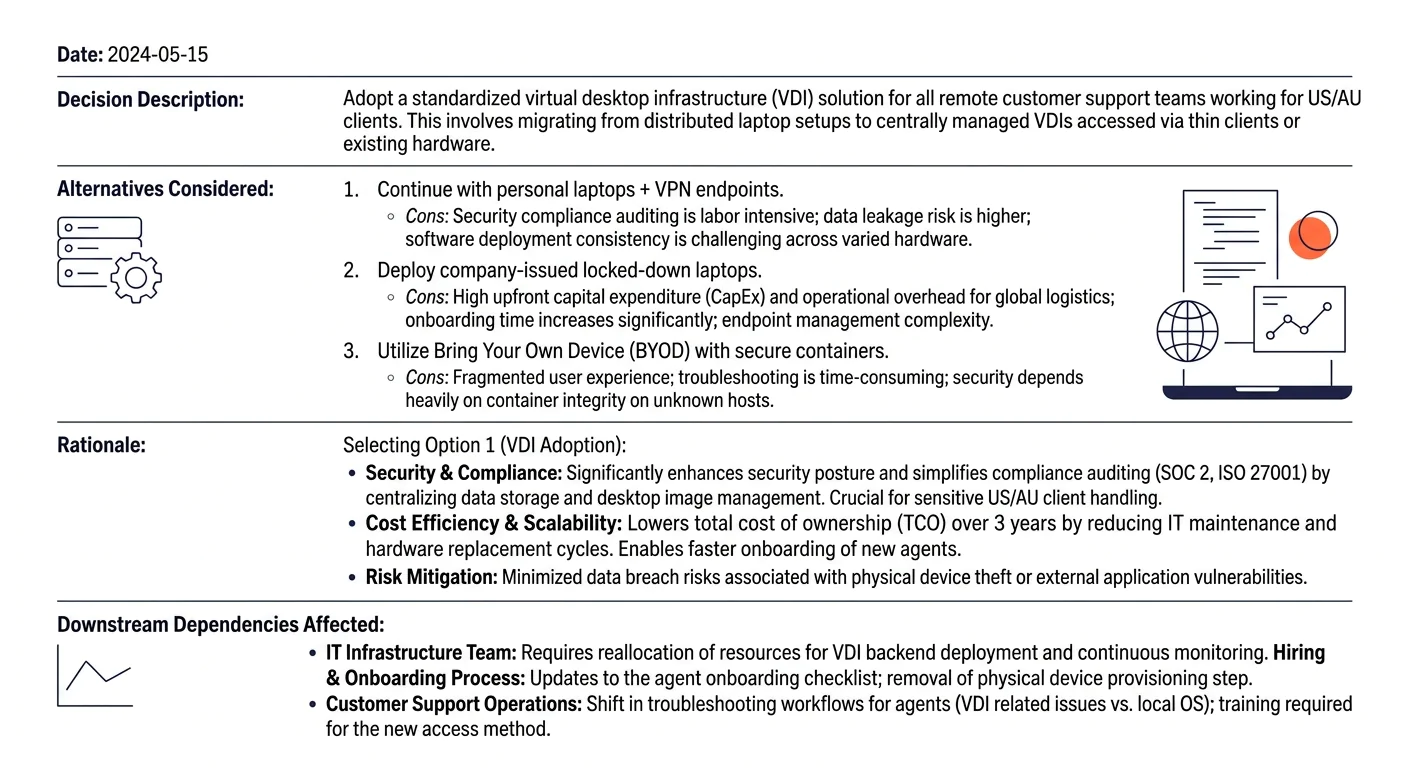
The decision log is the section that delivers the most value per hour of effort. Each entry takes 3-5 minutes to write at the time the decision is made. Reconstructing the same entry after the fact takes 30-60 minutes of archaeology through Slack, Git history, and Jira comments. Across 30 decisions, that’s the difference between 2.5 hours of inline documentation and 15-30 hours of post-hoc reconstruction.
Teams running AI-native development workflows have a specific advantage here. Tools like Cursor and Claude can generate first-draft decision log entries from code diffs and commit messages. The developer reviews and edits rather than writing from scratch, cutting documentation time by roughly 40-50% per entry.
The File the Next Developer Opens
KMC Solutions documented what mature Philippine outsourcing engagements look like at the 10-month mark: the team absorbs release-notes drafting and bug triage, removing 2 vendor handoffs. The CFO sees fewer touches, shorter cycles, and fewer escalations. That operational maturity depends entirely on whether the knowledge accumulated during months 1-3 survives the inevitable team transitions that happen over months 4-10.
Platform migration handoff documentation is the mechanism that makes this survival possible. Without it, every team transition resets the learning curve. A new developer joining the project burns 40-80 hours understanding decisions that are already made and unchangeable. With a migration dossier, that ramp-up drops to 8-15 hours of reading and 5-10 hours of targeted questions.
The math on Philippine web dev operations makes this especially stark. At a typical offshore rate of $25-35/hour, 60 hours of unnecessary ramp-up costs $1,500-2,100 per developer transition. A team that turns over 2-3 developers across a 12-month engagement loses $3,000-6,300 in pure ramp-up waste. The migration dossier, requiring roughly 15-20 hours of effort spread across the entire engagement, costs $375-700 to produce. The ROI is roughly 4:1 to 9:1 depending on team size and turnover rate.
And the dossier’s value extends beyond the original migration. Every maintenance task, feature addition, or subsequent platform upgrade that touches the migrated system references the same document. The dependency map tells the new developer which integrations will break if they modify the payment flow. The decision log explains why the team chose server-side rendering for the product pages but client-side rendering for the dashboard. The redirect map prevents the next SEO audit from re-litigating 500 URL decisions that were already made with full analytics context.
The trap in platform migration work is treating the migration itself as the deliverable. The deliverable is a system that the next team can understand, maintain, and extend without the original builders in the room. Philippine web dev teams that build documentation into every sprint, rather than bolting it on at the end, deliver that second, harder deliverable consistently. The ones that don’t leave behind a working site and a knowledge vacuum, and the client pays to fill that vacuum every single time the team changes.