
Costa Rica-based nearshore development company Square Codex published a staff augmentation guide on June 29, 2026, arguing that integrated external engineers preserve product control better than full project outsourcing for software companies scaling development capacity, according to the company’s blog post.
TL;DR: Square Codex, a Costa Rica-based nearshore development firm, published a guide June 29 positioning staff augmentation as a control-preserving alternative to project outsourcing for companies adding engineering capacity.
Publication Argues Against Isolated Vendor Models
The guide frames staff augmentation as daily integration of external engineers into existing Scrum or Kanban workflows, contrasting that model with project outsourcing where external vendors operate separately from internal teams. Square Codex, which provides Full Stack, Backend, Frontend, DevOps, Cloud, Data, AI, and QA engineers, argues that project outsourcing creates “knowledge fragmentation” when important product features are built too far from internal teams.
“When an important part of the product is built too far away from the internal team, knowledge starts to fragment,” the guide states. “Decisions are documented late or not documented at all. Changes become tied to closed deliverables. Internal engineers end up reviewing something they did not build but will eventually have to maintain.”
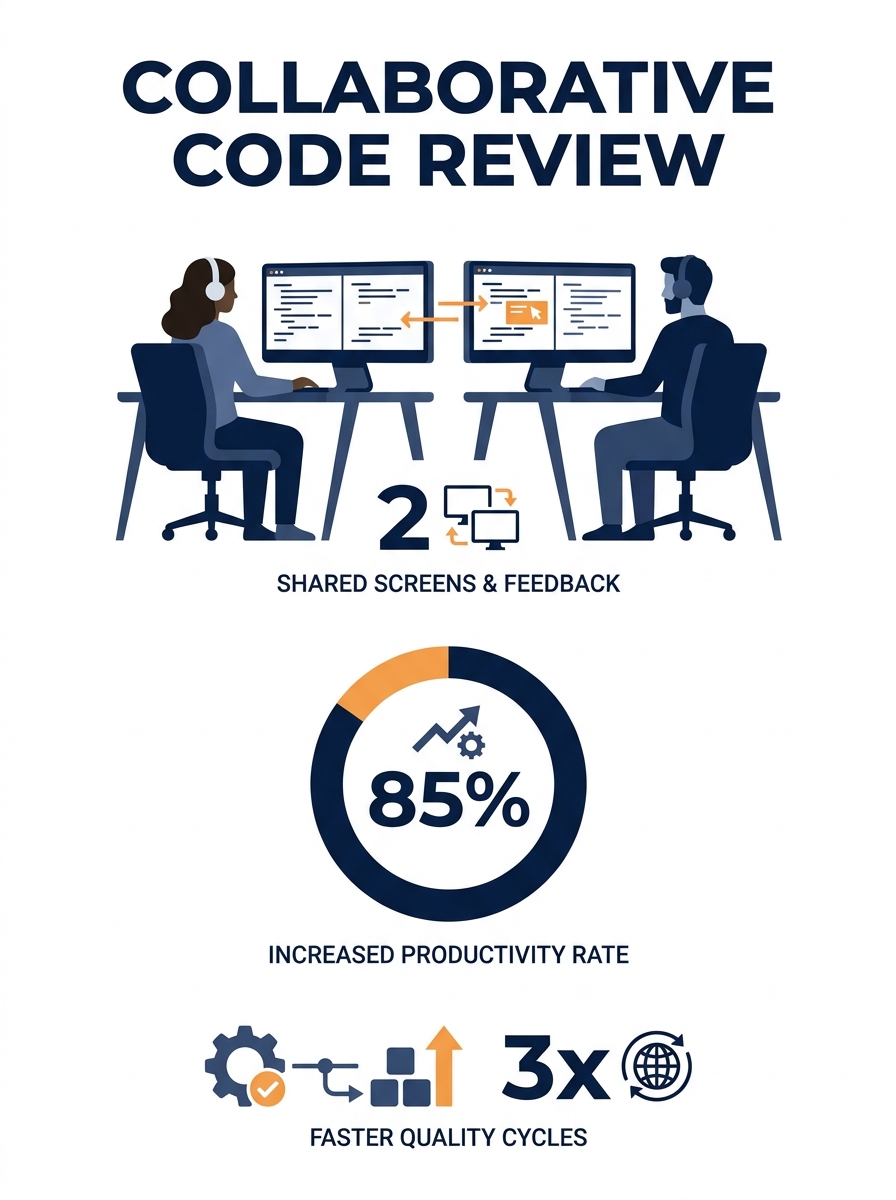
The publication positions nearshore collaboration as reducing operational distance through time-zone proximity, enabling faster code reviews and technical conversations compared to offshore arrangements. Square Codex operates from Costa Rica, serving North American companies.
Capacity Addition Without Ownership Transfer
The guide describes staff augmentation engineers as participants in architecture discussions, code review standards, and sprint planning rather than isolated ticket-closers. Square Codex argues that two to three senior engineers integrated into existing teams can deliver more velocity than building entire departments quickly, citing coordination overhead as a scaling friction point.
“A small group of senior engineers, properly integrated, can unblock critical areas with less friction,” according to the publication. “They can take ownership of specific modules, improve test coverage, accelerate pending endpoints, clean up frontend components, or support cloud migrations while the internal team keeps visibility and control.”
The model targets software companies experiencing roadmap expansion faster than team growth, where internal engineers split time between maintenance work and new feature development. Square Codex frames the hiring timeline for senior engineers entering complex codebases as taking “months,” positioning staff augmentation as a faster capacity route that preserves internal decision authority.
Nearshore Positioning Emphasizes Real-Time Collaboration
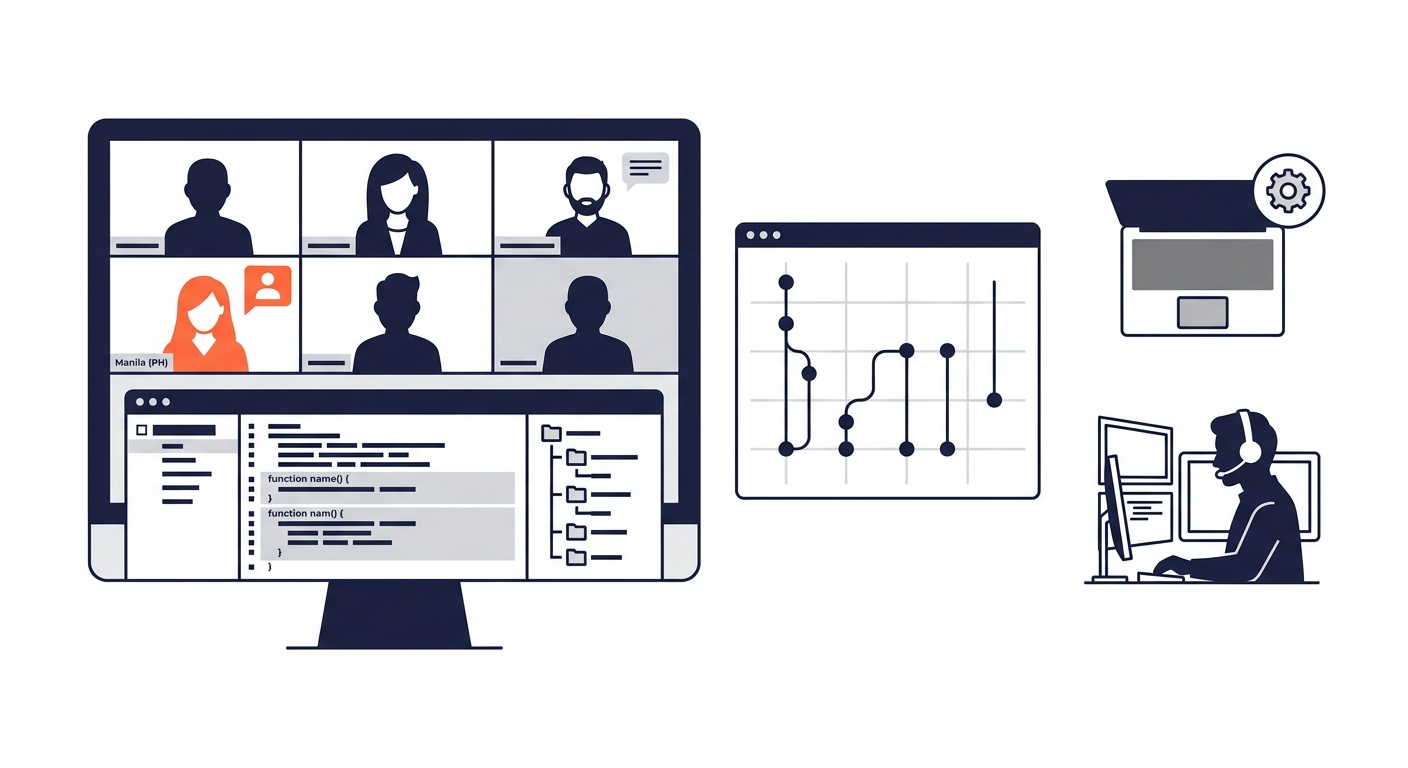
The guide emphasizes that decisions in software development “are not resolved well through documents passed back and forth” but through product conversations, code reviews, and same-week adjustments. Square Codex’s Costa Rica location provides time-zone overlap with North American clients, which the company positions as an operational advantage over fully offshore arrangements.
The publication does not disclose specific pricing, timeline commitments, or client case studies. It describes staff augmentation value as appearing “when the work goes beyond closing tickets,” citing technical debt reduction, API improvements, and security risk identification as contributions beyond feature delivery.
For US and Australian agencies evaluating outsourced mobile app development or web development capacity, the staff-augmentation-versus-project-outsourcing distinction maps to the broader question of how much architectural control to retain versus delegate. The Square Codex positioning—external engineers working inside internal workflows—resembles the dedicated-team models that Indian and Pakistani dev agencies have published guides on in recent months, including India-based providers pegging offshore ramp-up at 8–12 weeks versus 4–6 months for in-house hires.
Integrated-Engineer Model Competes With VA-First Alternatives
The guide does not address virtual assistant (VA) hiring as a capacity model, focusing exclusively on senior engineering roles across eight specializations. That focus positions Square Codex toward mid-market software companies rather than agencies or ecommerce operators who might start capacity expansion with lower-tier administrative or marketing support.
The “integrated engineers preserve control” argument assumes client organizations already have internal technical leadership capable of directing external contributors. For agencies without in-house engineering managers, the staff augmentation model may introduce coordination overhead rather than reduce it, particularly if the agency lacks structured workflows for code review, sprint planning, or technical documentation.
The publication’s emphasis on “daily integration” and “same repositories” implies clients must already operate version control, continuous integration, and code review practices that external engineers can join. Companies still running informal development processes may find the model requires internal workflow standardization before external capacity delivers value.
Context and Outlook
The Square Codex guide arrives as nearshore development providers compete for North American clients evaluating offshore alternatives. Costa Rica’s geographic and time-zone proximity to the US positions nearshore firms as operationally closer than Philippine, Indian, or Pakistani providers, though labor cost differentials favor Asian markets for clients optimizing purely on FTE economics.
For agencies and SMBs evaluating AI-augmented Philippine development teams or India-based dedicated teams, the control-preservation argument matters most when product architecture decisions carry long-term consequences. Staff augmentation keeps decision authority internal, but that advantage assumes the client organization already has the technical leadership to exercise that authority effectively. Agencies without senior engineering capacity in-house may find project outsourcing with clear deliverables simpler to manage than integrating external engineers into workflows they don’t yet have.
The nearshore positioning—emphasizing same-day collaboration and real-time technical conversations—directly challenges the asynchronous handoff models that offshore providers often navigate through structured briefs and documentation. For operators who value synchronous collaboration over cost arbitrage, nearshore arrangements trade higher per-FTE cost for lower coordination friction, assuming time-zone overlap actually translates to faster decision cycles rather than simply stretching the same work across more expensive hours.