
Creator campaigns managed by Philippine outsourcing teams produce higher engagement when those teams spend two to four weeks on audience listening before any content brief gets written. The model inverts the standard outsourcing workflow, where a US client ships a brief and expects deliverables within days, and replaces it with a structured intake phase built around social listening data, UGC performance benchmarks, and creator-audience alignment scoring.
TL;DR: Creator marketing outsourcing works better when Philippine teams run audience insight strategies before producing content. The listening-first model adds two to four weeks upfront but cuts wasted creator spend by filtering out mismatched influencers early. UGC management delegation succeeds at higher rates when the team managing creators already knows what the audience responds to.
Why Creator Campaigns Collapse Without Audience Data
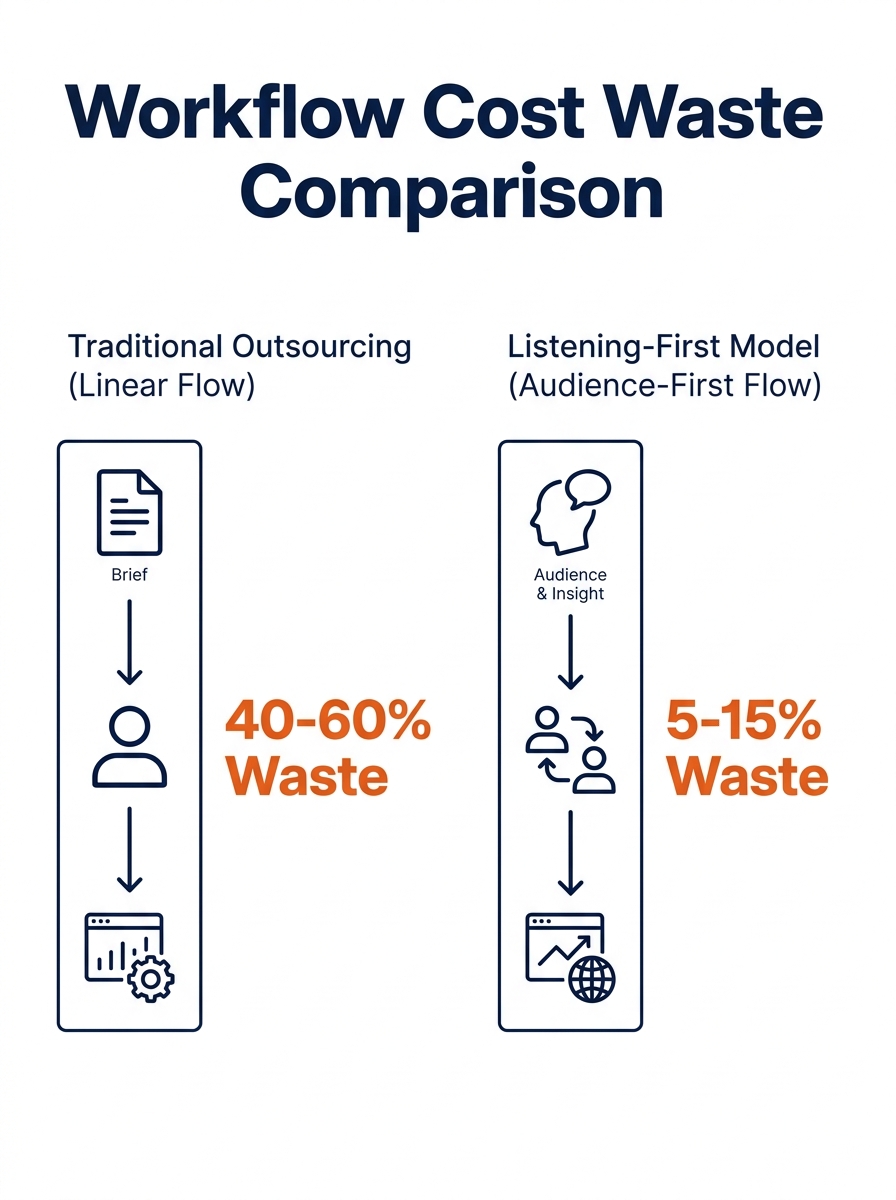
Brands that skip audience analysis before launching influencer or UGC campaigns waste between 30% and 60% of their creator budgets on content that generates impressions but no conversions. The failure point is predictable: someone picks creators based on follower counts, ships a brief that describes the product instead of the audience, and measures success by reach instead of action.
inBeat Agency’s analysis of UGC statistics makes the correction explicit. Their recommendation: establish measurable KPIs like engagement rate, conversion rate, or number of UGC submissions, and analyze your target demographic first. What motivates them? Which platforms do they frequent? These questions sound basic, but most outsourced creator campaigns never answer them before the first brief goes out.
The gap is structural. When you outsource creator marketing to any team without giving them audience context, you’re asking them to guess. And guessing at scale, across 10 or 20 creators per month, compounds errors fast. A single misaligned creator brief might cost $500 to $2,000 in fees and production time. Multiply that across a quarter and you’re looking at $6,000 to $24,000 in spend that moved zero needle.
Philippine influencer campaign teams that have adopted listening-first workflows report catching misalignment before contracts get signed. That’s the whole value: the filter happens earlier.
The Listening Layer Philippine Teams Build Before Content Ships
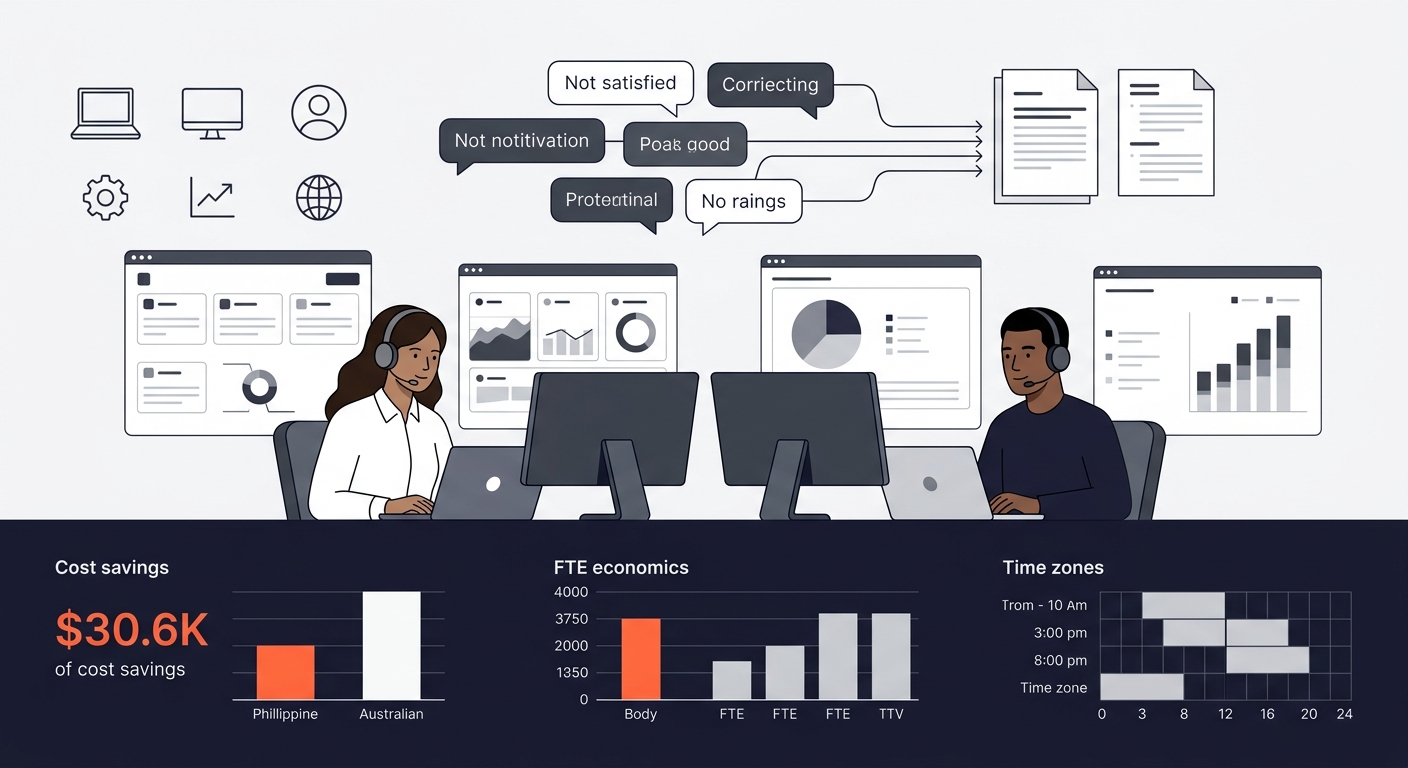
The listening phase has three components, and Philippine teams are well-positioned to run all three because of cost structures that make dedicated analyst hours affordable at $8 to $15 per hour versus $45 to $85 per hour for equivalent US roles.
Component one: social listening reports. EBSCO’s research on social listening describes the core challenge as separating meaningful comments from noise. Corporations often outsource this work and receive analytical reports after listening is complete. Philippine teams running social listening across platforms like TikTok, Instagram, Reddit, and Facebook groups can produce weekly sentiment and trend reports for $1,200 to $2,400 per month, covering brand mentions, competitor creator campaigns, and audience language patterns.
Component two: audience insight strategies built from engagement data. This means pulling actual engagement metrics from past campaigns or competitor content. What caption styles get saves versus shares? Which video lengths hold attention past the 3-second mark? What creator formats (talking head, tutorial, lifestyle, unboxing) match the audience’s consumption patterns? A Philippine analyst spending 20 hours per week on this work generates a dataset that makes every subsequent creator brief sharper.
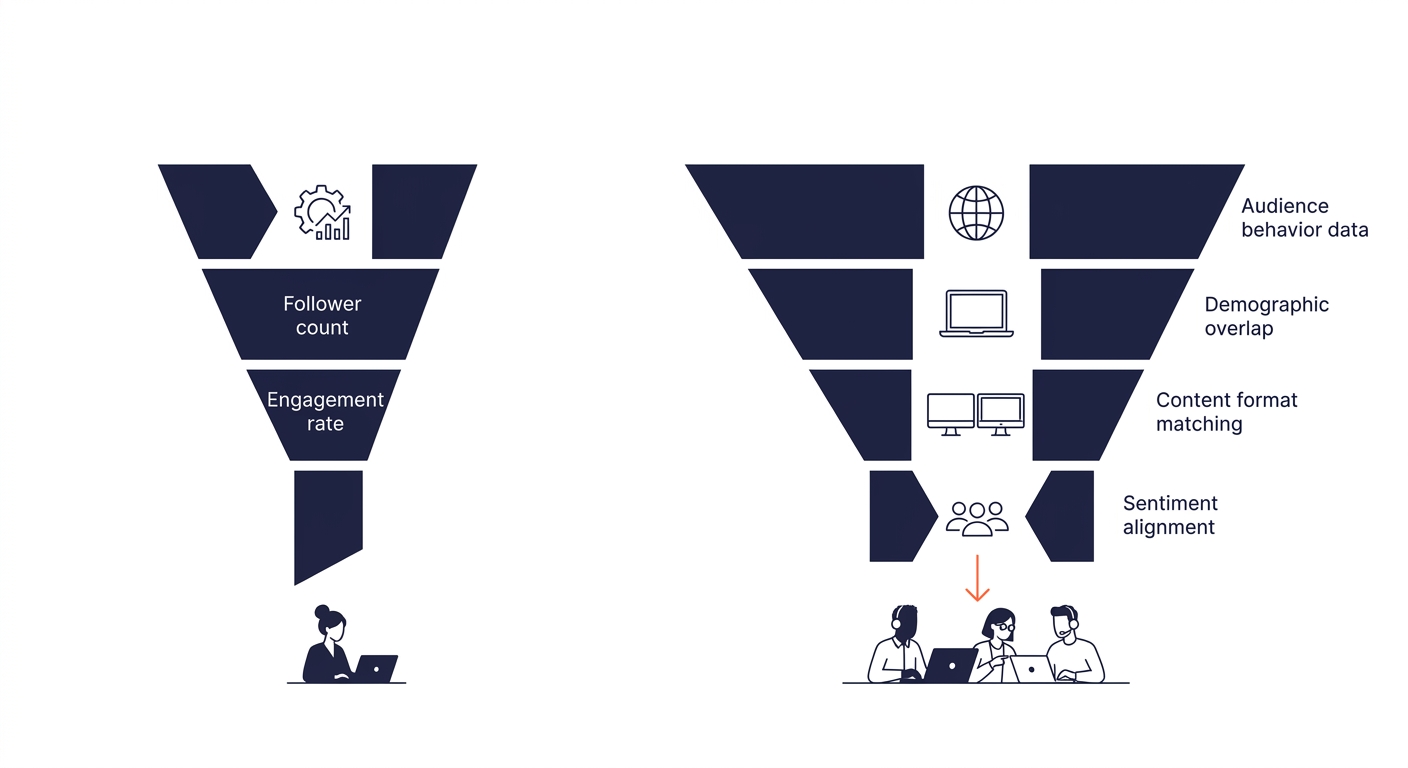
Component three: creator-audience fit scoring. Before any outreach happens, the team scores potential creators against the audience profile. This isn’t follower count or even engagement rate alone. It’s overlap between the creator’s actual audience demographics and the brand’s target buyer. Agencies like Blogapalooza, the Philippines’ premier influencer marketing company, have built their model around facilitating business-influencer collaborations that create authentic conversations. The word “authentic” gets overused, but in practice it means the creator’s followers actually look like the brand’s customers.
When you structure your outsourced marketing team with clear delegation order, the listening layer slots in before creative production, not as an afterthought.
How UGC Management Delegation Changes When Insight Leads
UGC management delegation is where most brands first experiment with creator marketing outsourcing. The typical handoff looks like this: brand sends product to creators, creators make content, someone on the team collects the assets, and the brand repurposes them for ads or organic posts. It’s a logistics operation.
But UGC campaigns measured against engagement benchmarks tell a different story about what actually works. Bazaarvoice’s UGC guide emphasizes that the cycle doesn’t end with distribution. You monitor data to see which pieces drive engagement and sales. If a specific type of review or photo style converts better, those insights refine guidelines for the next campaign cycle.
Philippine teams running UGC management delegation with a listening-first approach flip the sequence. Instead of collecting whatever creators produce and hoping some of it converts, they feed audience insight data into the creator brief before production starts. The brief specifies not just the product features to highlight but the content format, tone, and hook style that the audience data says performs.
This changes the economics. When FasterCapital’s analysis of UGC engagement metrics describes engagement metrics as “multifaceted” and varying by platform, content type, and campaign goals, they’re pointing at the same problem. A team that hasn’t done the listening work treats all UGC the same. A team that has can tell you that 15-second unboxing clips convert at 2.3x the rate of 60-second tutorials for a specific audience segment on TikTok versus Instagram Reels.
Creator marketing outsourcing fails when the outsourced team knows the product but doesn’t know the audience. The listening layer fixes this by making audience data the first deliverable, not the last measurement.
Top Philippine BPO firms maintain average specialist tenure of 18 or more months when they invest in structured onboarding, according to Outsourced.ph’s recruitment data. That retention matters here because listening-first workflows improve with accumulated audience knowledge. A team member who has been studying your audience for 12 months spots patterns that a new hire can’t.
Matching Creator Selection to Audience Behavior
The creator-first model’s biggest departure from conventional outsourcing is in how creators get selected. Traditional models use databases filtered by category, follower count, and engagement rate. Listening-first models add behavioral matching.
Here’s what that looks like in practice. Your Philippine team runs four weeks of social listening and identifies that your target audience, say US women aged 28 to 42 buying clean beauty products, engages most with creators who use humor in their hooks, show the product in real-life morning routines (not studio setups), and post between 6 AM and 8 AM EST. That behavioral profile eliminates 70% of creators who would have passed a follower-count filter.
Agencies like LOKAL in the Philippines facilitate communication between brands and creators while ensuring creative freedom meets campaign objectives. When the behavioral profile is clear, that communication gets faster and the creative guardrails get tighter without being restrictive. The creator knows exactly what the audience responds to before they shoot.
| Selection Criteria | Traditional Model | Listening-First Model |
|---|---|---|
| Follower count threshold | Primary filter | Secondary filter |
| Engagement rate | Primary filter | Weighted by audience overlap |
| Audience demographic match | Rarely checked | Required before outreach |
| Content format fit | Creator’s default style | Matched to audience consumption data |
| Posting time alignment | Not considered | Matched to audience active hours |
| Tone and hook style | Left to creator | Guided by sentiment analysis |
| Cost per engagement | Estimated after campaign | Projected before contract |
Huskee Digital’s team in the Philippines focuses on short-form and social-first content centered around TikTok, live selling, and paid social platforms. Their work is designed to perform within platform rules. When you pair that platform-native execution skill with pre-campaign audience data, the content the team produces starts from a position of informed creative direction rather than generic product promotion.
The Cost Structure That Makes This Model Viable
Running a two-to-four-week listening phase before creator campaigns sounds expensive until you compare it to the alternative. A US-based social listening analyst costs $4,500 to $7,500 per month at full-time rates. A Philippine specialist doing the same work runs $1,400 to $2,800 per month. That’s the math that makes audience insight strategies economically viable for SMBs and mid-market agencies that would otherwise skip the research entirely.
The downstream savings compound. Brands that filter creators through audience data before signing contracts report lower per-campaign creator costs because they’re not paying for misaligned content that needs to be scrapped or re-shot. When WebFX recommends starting outsourced marketing with SEO, PPC, or content marketing, they’re pointing at services where ROI tracking is mature. Creator marketing outsourcing hasn’t had the same measurement discipline, but the listening-first model imports that rigor by making data the starting point.
If you’re already running a capability-stacked Philippine marketing team handling SEO, paid media, and content production, adding a listening layer to creator campaigns means reallocating 15 to 20 hours per week of analyst time, not hiring an entirely new role. The same person pulling keyword data and paid media reports can run social listening queries and build audience profiles for creator briefs.
And when the workflow integration between your systems and your Philippine team is already aligned, the listening data flows into existing dashboards rather than creating a new reporting silo.
Tip: Before delegating UGC management, ask your Philippine team to deliver a two-week audience listening report covering platform-specific engagement patterns, competitor creator performance, and audience demographic overlap data. Use that report to write creator briefs instead of writing briefs from product specs alone.
What Still Isn’t Settled
The listening-first creator model has real limitations that haven’t been resolved. The biggest: how long should the listening phase run before diminishing returns set in? Two weeks produces directional data. Four weeks produces statistically meaningful patterns. Eight weeks starts to feel like stalling, and the market moves fast enough that early data can become stale before it gets acted on.
There’s also an open question about ownership of listening data. When a Philippine team builds an audience insight database over 12 months of social listening, who owns that dataset if the client relationship ends? Most outsourcing contracts don’t address this, and it’s going to become a friction point as the data becomes more valuable than the content it informs.
Creator marketing outsourcing is growing faster than the measurement frameworks can keep up. The listening-first model gives Philippine teams a structural advantage because the economics let them do the research that US teams price out of smaller budgets. Whether that advantage holds depends on how quickly the measurement standards mature and whether the listening phase can be compressed without losing the signal that makes it valuable.