
The Hidden Cost of Doing Everything In-House
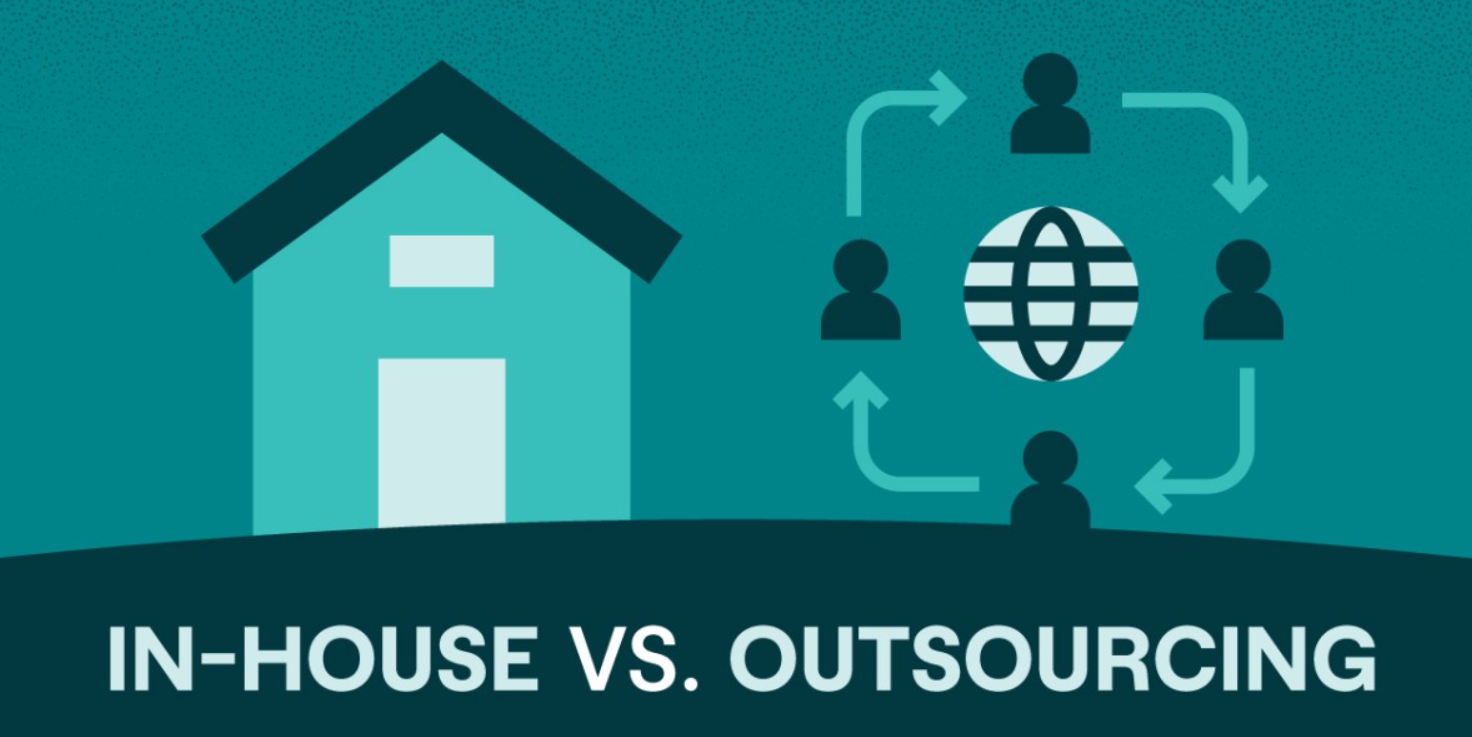
Many business leaders assume that keeping every function internal gives them greater control. While control is important, it often comes at a significant cost that isn’t reflected on a balance sheet.
Building internal teams for every business function requires recruitment, onboarding, training, management oversight, software investments, office resources, and ongoing professional development. These expenses accumulate over time, creating operational complexity that can slow decision-making and hinder growth.
For example, a software company may decide to build an internal cybersecurity department. While this provides direct control, it also means competing for highly sought-after security professionals, investing in continuous certification programs, purchasing specialized monitoring tools, and staying current with evolving threats. A specialized cybersecurity partner, however, already possesses the expertise, infrastructure, and processes required to deliver high-level protection from day one.
The question is not whether an organization can build a capability internally. Most companies can. The real question is whether doing so represents the best use of leadership attention, financial resources, and organizational energy.
Every hour executives spend managing non-core functions is an hour not spent strengthening customer relationships, improving products, exploring new markets, or developing innovative business strategies. Strategic outsourcing allows organizations to redirect their focus toward activities that create lasting competitive advantage.
Why Expertise Matters More Than Labor

One of the most common misconceptions about outsourcing is that companies are simply purchasing labor. In reality, the most valuable outsourcing relationships provide expertise, experience, and intellectual capital.
There’s a substantial difference between hiring someone to complete a task and partnering with specialists who have solved similar challenges hundreds or even thousands of times before.
Consider digital marketing. A company could hire a generalist marketer to manage SEO, paid advertising, analytics, content creation, and conversion optimization. Alternatively, they could partner with an agency whose team includes dedicated SEO strategists, PPC specialists, data analysts, technical developers, and content experts.
While the agency may appear more expensive on paper, the value delivered is often significantly greater. The organization gains access to an entire ecosystem of expertise without bearing the cost of building and maintaining that team internally.
The same principle applies across industries. Outsourcing providers often work with dozens or hundreds of clients, giving them exposure to trends, technologies, and best practices that individual organizations may not encounter for years. Their experience becomes your advantage.
Speed as a Competitive Advantage

In today’s business environment, speed often determines success.
Markets evolve quickly. Customer expectations change rapidly. New technologies emerge constantly. Organizations that move slowly risk losing opportunities to more agile competitors.
Strategic outsourcing can dramatically accelerate execution.
Instead of spending months recruiting specialized talent, companies can immediately access experienced teams. Rather than investing years developing a new capability internally, they can partner with experts who already possess the necessary knowledge and infrastructure.
Imagine an e-commerce company preparing for a major holiday season. Hiring, training, and managing an expanded customer support team internally could take months. An outsourcing partner with established processes and scalable resources can often expand support operations within weeks or even days.
This ability to move quickly creates a significant competitive advantage. Businesses can launch products faster, enter markets sooner, respond to customer demands more effectively, and capitalize on opportunities before competitors do.
In many cases, the value of speed far exceeds any direct cost savings generated through outsourcing.
Innovation Through External Perspectives

Another overlooked benefit of outsourcing is access to fresh perspectives.
Internal teams often develop organizational blind spots over time. Processes become familiar. Assumptions go unchallenged. Innovation can slow as teams become accustomed to doing things a certain way.
External partners bring different experiences, methodologies, and viewpoints. Because they work across industries and organizations, they frequently identify opportunities that internal teams may overlook.
A logistics provider serving multiple industries may introduce process improvements that dramatically increase efficiency. A software development partner may recommend technologies that reduce technical debt. A customer service provider may share best practices that improve customer satisfaction scores.
These external perspectives can become powerful drivers of innovation.
Organizations that embrace collaboration with outsourcing partners often discover new ways to improve operations, enhance customer experiences, and create additional sources of value.
Building an Outsourcing Strategy Around Business Outcomes
The most successful outsourcing initiatives begin with business objectives, not operational tasks.
Instead of asking:
“What work can we outsource?”
High-performing organizations ask:
“What outcomes are we trying to achieve?”
This distinction is critical.
A company focused solely on tasks might outsource customer support because it’s expensive. A company focused on outcomes might outsource customer support because it wants to improve customer satisfaction, reduce response times, and provide 24/7 service.
The first approach prioritizes cost.
The second prioritizes results.
When evaluating outsourcing opportunities, leaders should identify the outcomes that matter most, such as:
- Faster product development
- Increased revenue growth
- Improved customer retention
- Better service quality
- Enhanced operational efficiency
- Greater innovation capacity
- Reduced business risk
- Improved scalability
Once these objectives are clearly defined, outsourcing decisions become significantly more strategic and measurable.
The Best Outsourcing Relationships Create Shared Success
Traditional outsourcing models often create opposing incentives.
The client wants maximum service at the lowest possible cost.
The vendor wants to maximize profitability while minimizing effort.
This arrangement naturally creates tension.
Value-driven outsourcing takes a different approach.
The strongest partnerships align incentives so that both parties benefit from success.
For example, a marketing agency may be rewarded based on lead generation performance. A software development partner may receive bonuses tied to project milestones and business outcomes. A customer support provider may be measured against customer satisfaction and retention metrics.
When incentives are aligned, both organizations become invested in achieving meaningful results rather than simply fulfilling contractual obligations.
This transforms outsourcing from a vendor relationship into a collaborative growth partnership.
Outsourcing in the Age of AI and Automation
The future of outsourcing is also evolving alongside artificial intelligence and automation technologies.
Routine, repetitive work is increasingly being automated. Data entry, basic customer support inquiries, scheduling tasks, and administrative processes can now be handled efficiently by AI-powered systems.
As a result, the value of outsourcing is shifting even further away from labor arbitrage and toward specialized expertise.
Organizations no longer outsource simply because someone can perform a task more cheaply. They outsource because partners provide strategic insight, advanced technical skills, industry knowledge, and the ability to manage increasingly complex business challenges.
The outsourcing providers that thrive in the future will be those that combine human expertise with technology-driven efficiency. Likewise, the businesses that benefit most from outsourcing will be those that view their partners as sources of innovation and strategic value rather than merely suppliers of labor.
Conclusion: Outsourcing as a Growth Strategy
The companies that gain the greatest advantage from outsourcing understand a simple truth: reducing costs is not the goal—creating value is.
While cost savings may be a welcome benefit, they should never be the primary reason for outsourcing. Organizations that focus exclusively on lower expenses often sacrifice quality, innovation, and long-term growth potential.
By contrast, companies that use outsourcing strategically gain access to specialized expertise, accelerate execution, improve scalability, reduce risk, and free their internal teams to focus on what they do best.
In a competitive business environment, these advantages compound over time.
The future belongs to organizations that recognize outsourcing not as a way to spend less, but as a way to achieve more. When approached strategically, outsourcing becomes one of the most powerful tools for building agility, driving innovation, and creating sustainable competitive advantage.
Ultimately, the question is no longer whether outsourcing can save money. The more important question is how much value it can create for your business.