
AI-driven SEO outsourcing costs less per task in 2026 and produces worse results per dollar spent. The paradox traces directly to Google’s May 19 I/O announcements and the collapse of the search paradigm that offshore SEO teams were trained on.
TL;DR: AI tools cut routine SEO labor 20–30%, but Google’s shift to AI Overviews (now covering 48% of queries) means the work that actually moves the needle requires *more* strategic hours, not fewer. Your 2026 SEO budget should be restructured around citation-earning deliverables, not keyword-volume output.
The Efficiency Gains Are Real, and They Don’t Matter the Way You Think
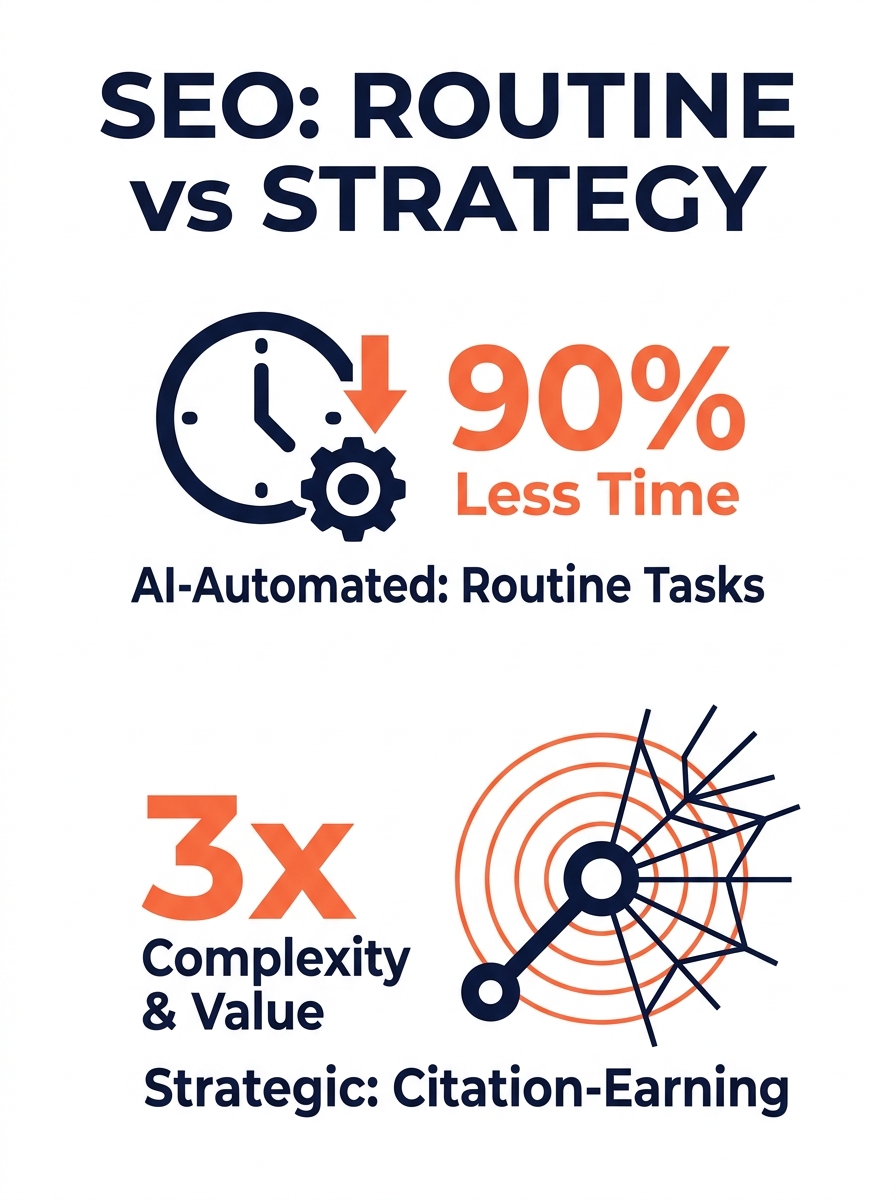
AI SEO tools have genuinely compressed execution time. Content briefs, technical audits, keyword clustering, and backlink monitoring that consumed 15-20 hours per month now take 5-8 hours with AI assistance. That amounts to a 20-30% cost reduction on the labor side, according to agency data tracked through early 2026. Monthly AI SEO pricing ranges from $2,000 to $15,000 depending on scope and competition level.
But the tasks that got cheaper are the tasks that matter least in post-I/O search. Google’s AI Overviews now appear on 48% of all queries, up from 34.5% in December 2025. When an AI Overview fires, the #1 organic position loses roughly 18% of its clicks. The keyword rankings your offshore team spent those 15-20 hours chasing are worth less every month.
The work that actually drives traffic now requires earning citations inside AI Overviews, building entity authority, and producing first-party data that Gemini 3.5 Flash pulls from. This work is strategic, slow, and human-intensive. The same AI tools that sped up keyword research can’t compress it. If you’re working with an SEO outsourcing partner still billing primarily for keyword-position deliverables, you’re paying for speed on tasks where speed no longer translates to revenue.
Google I/O Changed the KPI, and the Budget Math Changed With It
On May 19, Google made AI Mode the default search experience, powered by Gemini 3.5 Flash and reaching one billion monthly users. Matt Thompson, VP of partnerships at Scrunch, told TechCrunch’s Equity podcast this week that your SEO strategy “is optimized for a search engine that no longer exists.”
The new interface accepts multimodal inputs: images, documents, Chrome tabs. Short-tail keyword targeting, the bread-and-butter deliverable of outsourced SEO for a decade, doesn’t map to conversational, context-rich queries that pull from a user’s Gmail, Photos, and browsing history. Personal Intelligence is live in nearly 200 countries and 98 languages. Uniform ranking reports no longer reflect what individual users actually see.
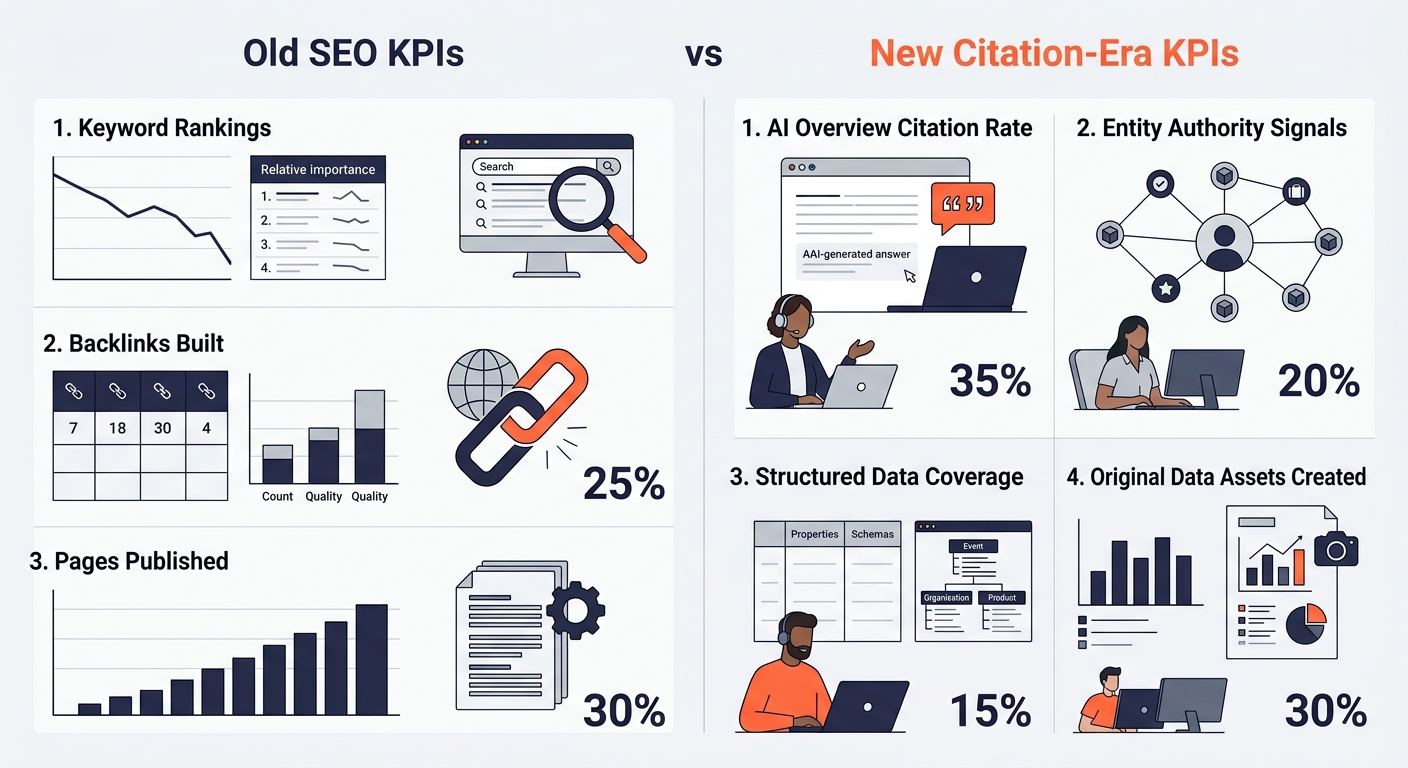
The new primary KPI is citation rate inside AI Overviews. Sites cited within an AI Overview see 35% more organic clicks and 91% more paid clicks than non-cited competitors on the same queries. Search Engine Journal’s May 23 analysis frames it bluntly: the risk to SEO is economic, not technical, and both sides of the debate are getting it wrong.
Sites cited inside an AI Overview see 35% more organic clicks and 91% more paid clicks than non-cited competitors. Citation rate is the new ranking position.
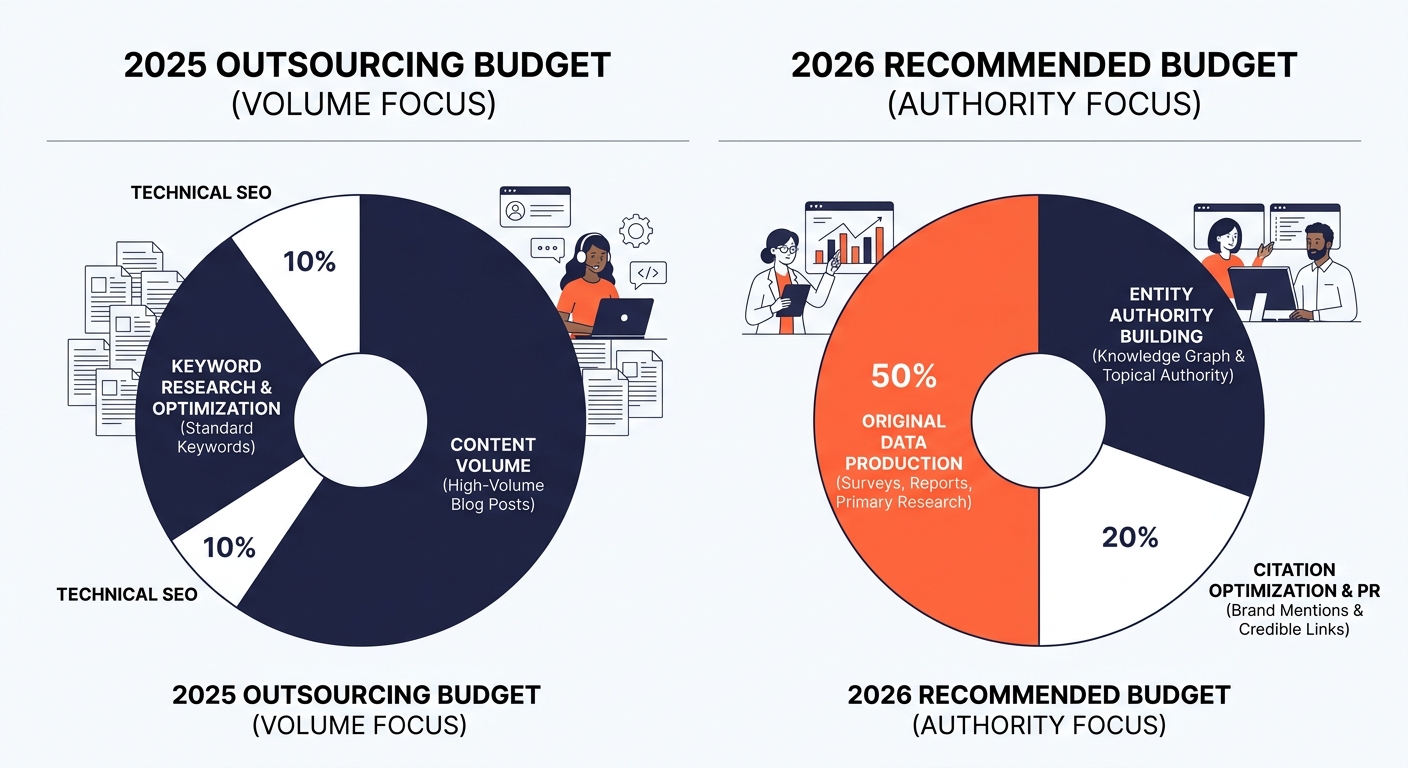
This changes what you should demand from any outsourcing search visibility automation arrangement. An offshore provider billing $3,000/month for 200 keyword-position reports and 8 blog posts is selling a service designed for 2023 search. The deliverables that earn AI Overview citations require original research, expert commentary with proper entity markup, and structured data that Gemini can parse. These cost more per unit and demand editorial judgment that AI tools can’t replicate.
Digital marketing outsourcing is growing at an 11.4% CAGR from 2025 to 2034, but the spending growth is flowing toward the wrong deliverable categories. Companies are buying more of the same output at lower unit costs, when they should be buying fundamentally different output.
The Pricing Model Mismatch Is Costing Both Sides
Hourly billing, the standard model for offshore SEO teams, rewards the wrong behavior in an AI-compressed workflow. When AI tools cut a 15-hour monthly workload to 6 hours, an hourly-rate team earns less. The incentive is to either pad hours (bad for you) or accept lower revenue (bad for them, and unsustainable). Neither outcome produces the citation-earning content strategy you need.
The Philippine call center industry already started solving this problem in adjacent verticals. As we covered when looking at outcome-based pricing models replacing hourly billing across BPO operations, the same structural pressure from AI-compressed handle times applies directly to SEO services. The parallel is exact: AI makes the task faster, which breaks the hourly model, which forces a shift to outcome measurement.
What does outcome-based SEO pricing look like in practice? Pay for AI Overview citations earned, not keywords ranked. Pay for original data assets published, not blog posts counted. Pay for entity authority metrics (Knowledge Panel presence, structured data coverage, citation frequency in generative search), not monthly traffic deltas that AI Overviews are cannibalizing.
Warning: Google’s March 27 through April 8 core update explicitly filtered pages synthesizing existing information without original analysis or first-hand experience. If your [outsourced content production](/content-outsourcing/) pipeline still prioritizes volume over originality, those pages are now actively hurting your domain.
The $2,000-$15,000/month range for AI SEO services is wide enough to accommodate this shift. The question is whether your provider prices against the old deliverable set (keyword positions, backlinks built, pages published) or the new one (citations earned, entity signals strengthened, original data assets created). And if you’re evaluating 2026 digital marketing outsourcing costs against benchmarks from eighteen months ago, you’re comparing different products entirely.
Victor Karpenko, founder and CEO of SeoProfy, told TechFundingNews this week that AI transformation inside agencies is real but uneven. The agencies thriving aren’t the ones that cut headcount with AI tools. They’re the ones that reallocated those efficiency gains into higher-value strategic work.
Meanwhile, Forbes reported just two days ago that Microsoft and Uber both blew past their 2026 AI budgets within months. Token-based pricing on AI tools creates runaway costs when usage isn’t governed. The same dynamic applies to AI SEO tools in offshore teams’ hands: the tools are cheap until they aren’t, and the cost of the tools themselves is a distraction from the larger question of whether the output those tools produce still earns visibility in the new search landscape.
What the Other Side Gets Right
The counter-argument deserves honest treatment. AI-powered outsourcing has genuinely reduced costs for high-volume, execution-heavy SEO work. If you’re a local services company needing 50 location pages optimized, AI-assisted offshore teams do that faster and cheaper than at any previous point. The MEGA AI 2026 guide recommends “multiple AI tools managed by an in-house SEO team, with AI handling execution and humans handling strategy.” That model works when the work is primarily execution.
For e-commerce brands managing thousands of product pages, AI SEO tools on an offshore team’s desk can analyze competitor weaknesses, optimize content for search intent, and automate technical improvements at a scale that manual approaches simply cannot match. A managed outsourced digital marketing operation with proper AI tooling can publish 3x the volume at the same cost. For some business models, volume remains the game.
This argument holds for any business whose target queries don’t trigger AI Overviews. Plenty of long-tail, transactional, and local queries still serve traditional blue links. If your revenue comes from those queries, the efficiency gains from AI-driven SEO outsourcing translate directly to lower costs and better margins. The economics discussed in the $2.7 billion GTM-AI funding wave confirm that real money is flowing into AI-augmented execution for good reason.
The argument breaks for companies competing on queries where AI Overviews appear. And at 48% of all queries and climbing, that’s a large and growing share of the search landscape. For those queries, the volume game is secondary to the citation game, and the citation game rewards depth, originality, and entity authority over speed and scale.
Where This Leaves the 2026 Budget Conversation
The uncomfortable part for anyone finalizing 2026 digital marketing outsourcing costs: you likely need to spend more on SEO, not less, despite efficiency gains from AI tools. The savings from automation should be redirected into different deliverables, not returned to the CFO.
Routine SEO execution costs 20-30% less than it did two years ago. Redirect those savings into the strategic work that earns AI Overview citations: original data production, expert-sourced content with proper entity markup, structured data implementation, and citation-earning outreach. Ask your offshore SEO provider what percentage of your current monthly hours go toward execution tasks that AI has made 3x faster, and what percentage goes toward the original data and entity-authority work that actually earns citations.
If those numbers are skewed heavily toward execution, your retainer is funding a service designed for a search engine that Google replaced nine days ago. The companies that recognized this shift and restructured by Q3 will own the citation slots. Everyone else will be buying discounted keyword reports for a search results page that fewer and fewer users ever see.