
SLA-defined outsourcing contracts produce 28% higher client satisfaction than handshake agreements, according to a 2024 Marketing Innovation Institute report. Philippine digital marketing teams that win the first 90 days follow a documented sequence: pre-launch alignment documents, a brand immersion sprint, controlled campaign launches with clear KPIs, and a day-90 data review that gives leadership actual ROI evidence.
Before Day One: The Documents That Prevent Month-Three Blowups
The outsourced marketing brief framework that separates productive engagements from quiet failures contains three separate documents, and most clients only prepare one of them. Brand guides get sent over. Campaign briefs sometimes get written. But the third document, what some teams call a Signal Map, almost never exists at kickoff.
A Signal Map is a shared reference that defines success metrics with numeric thresholds, escalation triggers that tell both sides when to raise a flag, and explicit boundaries around what the offshore team can and cannot decide independently. As we’ve covered in our breakdown of why outsourced marketing fails before day one, this second layer of marketing expectations alignment is where engagements quietly go wrong without anyone noticing until month two or three.
The practical version looks like this: before any Philippine marketing team onboarding begins, you sit down and write out what “good” means in numbers. That might be cost-per-acquisition under $45 for paid social, 15 marketing-qualified leads per week from content, or a 3.2x return on ad spend for Google campaigns. Without these thresholds documented, every weekly check-in becomes a subjective conversation about whether things “feel” like they’re working.
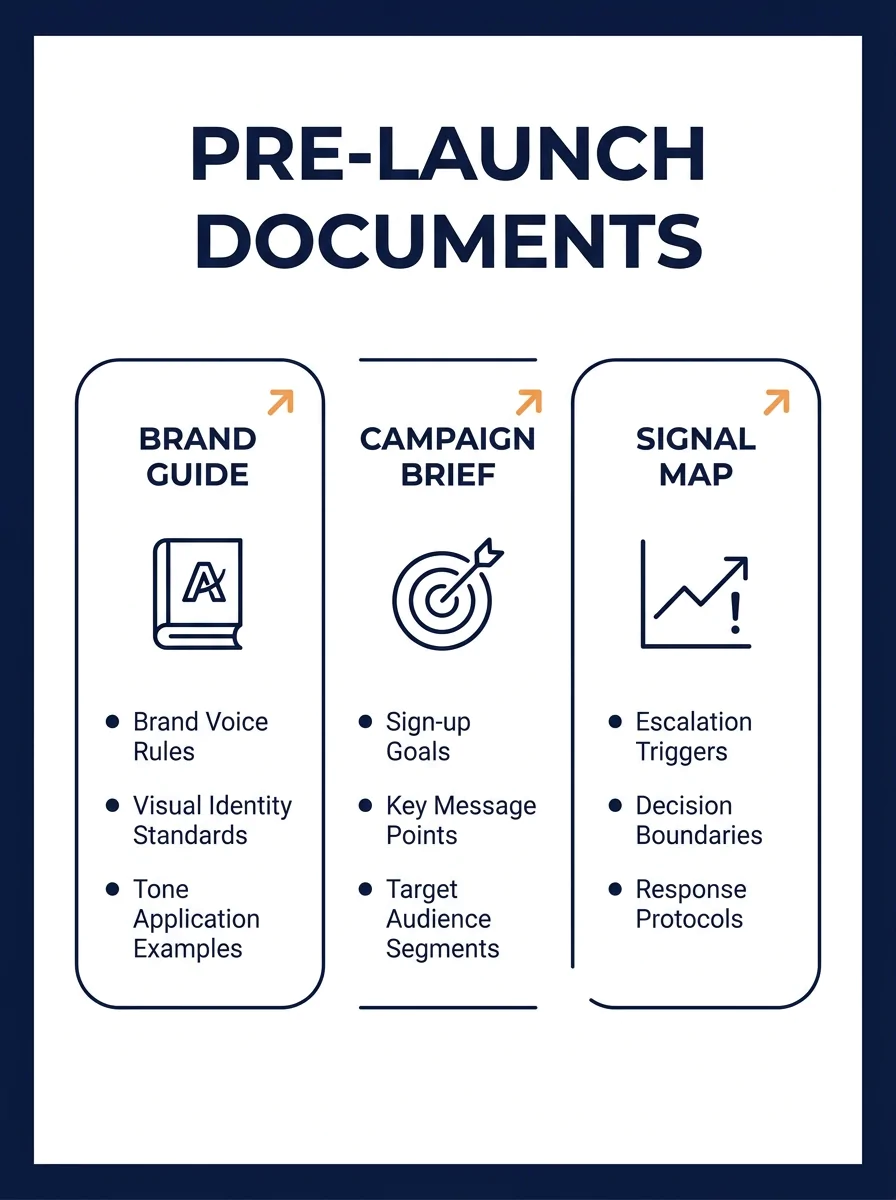
One agency owner whose production execution runs through Philippine staff put it bluntly in a Kineticstaff industry profile: “Invest seriously in the handoff documentation. Every client has a brand guide and a creative brief, but we also have a ‘production playbook’ for each client that covers the unwritten things—the colours they actually use versus what’s in the brand guide, the phrases they hate, the competitors they watch.”
That production playbook sits alongside the Signal Map and the campaign brief. Three documents. If you’re only handing over one, you’re building digital marketing outsourcing expectations on a foundation that will shift under pressure.
Week One: The Brand Immersion Sprint
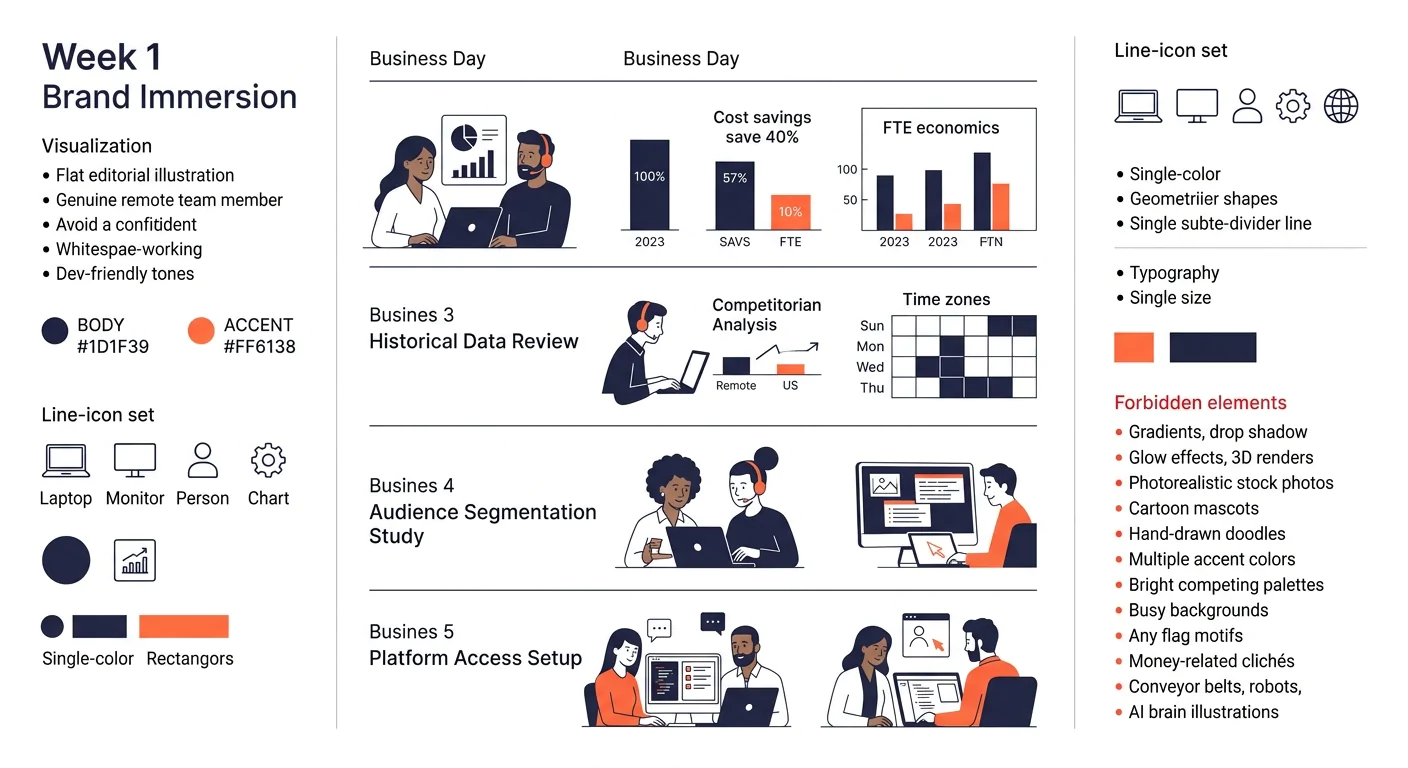
Philippine teams working in pod structures compress the standard ramp-up to 4–6 weeks through rapid A/B testing and established onboarding frameworks. But that compressed timeline only holds if the first week is treated as a focused immersion sprint, not an administrative onboarding exercise.
The administrative side has gotten faster. A January 2026 Manila Bulletin report on zero-touch onboarding workflows documented how digital account opening and paperless HR flows have eliminated the old chain of branch visits, manual form collection, and delayed payroll setup. What used to eat three to five days of a new hire’s first week now takes hours. That reclaimed time matters because it goes directly into brand study.
During week one, a properly structured immersion sprint covers four things: historical campaign performance data (what’s been run, what worked, what tanked), competitor positioning (who you’re fighting for attention and what they’re spending), audience segmentation documents, and access to every active platform with view-level permissions. The team isn’t making decisions yet. They’re reading the room.
The distinction between strategic work you keep in-house and tactical execution you hand off gets stress-tested right here. If your offshore team needs deep institutional knowledge or the authority to set direction, 90 days won’t close that gap. But if you’re outsourcing execution against a defined strategy, this first-week immersion gives them enough context to operate with judgment, not just follow task lists.
Weeks Two Through Four: Controlled Launches and First Real Numbers
This is where BPO partnership alignment either holds or cracks. The team has absorbed your brand context. They’ve reviewed what’s been tried. They launch their first controlled campaigns between days 8 and 14, deliberately scoped small so the data comes in fast and the cost of being wrong stays low.
The playbook from The Marketing Blender’s 90-day outsourced CMO framework maps this phase as “Refine and Optimize,” where early campaign data gets used to tweak strategies and tactics in real time. For Philippine teams running paid media, this means daily budget adjustments, ad copy variants cycling through approval, and conversion tracking validated against your CRM within the first 10 days of spend.
If you’ve engaged outsourced social media management, the weeks-two-through-four window is when your team establishes posting cadences, tests content formats against engagement benchmarks, and identifies which platform-audience combinations actually drive traffic versus vanity metrics. The Signal Map you built before day one becomes the reference document: if engagement rates are above threshold but click-throughs are below, the team knows to adjust creative without waiting for a weekly call to ask permission.
The Signal Map you built before day one becomes the reference document that tells the team when to adjust without waiting for a weekly call to ask permission.
Setting clear overlapping hours and holding weekly check-ins are baseline requirements, as Offshore PH’s industry guide emphasizes. But the real coordination challenge during weeks two through four isn’t scheduling. It’s the async decision tax that accumulates when approval workflows aren’t mapped to time zones. A Philippine team submitting ad copy at 5 PM Manila time that needs US approval before it can go live loses 16 hours if you haven’t designated an approval window. Multiply that across 20 creative assets in a month and you’ve lost entire campaign cycles to waiting.
Weeks Five Through Eight: The Compounding Effect of Testing Velocity
By week five, the engagement shifts from “are we set up correctly” to “are we learning fast enough.” Philippine teams running in pod structures with dedicated channel specialists have an advantage here: a four-person team (paid media specialist, content writer, SEO analyst, project coordinator) costs roughly what one senior US marketing hire costs, according to role-specific offshore benchmarking data. That means you can run parallel tests across channels that a single in-house hire would have to sequence over months.
The 79% of top-performing teams now using AI for multi-channel marketing execution makes this phase look different than it did even 18 months ago. Daily specialist work has shifted from manual bid adjustments to interpreting AI recommendations and making judgment calls, particularly in Gemini-powered Google Ads and Meta Advantage+ campaigns. Your outsourced content production team is using AI drafting tools to increase output velocity, but the brand immersion from week one is what keeps that output on-voice rather than generic.
Tip: Track pipeline quality metrics (cost-per-acquisition, return on ad spend, marketing-qualified leads) instead of task volume. A team producing 40 social posts per week means nothing if none of them drive qualified traffic.
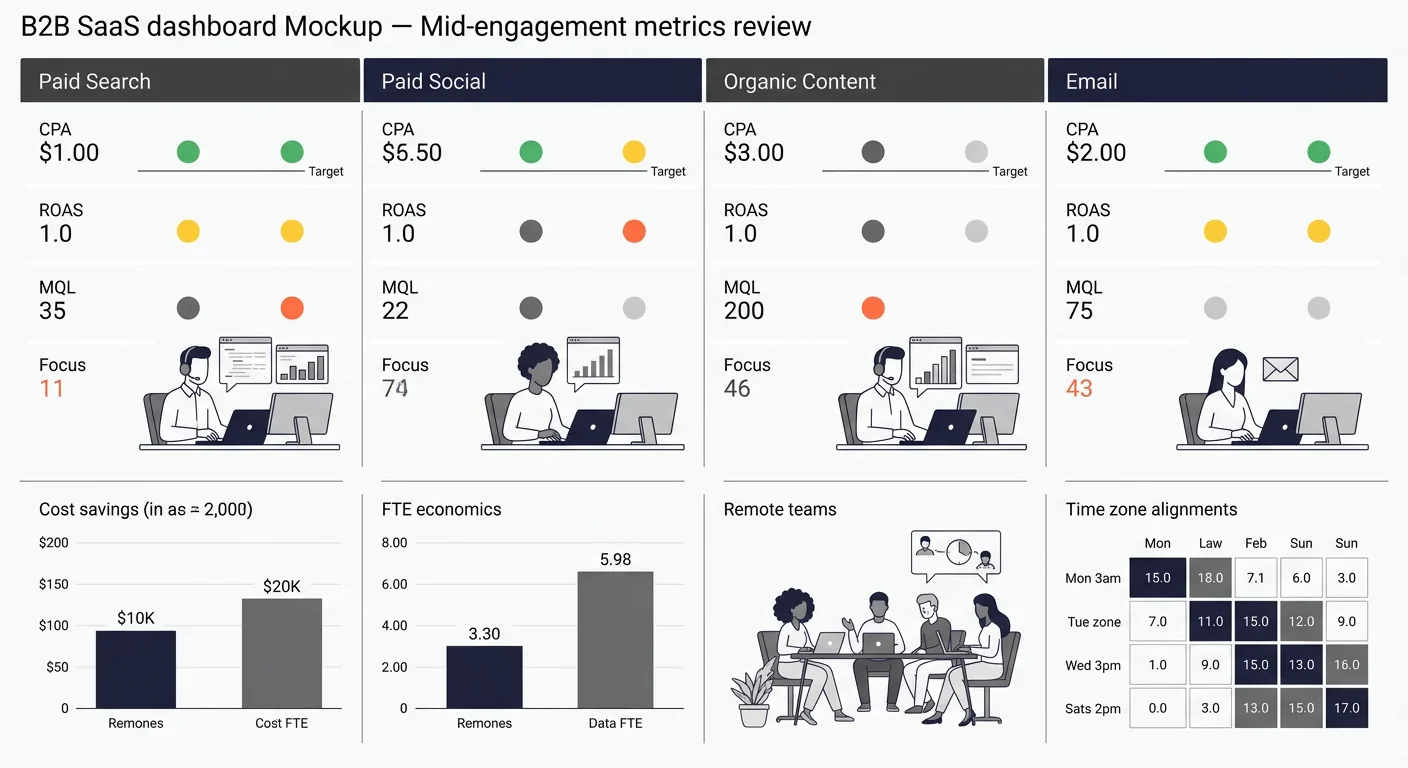
During this phase, expect the team to present a mid-engagement review. The data should show clear trends: which channels are delivering against the Signal Map thresholds, which are underperforming, and what reallocation the team recommends. This is where you evaluate whether the engagement is on track for day-90 results or needs a course correction.
The Day-90 Presentation
Aboad’s documentation of outsourced CMO engagements captures what most companies look like at this stage: “Most companies that bring in an outsourced CMO are not short on ideas. They have campaigns they want to run, channels they want to test, and content they mean to produce. What they are often short on is a clear picture of whether any of it is working, and a systematic way to make it better.”
The day-90 presentation is where that systematic picture comes together. The team presents key accomplishments, data insights, and a forward roadmap to leadership. This isn’t a progress report. It’s the evidence package that determines whether the engagement expands, stays steady, or gets reevaluated.
A strong day-90 presentation includes three sections: what was tested and what the data showed (with specific numbers against the Signal Map thresholds), what the team learned about your audience and channels that wasn’t in the original brief, and a 90-day forward plan with projected costs and expected returns based on the data gathered so far. If your team can’t present this with confidence, the pre-launch documents were either incomplete or ignored.
The teams that reach day 90 with strong results share a common trait: they treated the engagement as a structured learning sequence rather than an immediate performance demand. The ramp-up period exists. Pretending it doesn’t by expecting month-one results from a team still absorbing your brand context is how partnerships erode before they ever get to produce meaningful work.
Where This Lands Now
Philippine digital marketing teams that follow this 90-day sequence are outpacing new full-time hires hitting the same milestones, primarily because the structure forces documentation and measurement that in-house onboarding rarely demands. When a team operates against a Signal Map with numeric thresholds, every week produces data that either confirms the approach or triggers a specific adjustment. There’s less room for the slow drift that kills engagements in month four or five.
The 28% satisfaction gap between SLA-defined contracts and informal agreements isn’t surprising when you see it play out over 90 days. The engagements with written expectations, weekly performance breakdowns against real-time dashboards, and pre-defined escalation triggers simply have fewer moments where client and team are operating on different assumptions. That’s the unsexy truth about digital marketing outsourcing expectations: the work that happens before the campaigns launch determines whether the campaigns succeed.