
“Multi-phase design-build solution integrating BIM and Lean methodologies” is actual copy from an AEC firm’s project page. To a fellow architect or engineer, that sentence makes sense. To the property developer or homeowner who Googled “commercial architect near me,” it communicates nothing about what the firm can do for them, how much it costs, or why they should pick up the phone.
That disconnect explains why architecture firm digital marketing lags behind almost every other professional services category. The AEC industry produces exceptional built work and then buries it behind websites, copy, and channel strategies that actively repel the clients who would pay for it. Below are the five most common AEC marketing mistakes and the pipeline damage each one causes.
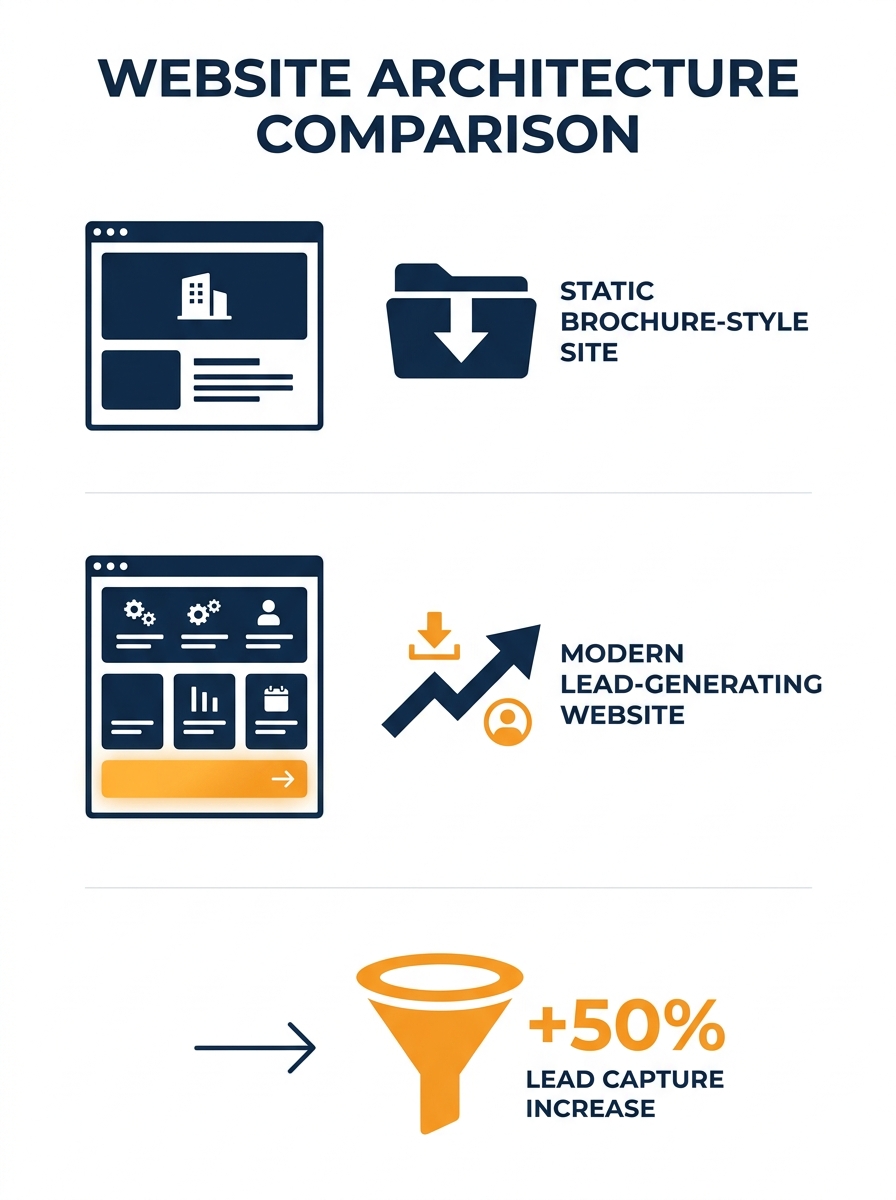
Treating the Website as a Static Brochure
Thrower Marketing Group’s analysis of AEC digital marketing identifies the pattern clearly: firms rely on their website as a static brochure rather than an active lead generator. Without SEO and paid strategies, they remain invisible to prospects searching for their services.
Think about what a typical architecture firm’s site looks like. A homepage hero with a dramatic project photo. An “About” page that reads like a LinkedIn summary. A “Projects” gallery with images but minimal context. And a “Contact” page with a form nobody fills out.
That structure worked in 2012 when referrals carried 90% of new business. It doesn’t work now. Prospective clients — especially commercial developers and institutional buyers — research firms online before they ever make a call. If your website doesn’t answer their questions, rank for their search terms, or give them a reason to engage, you’ve lost them to the firm whose site does.
The fix starts with treating the website as your primary sales tool. Every page should have a clear purpose: attract a specific searcher, answer a specific question, and offer a specific next step. If you don’t have the in-house team to execute this, working with outsourced SEO specialists who understand service-industry search behavior can close the gap faster than training a project manager to learn keyword research on the side.
One Page, Seven Services, No Rankings
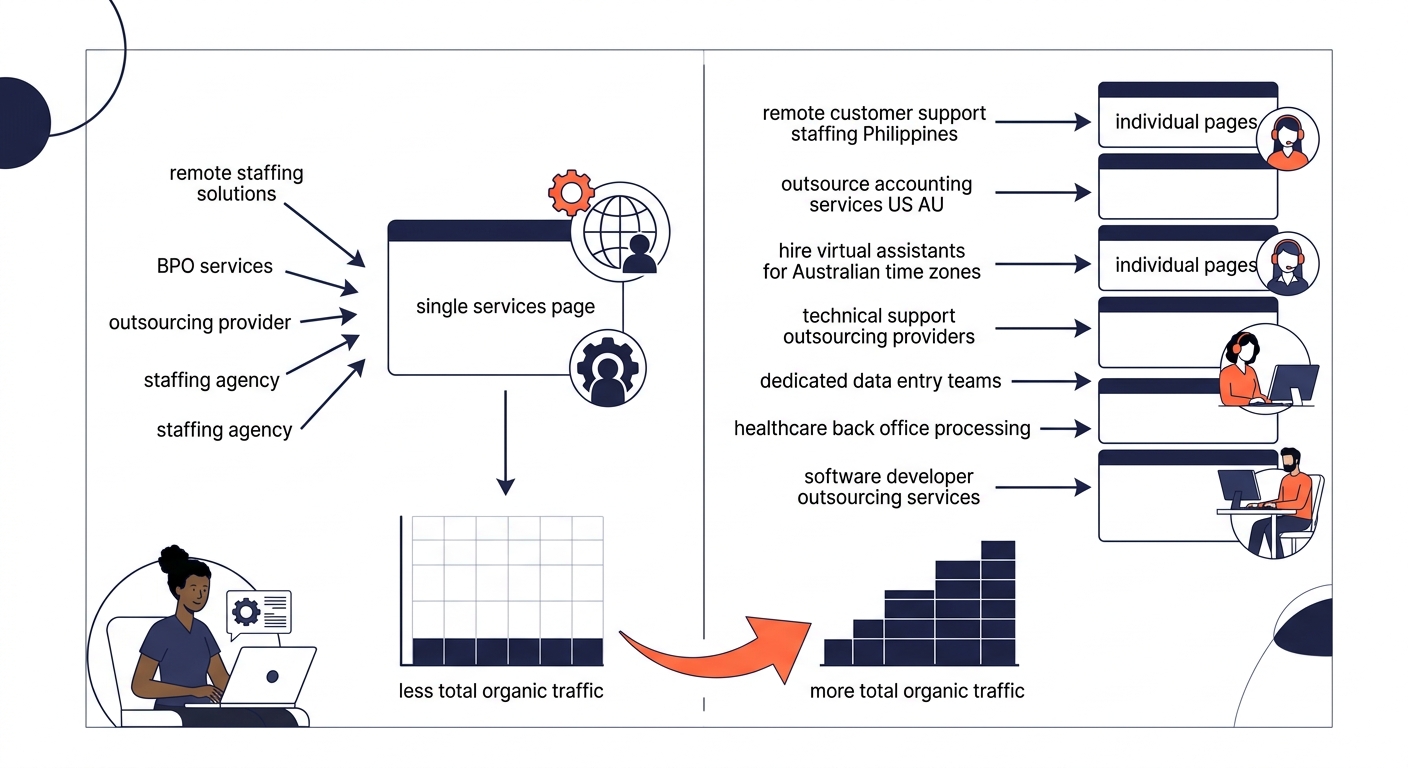
Service page optimization for architects is one of the highest-impact changes a firm can make, and almost nobody does it. The default approach is a single “Services” page that lists everything — master planning, residential design, commercial interiors, adaptive reuse, 3D rendering — in a paragraph or two each.
As Netvantage SEO’s guide for architects points out, this is a major SEO mistake. A customer searching for “remodel architect Des Plaines” would rather land on a page specifically showing examples of that service than a page providing scant details about seven different offerings. Google agrees: pages with clear topical focus rank higher for the specific queries that bring in qualified leads.
The alternative is straightforward. Build a dedicated page for each service you offer. Each page should include a description written for the client (not for other architects), two or three relevant project examples with photos, location-specific keywords if you serve defined geographic markets, and a clear way to start a conversation.
This isn’t a huge web development project. For firms running WordPress, the work can often be handled by budget-conscious developers in the Philippines in a matter of weeks. The return is disproportionate: individual service pages with proper on-page SEO can rank for dozens of long-tail queries that a single combined page never will.
Copy That Impresses Peers and Confuses Buyers
Prose Media’s analysis of AEC marketing failures nails this problem: firms assume their audience is as technical as they are, filling marketing materials with jargon that alienates non-experts. The result is a website, brochure, and social media presence that speaks fluently to other architects and says nothing to the people who actually hire them.
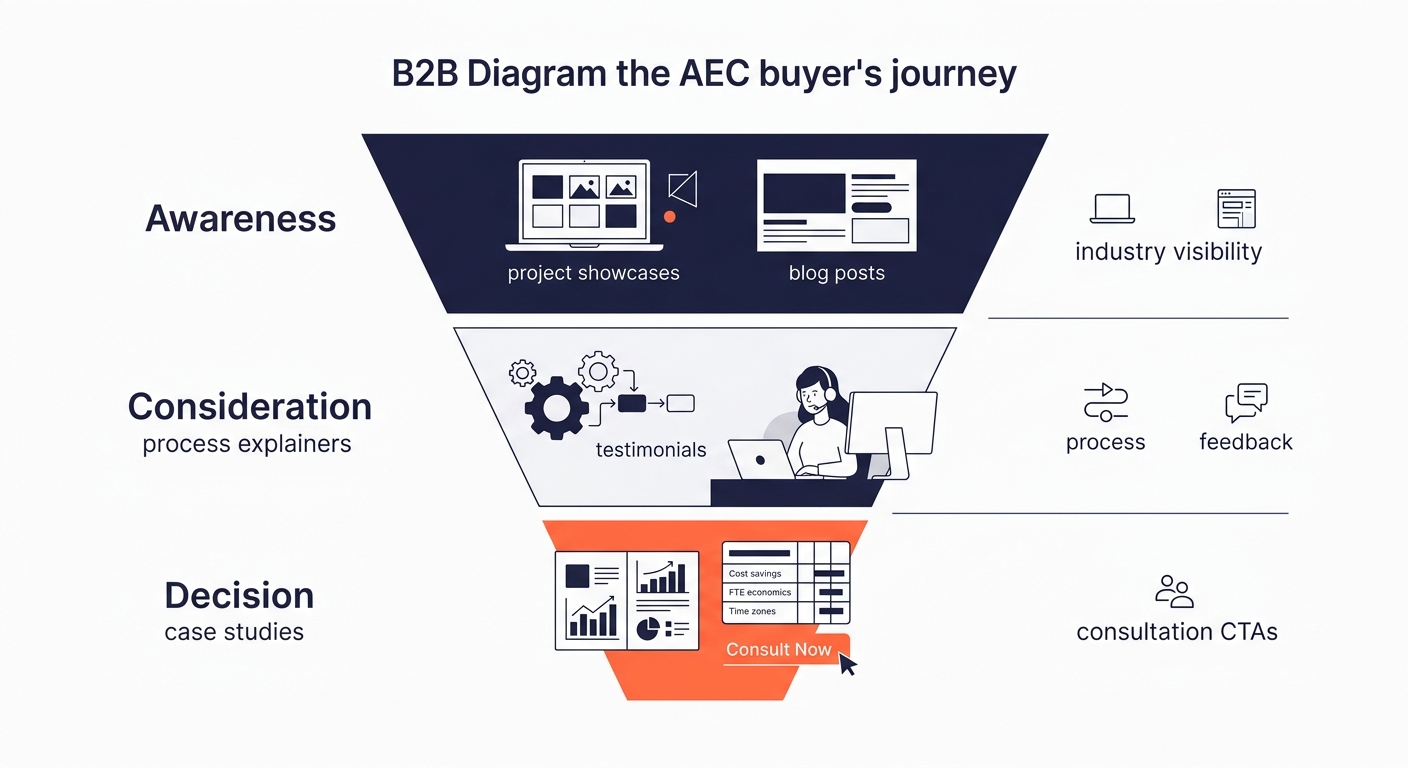
AEC buying cycles involve multiple stakeholders, according to OpenAsset’s research on the industry. Awareness-stage content — blogs, social posts, project case studies — needs to speak to people who know they have a problem (they need a building designed, renovated, or expanded) but don’t yet know how to evaluate architectural firms. If every piece of content you publish reads like a specification document, you’ve filtered out most of your potential audience before they ever reach the contact form.
A website that describes a project as a “multi-phase design-build solution integrating BIM and Lean methodologies” may impress industry insiders but leaves potential clients scratching their heads.
The content strategy shift is simple in concept: write for the person writing the check, not the person reviewing the drawings. Describe outcomes, not methodologies. Show before-and-after project stories. Explain your process in terms a facilities director or a homeowner can follow. This kind of work requires someone who understands both the architecture and the audience, which is exactly why many firms find that outsourced marketing for design firms delivers better content than assigning it to a principal who’d rather be designing buildings.
Social and Email Channels Collecting Dust
Architectural practices tend to treat social media as an afterthought. Someone posts a project photo to Instagram every few weeks, LinkedIn goes untouched for months, and the email list (if one exists) hasn’t received a message since the firm’s holiday card.
This creates a real cost for architectural practice growth because AEC buying cycles are long. A commercial developer might research firms for six to twelve months before issuing an RFP. During that window, the firms that stay visible through consistent social content and periodic email updates occupy mental real estate. The ones that go silent get forgotten.
You don’t need to post daily or build a content empire. A reasonable cadence looks like two to three LinkedIn posts per week showcasing project progress, design thinking, or industry perspective, plus a monthly email newsletter sharing recent work and firm news. If that sounds like more bandwidth than your team has, a dedicated social media team running on a clear brief can keep these channels active at a fraction of the cost of a full-time marketing hire.
The firms that get this right also tend to match their content to where the buyer is in the decision process. Awareness-stage content (project showcases, design trends) brings people into the orbit. Consideration-stage content (process explainers, client testimonials, budget guides) moves them closer to a conversation. Decision-stage content (case studies with specific outcomes, awards, team bios) closes the gap. When these pieces live across your social feeds, email sequences, and website, they compound over months — the exact timeline AEC sales cycles operate on.
Paid Search Doesn’t Exist in the Budget
The fifth mistake is the most financially straightforward to quantify. Architecture firms in competitive metros can expect to pay $8–$25 per click for terms like “commercial architect [city]” or “residential architect near me.” That feels expensive until you calculate that a single new commercial project might be worth $150,000–$500,000+ in fees. Even a modest Google Ads campaign producing one qualified lead per month can pay for itself many times over.
And yet most firms run zero paid search. The objection is usually either “we get our work through referrals” or “we tried Google Ads once and it didn’t work.” The first objection ignores the reality that referral networks erode as partners retire, move, or consolidate. The second usually means someone set up a campaign with broad-match keywords, no negative keyword list, and a landing page that was the firm’s homepage. Of course it didn’t work.
A properly structured paid search campaign for an architecture firm needs tight keyword targeting by service and geography, dedicated landing pages for each ad group, conversion tracking that actually functions, and ongoing bid management. If you can’t staff that internally, offshore PPC specialists who manage campaigns across professional services verticals already know the playbook. A managed PPC engagement typically costs less per month than a single billable hour of a senior architect’s time.
For firms that want to move faster across all these channels simultaneously, outsourcing digital marketing to a Philippine team can cover SEO, paid search, social, and content under one managed relationship. That beats hiring three or four domestic specialists when your marketing budget is still proving itself.
Tip: If you’ve never run paid search, start with your highest-margin service in your strongest geographic market. Build one landing page, one ad group, and track phone calls and form submissions for 90 days before judging results.
What Still Isn’t Settled
None of these five problems are technically difficult to solve. They’re operationally difficult because architecture firms are built around design and project delivery, not marketing. The principal who could spend four hours writing a service page description is the same person billing $250/hour on an active project. The math almost always favors getting the marketing work off their plate, whether through a marketing virtual assistant handling social and email, a dedicated SEO partner building out service pages, or a full outsourced marketing function covering all five gaps at once.
The sequencing question is where each firm has to make its own call. Do you fix the website first and then drive traffic to it, or start with paid search to validate demand while the site gets rebuilt? The answer depends on how broken the current site is. If prospects land there and leave confused, sending more traffic through ads is burning money. Fix the foundation — clear copy, individual service pages, working conversion paths — then turn on the channels that feed it.
Architecture firm digital marketing doesn’t require a six-figure annual budget or a five-person internal team. It requires recognizing that design excellence alone stopped being a sufficient growth strategy years ago. The firms winning new work in competitive markets have built marketing infrastructure that matches their design capabilities, and the ones still relying on word-of-mouth alone are watching their pipelines thin out in ways that referrals can no longer replenish.