
Philippine digital marketing agencies absorb $2,000–$5,000 per month in shared marketing tool subscriptions across their client base, covering platforms like SEMrush, HubSpot, Sprout Social, and paid ad intelligence suites that solo freelancers either skip entirely or pass through as separate line items on your invoice. That shared marketing campaign infrastructure fundamentally changes the agency vs freelancer ROI calculation, and most buyers never see the math.
TL;DR: Solo freelancers win on single-channel depth and hourly rate, but they can’t match the tool access, ad network relationships, or cross-client data advantages that Philippine agencies distribute across 8–15 retainer clients simultaneously. Your decision depends on how many channels you’re running and whether you can absorb hidden tool costs yourself.
The Solo Freelancer and the Tool Gap
A specialized freelancer often delivers better ROI than a generalist agency when you need deep expertise in one specific channel and have time to manage the relationship actively, according to a 2026 analysis by ClicksGeek. The math favors freelancers when scope is narrow: entry-level packages from freelancers run $1,000–$3,000 per month, and Philippine freelancers charge as low as ₱5,000 per month (roughly $90) at the bottom of the market, according to pricing data from SEO.com.ph.
The gap shows up in tools. A freelancer running Facebook ads for you brings their own expertise but typically works from your ad account, your analytics platform, and maybe one competitive research tool they personally subscribe to. They don’t carry five-figure annual licenses for enterprise SEO suites, social listening platforms, or multi-touch attribution software. When your freelancer needs competitor intelligence from Ahrefs ($199/month for a standard plan) or audience insights from SparkToro, someone pays for that access. Usually you.
ClicksGeek’s cost breakdown flags this directly: the true cost of hiring a freelancer includes “your own time managing the relationship, the cost of tools and software the freelancer doesn’t bring, onboarding time, revision cycles, and the opportunity cost of delayed campaigns.” That $1,500/month freelancer rate looks different when you add $400–$800 in tool subscriptions the freelancer assumed you’d provide.
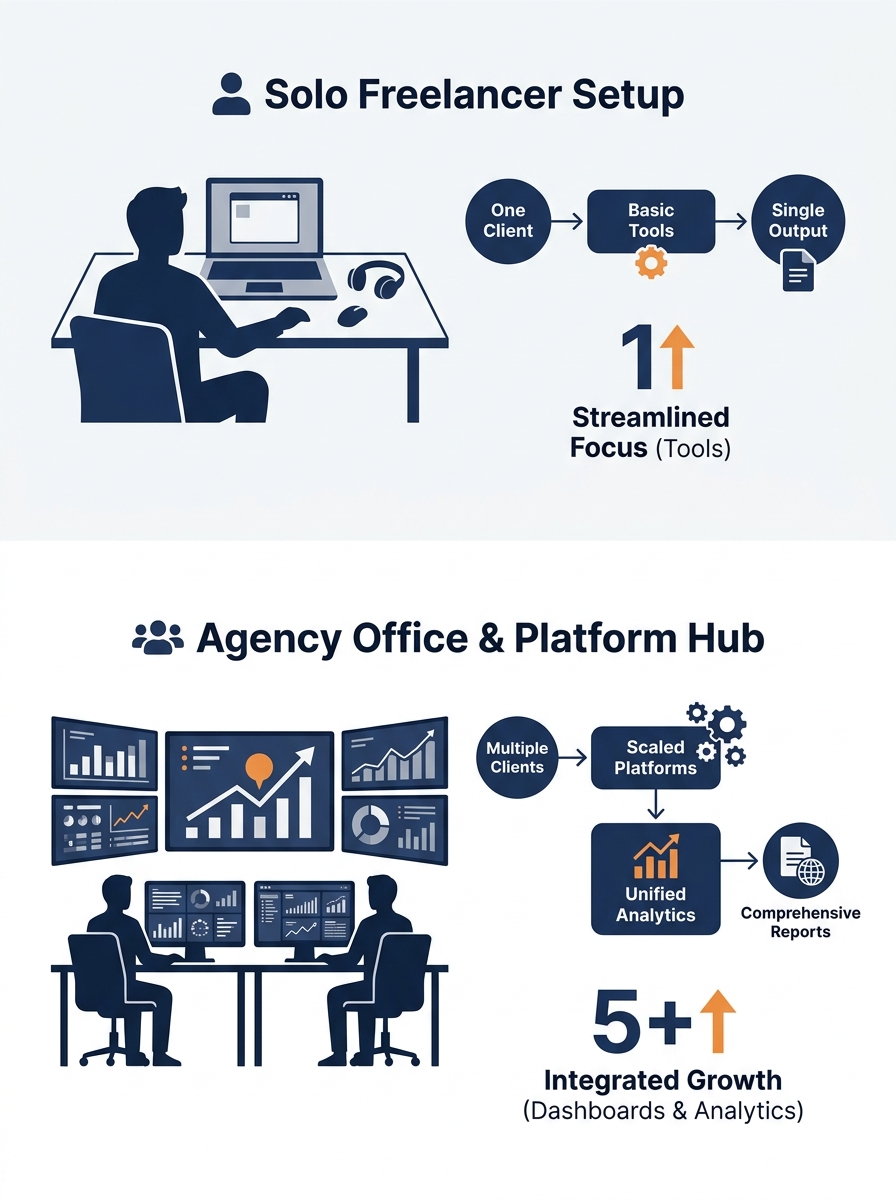
There’s also a data isolation problem. A freelancer working with you sees your data. A freelancer working with your competitor sees their data. But the freelancer rarely has cross-industry benchmarks built from dozens of simultaneous campaigns. Each engagement starts from a narrower baseline, which means more testing cycles before performance stabilizes.
Where Freelancers Still Win
Single-channel mastery remains the freelancer’s strongest card. If your entire paid media budget runs through Google Ads and you need someone who lives in that platform 40 hours a week, a dedicated freelancer with 5+ years of Google Ads experience will outperform a junior media buyer inside an agency who splits time across four clients and three platforms. The tradeoff is clear: you get depth in exchange for breadth.
How Mid-Size Philippine Agencies Split the Cost
A Lime Digital Asia analysis of the Philippine agency landscape describes how agencies gain structural advantages through team composition: “A strong agency combines strategy, creative talent, media buyers, data analysts, and community managers under one roof. That team uses enterprise-grade tools, live data, and years of pattern recognition from many campaigns and industries.”
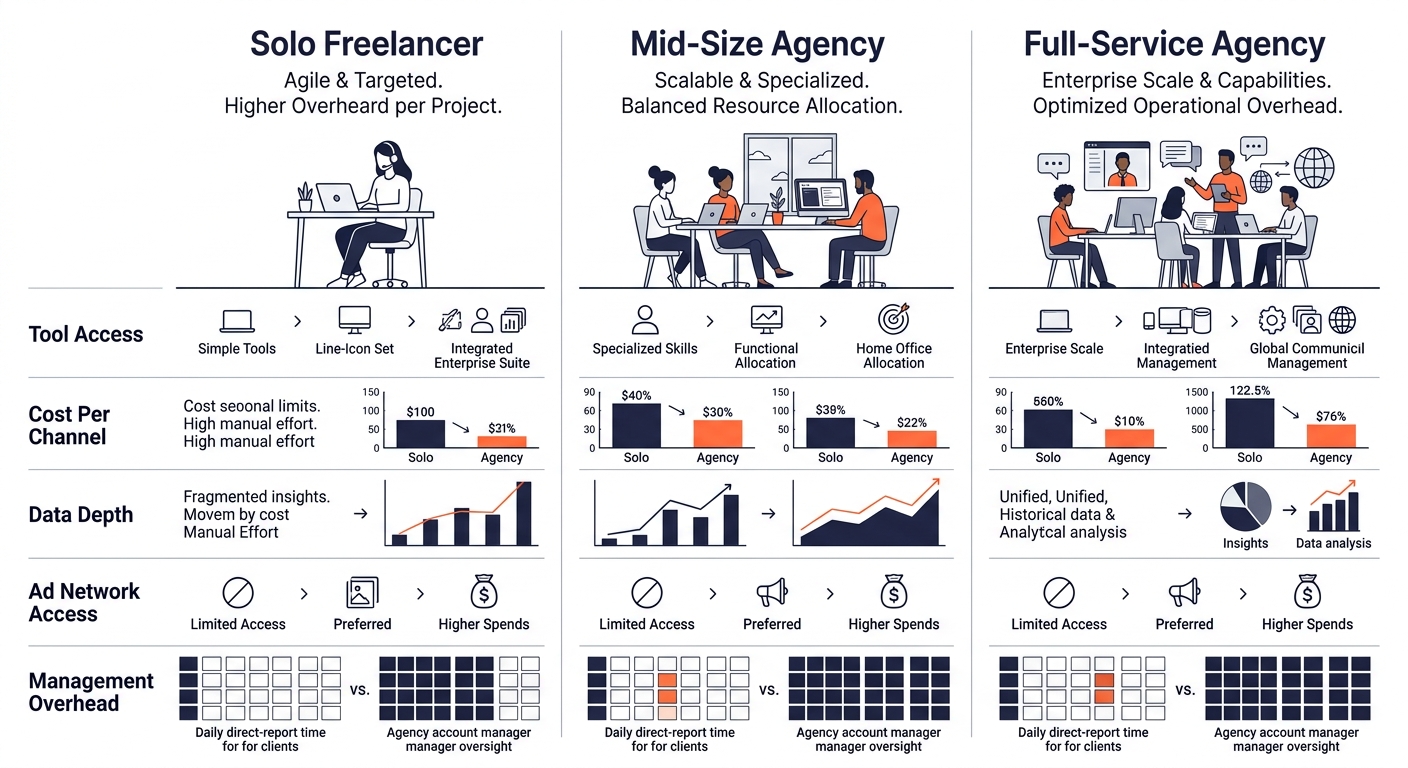
The economics are straightforward. When an agency like Spiralytics or Optimind Technology Solutions (both ranked among Clutch.co’s top Philippine digital marketing agencies as of June 2026) pays $500/month for an enterprise SEMrush license, that cost gets distributed across 10–15 active clients. Each client’s effective tool cost drops to $33–$50 per month for that platform alone. Multiply this across 8–12 tools in a typical agency stack, and you’re looking at $300–$600 in effective tool cost per client versus $2,000–$5,000 if you bought the same subscriptions individually.
Each client’s effective tool cost drops to $33–$50 per month when an agency distributes enterprise licenses across 10–15 active accounts.
This cost-spreading model is why most small-to-mid-sized businesses pay between $2,500 and $12,000 per month for agency retainers in 2026 and still come out ahead on total cost of ownership. The retainer absorbs labor, tools, and project management. The freelancer rate doesn’t.
Mid-size Philippine agencies also benefit from what we’ve described as capability stacking, where a single team runs paid media, SEO, email sequences, and social content under unified reporting. You don’t coordinate three freelancers across three Slack workspaces. One team sees all channels, catches conflicts (like paid and organic cannibalizing the same keyword), and adjusts in real time.
The Partner Program Layer
Ad network relationships create another gap freelancers can’t close. According to a 2026 Jotform analysis of marketing agency partner programs, agencies that join platform partner networks gain access to “commissions on sales, training resources, and dedicated support.” Google Partner status, Meta Business Partner certification, and HubSpot Solutions Partner tiers all require minimum ad spend thresholds and certification counts that individual freelancers rarely meet.
Those certifications aren’t just badges. Google Partners get access to beta features, dedicated account reps who can escalate ad disapprovals, and quarterly strategy calls with Google’s own media teams. A freelancer managing $3,000/month in ad spend doesn’t get that phone call. An agency managing $150,000/month across 20 clients does.
Full-Service Agencies and the Data Moat
Why do full-service Philippine agencies command retainers of ₱300,000 or more per month, as SEO.com.ph’s 2026 pricing guide documents? Because at that tier, marketing tool subscriptions are table stakes. The real advantage is accumulated data.
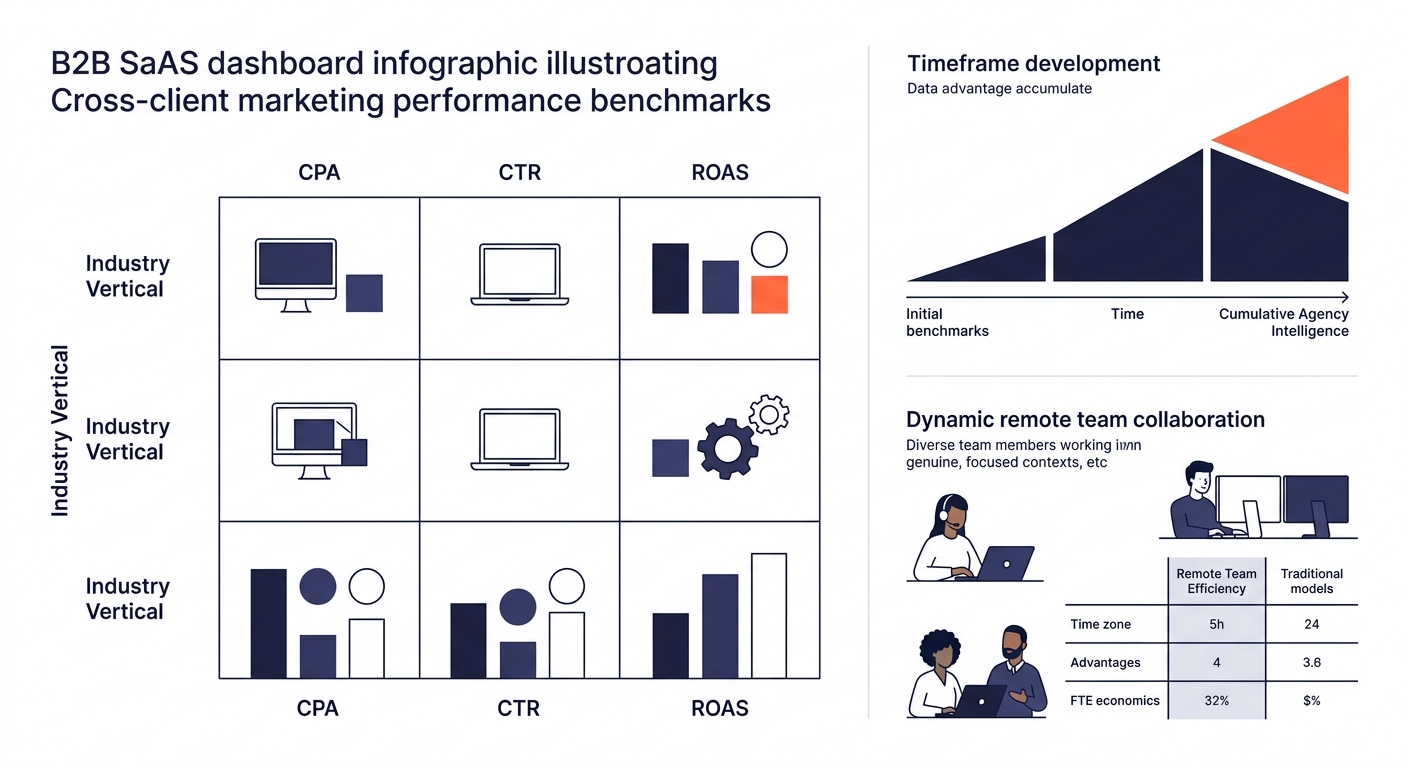
An agency running 40+ paid media campaigns simultaneously across e-commerce, real estate, hospitality, and professional services develops conversion benchmarks that no freelancer can replicate. They know that a 2.3% click-through rate on a real estate Facebook lead ad is below average because they’ve run 200 similar campaigns. They know that email open rates for B2B SaaS in Southeast Asia hover around 18–22% because they have the campaign data from three years of email automation handoffs. A freelancer working with their fifth-ever real estate client is still calibrating.
This data moat compounds over time. Agencies with proactive diagnostic processes can benchmark a new client’s performance against their entire portfolio within the first week, identifying gaps that would take a freelancer months of A/B testing to surface.
Full-service agencies also carry relationships with ad networks that go beyond partner programs. Agencies billing $50,000+ per month through a single ad platform get negotiating power on CPM floors, priority access to new ad formats, and sometimes custom audience segments unavailable through self-serve interfaces. These ad network relationships translate directly into lower cost-per-acquisition for their clients.
Info: If you’re considering a lighter-touch engagement to start, [a Philippine virtual assistant](/virtual-assistant-services/) can handle campaign reporting, social scheduling, and competitor monitoring at $800–$1,500/month while you evaluate whether a full agency retainer makes sense.
Comparing All Three Side by Side
| Attribute | Solo Freelancer | Mid-Size Philippine Agency | Full-Service Philippine Agency |
|---|---|---|---|
| Monthly cost range | $1,000–$3,000 | $2,500–$7,000 | $7,000–$12,000+ |
| Tool access | 1–3 personal subscriptions | 8–12 enterprise licenses shared across clients | 12–20+ enterprise licenses plus beta access |
| Ad network status | Self-serve only | Google/Meta Partner tier | Premier Partner with dedicated reps |
| Cross-client benchmarks | None (isolated data) | 10–15 client baseline | 40+ client baseline across verticals |
| Channels covered | 1–2 deep | 3–5 integrated | 5–8 with unified reporting |
| Management overhead for you | High (you coordinate tools, timelines, reporting) | Medium (single point of contact, shared dashboards) | Low (full project management, proactive strategy) |
| Hidden tool costs you absorb | $400–$800/month | Included in retainer | Included in retainer |
Who Should Pick Which
The freelancer makes sense when you have a single channel generating 80%+ of your leads and you need someone who thinks about that channel all day. If Google Ads is your entire paid strategy, a $2,000/month specialist who lives in that platform will outperform the junior buyer at a mid-size agency who splits attention. But you’ll pay for tools on top of that rate, and you’ll spend 3–5 hours per week managing the relationship yourself.
The mid-size Philippine agency is the right fit for most US and Australian SMBs running 3+ marketing channels simultaneously. At $2,500–$7,000 per month, you get shared enterprise tools, integrated reporting across paid, organic, and email, and enough cross-client data to avoid the expensive “let’s test everything from scratch” phase. The transparency practices you should demand from any agency partner will keep you from overpaying.
The full-service agency makes sense when your monthly ad spend exceeds $20,000 and you need someone with direct ad network relationships, Premier Partner access, and the data moat to optimize across verticals. You’re paying ₱300,000+ per month for infrastructure that would cost you $15,000–$25,000 to replicate in-house when you add tool licenses, salaries for three specialists, and management overhead.
The honest version of agency vs freelancer ROI comes down to channel count. One channel, hire the specialist. Three or more channels with meaningful spend behind each, hire the agency. And if you’re somewhere in between, start with the mid-size option and measure whether the integrated reporting and shared tools actually produce better cost-per-acquisition numbers than your previous freelancer setup. Within 90 days, the data will answer the question for you.