
Filipino trust in news collapsed by 10 percentage points in a single year — from 38% to 28% — the steepest decline among all 48 markets in the 2026 Reuters Institute Digital News Report. That collapse coincides with a structural shift the report calls “platformisation”: social media and video networks have, for the first time, overtaken both television and owned news websites as primary news sources globally.
TL;DR: The 2026 Reuters Digital News Report confirms social media has surpassed TV and news websites as the top news source across 48 markets. Filipino news trust hit 28%, the biggest single-year drop anywhere. For outsourced digital marketing teams, platform-native distribution is now the primary channel, and search-first strategies are losing ground fast.
If you’re running or hiring a Philippine digital marketing team, six rules separate the teams adapting to this platformisation strategy 2026 from those still building content plans around a search-first world that’s shrinking by the quarter.
Treat social platforms as your primary distribution channel, not a supplement
The 2026 Reuters report’s central finding is direct: social media and video networks are now, on average across all 48 covered markets, more popular than TV, news websites, and apps as sources of news. TikTok and Instagram influence keeps climbing. The Philippines, with over 86 million active social media users according to Ken Research’s digital market analysis, sits at the extreme end of this trend.
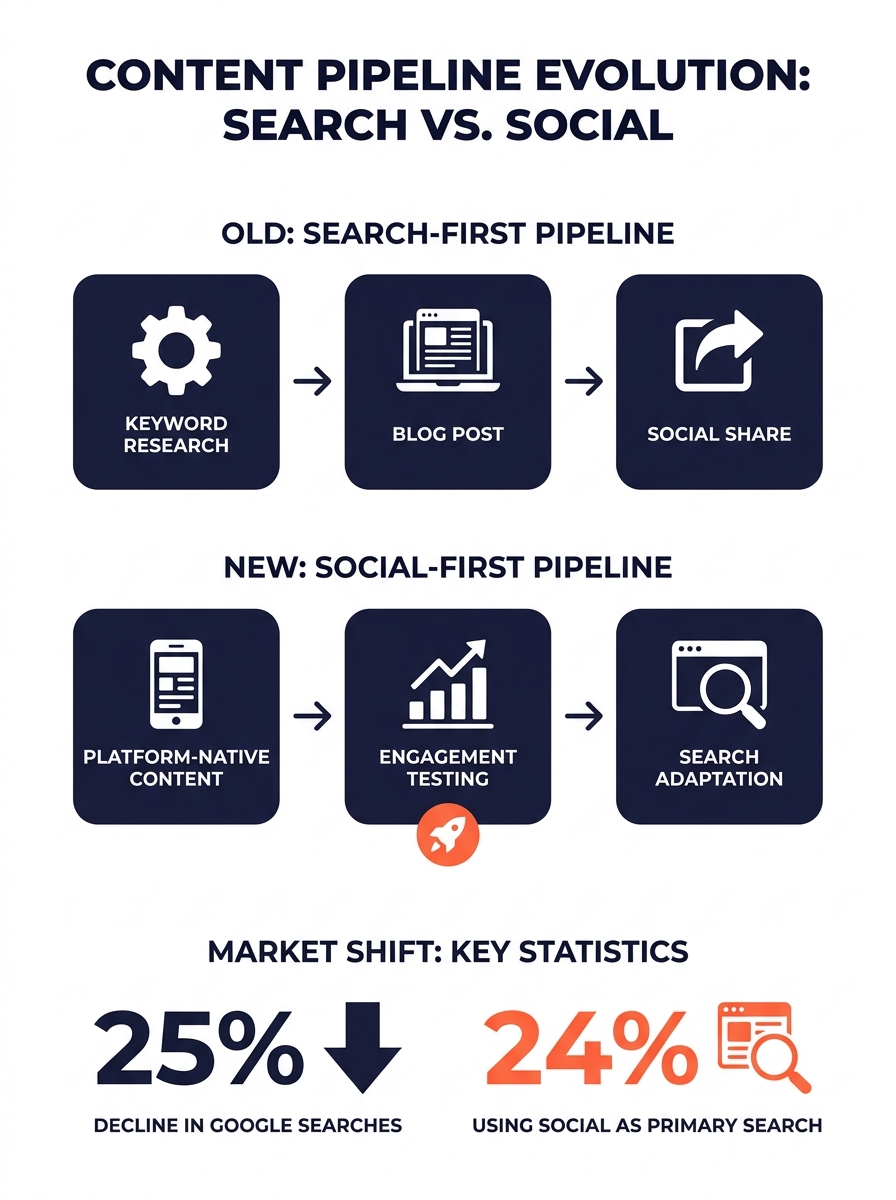
This flips the default outsourced content distribution model. For years, the playbook was: write blog content, optimize for Google, share links on social as an afterthought. That model assumed search was the primary discovery mechanism. It isn’t anymore. WebFX reports that 24% of people now use social media as their primary search engine, with a 25% average decline in Google searches among Gen Z, millennials, and Gen X users combined.
Your Philippine marketing team should build content for social feeds first, then adapt for search and owned channels. If the team’s content calendar still starts with keyword research and ends with “post to social,” the pipeline runs backwards. Social media-first digital marketing means the feed is your homepage now.
Build for the algorithm’s recommendation logic, not your posting calendar
Why does a platformisation strategy 2026 require different team operations? Because platform algorithms decide who sees your content based on engagement signals, not chronological posting. Meta restructured Reels distribution earlier this year, and TikTok shifted to vector-based semantic matching. Both changes reward content that matches user interest patterns over content that follows a rigid editorial calendar.
Philippine digital marketing teams still operating on a “3 posts per week on each platform” model are optimizing for a metric (frequency) that the algorithms deprioritized. The teams producing results right now build content around topic clusters aligned with how each platform’s recommendation engine categorizes and surfaces material.
This connects directly to the algorithm outpacing problem facing Philippine digital teams. Platform changes happen weekly. A team structured to execute a pre-set calendar can’t pivot when Meta changes its distribution weighting midweek. Sprint-based content workflows with room for weekly adjustments outperform month-long editorial calendars every time in a social-first environment.
Prioritize engagement depth over content frequency
Here’s the number that should change how you evaluate your outsourced team: according to practitioners discussing current social media strategies on Reddit, “one thoughtful post with 50 real comments beats 10 posts with crickets.” The math on social media ROI for SMBs shifts dramatically when you measure cost per meaningful interaction instead of cost per post published.
The 2026 digital marketing landscape in the Philippines reflects this priority. Trends driving the market include AI-powered automation, community-building, and hyper-personalization, all pointing toward deeper engagement over higher volume. One comprehensive strategy guide for 2026 frames success around data-driven planning, Social SEO, short-form video, and “oh-so-genuine engagement.” The word “genuine” keeps surfacing in every practitioner discussion for a reason: algorithms detect and reward authentic conversation signals.
The brands winning right now aren’t the ones posting the most. They’re the ones creating genuine conversations. One thoughtful post generating 50 real comments outperforms 10 posts with silence.
For SMBs paying a Philippine team $1,500–$3,000/month for social media management, this means restructuring deliverables. Instead of 60 posts per month spread across platforms, ask for 20–25 posts engineered for comments, shares, and saves, plus a weekly engagement report showing conversation depth. If your team can’t report the average comment count per post, you’re paying for output without measuring impact. Demanding weekly performance breakdowns is the minimum standard.
Staff your team for platform-native content, not repurposed blog excerpts
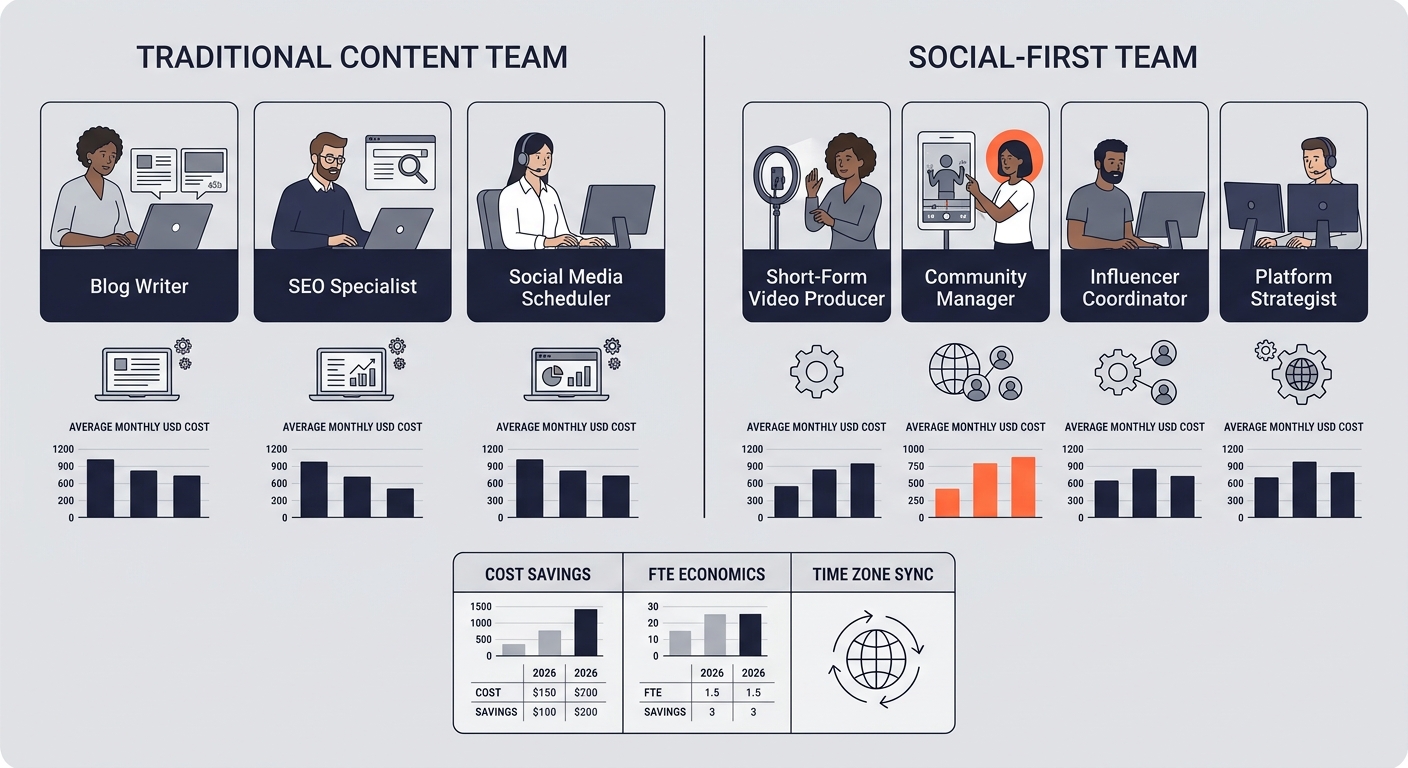
A social media-first digital marketing approach requires different skills than a search-first one. You need short-form video producers, community managers who respond in brand voice within hours, and designers who understand platform-specific aspect ratios and format constraints. You don’t need more blog writers creating 1,500-word articles that get chopped into caption-length excerpts.
This is where generalist Philippine marketing teams outperform narrowly-focused agencies. A generalist team can shift resources from long-form SEO content to Reels production and community engagement without a contract renegotiation. A specialist content agency locked into deliverable-based pricing can’t make that pivot.
Micro-influencers (10,000 to 100,000 followers) and nano-influencers (1,000 to 10,000 followers) deliver better ROI for SMBs than larger influencer partnerships. A Philippine team managing influencer outreach, content coordination, and performance tracking can run a micro-influencer program for a fraction of what a US-based agency charges. The practical model, as one outsourcing guide describes it: keep brand voice and approvals in-house, outsource strategy, production, and influencer coordination to your Philippine virtual assistant or dedicated marketing team. That hybrid setup is the most common structure working for SMBs right now.
Run organic tests before you spend a dollar on paid distribution
Google’s migration of Dynamic Search Ads to AI Max by September 2026 shows a 7% average lift in conversions, and AI discovery channels like ChatGPT and Google AI Overviews already account for 9.7% of B2B revenue and 11.4% of B2C revenue. The search engine decline isn’t hypothetical. Paid distribution is shifting underneath you regardless. Don’t compound that uncertainty by scaling paid spend on social content you haven’t validated organically first.
The workflow: your outsourced team posts 4–5 variations of a content concept organically, measures engagement over 5–7 days, and puts ad spend only behind the top 1–2 performers. This cuts wasted ad spend by 30–40% compared to the “boost every post” approach that most teams default to. Test with organic first, then scale what works with paid.
Tip: Before spending on paid social, run at least 4–5 organic variations of each content concept. Measure engagement for 5–7 days. Allocate ad budget only behind top performers. Teams using this process consistently report 30–40% less wasted spend.
Measure platform-specific ROI, not aggregate social metrics
Filipino trust in news sitting at 28% has a direct consequence for brand content: audiences are skeptical of anything that reads like a press release or corporate announcement. Content that performs on Philippine social platforms in this low-trust environment needs to feel personal, conversational, and community-driven. Your measurement framework has to reflect that reality.
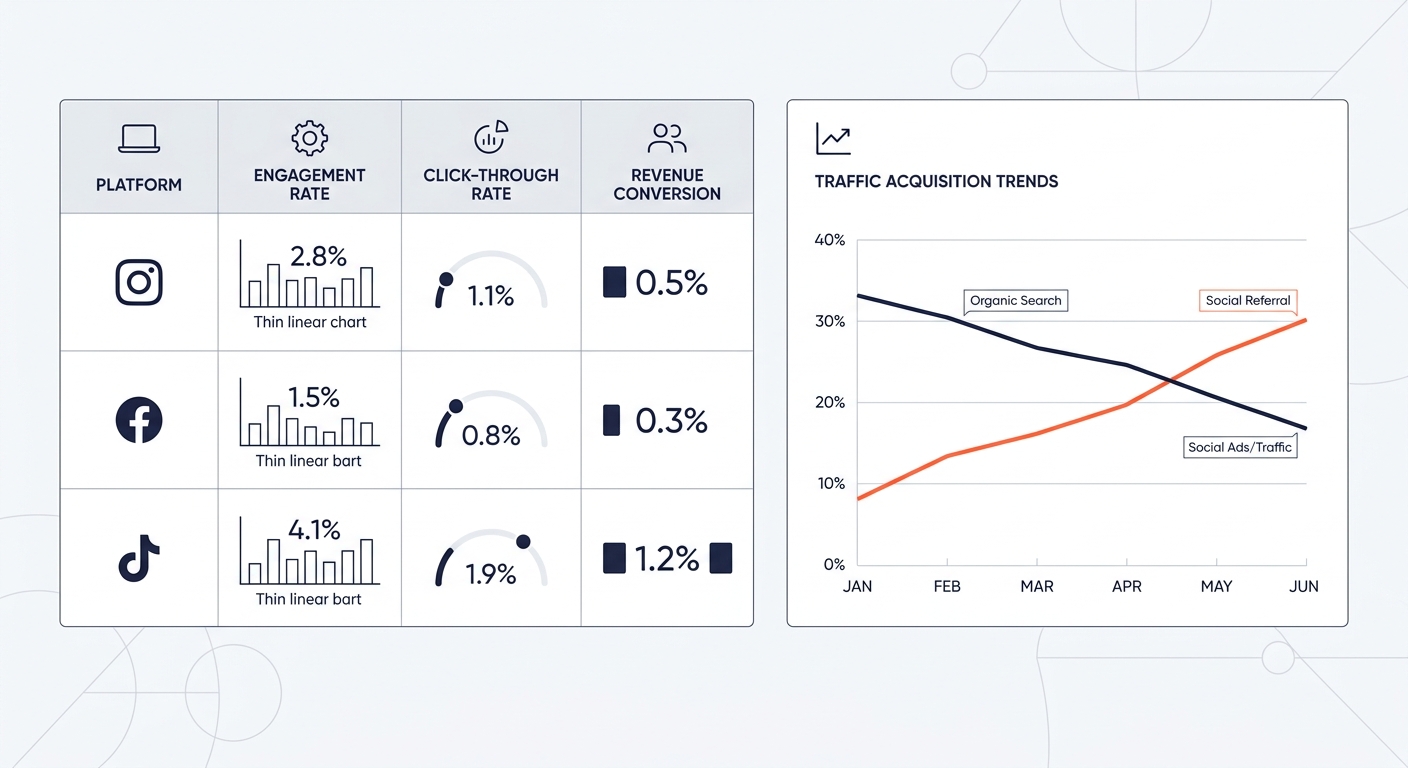
Track three metrics per platform: engagement rate (comments and shares, not likes), click-through rate on content with calls to action, and conversion rate from social traffic to your pipeline. Aggregate “social media impressions” across platforms tells you nothing actionable. Each platform has different distribution mechanics, different audience behavior, and different conversion paths. Social Media Today reported that TikTok and Instagram influence keeps increasing in the Reuters findings, but their conversion paths to revenue look nothing alike.
For teams managing outsourced social media, the pipeline quality dashboard approach matters more than ever. Vanity metrics mask the search engine decline happening underneath your traffic numbers. If your Google organic traffic dropped 15% this quarter but social referral traffic grew 25%, those two numbers need to appear next to each other on the same dashboard, updated weekly. That side-by-side view is the only way to track whether your platformisation strategy is actually compensating for the search volume you’re losing.
When These Rules Break Down
These six rules assume your audience is active on social platforms and discovers content through feeds and recommendations. That assumption holds for B2C brands, local services, e-commerce, and most B2B companies targeting decision-makers under 45.
It breaks for highly technical B2B niches where buyers still rely on search-driven research: enterprise software procurement, industrial equipment, specialized professional services. For those verticals, search-first content strategy still delivers higher-intent traffic even as overall search volume declines. The platformisation shift documented in the Reuters report is real and accelerating, but it’s unevenly distributed across buyer personas.
The other exception: regulated industries where social content faces compliance review bottlenecks. If every Instagram Reel needs legal approval before posting, the speed advantage of social-first distribution evaporates. Solve the compliance workflow before you shift resources.
The 2026 Reuters data is clear about direction. Social platforms are the primary discovery layer now, and the Philippines sits at the leading edge of that shift with 86 million active users and collapsing trust in traditional news channels. Philippine digital marketing teams that restructured around this reality are producing measurably better results for their clients. The teams still treating social as a distribution afterthought are watching their numbers erode while wondering why more blog posts aren’t fixing the problem.