
As businesses navigate an increasingly competitive and digital-first landscape, one question continues to shape operational strategy:
Should you build your team in-house, or outsource key functions?
This is the core of the outsourcing vs insourcing debate, and in 2026, it has become more complex—and more important—than ever.
Rising labor costs, rapid technological change, and the need for specialized skills are pushing companies to rethink how they structure their workforce. What worked five years ago may no longer be sustainable today.
Choosing the right approach doesn’t just affect your day-to-day operations—it directly impacts your:
- Profit margins
- Speed of execution
- Ability to scale
- Long-term competitiveness
In this comprehensive guide, we’ll explore both models in detail, compare their strengths and limitations, and help you determine the best strategy for your business.
What Is Insourcing?
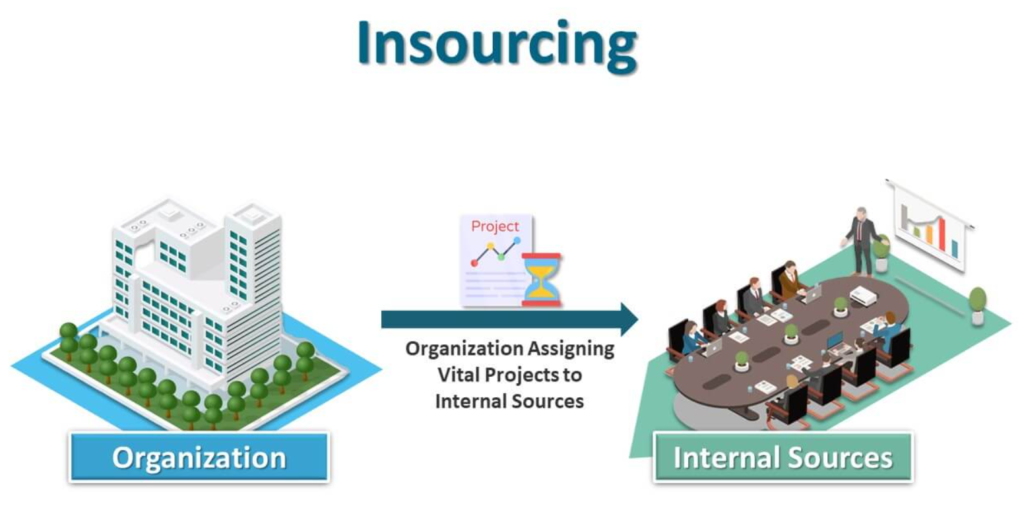
Insourcing refers to the practice of assigning tasks, projects, or entire business functions to your internal team rather than relying on external providers.
This typically involves:
- Recruiting full-time or part-time employees
- Building internal departments (e.g., marketing, IT, customer service)
- Training staff to develop specific skill sets
- Managing workflows, performance, and output internally
Real-World Example:
A company builds its own in-house digital marketing department, hiring SEO specialists, content writers, web designers, and PPC managers instead of outsourcing to an agency.
Why Businesses Choose Insourcing
Insourcing is often seen as a long-term investment in the company’s internal capabilities. It allows organizations to develop a team that is deeply aligned with their mission, values, and goals.
It is particularly common in:
- Large enterprises with stable budgets
- Companies handling sensitive data
- Businesses where operations are tightly integrated
However, while insourcing provides control, it also comes with significant responsibilities and costs.
What Is Outsourcing?

Outsourcing is the process of delegating specific tasks or business functions to external professionals, agencies, or offshore teams.
Instead of hiring employees directly, businesses partner with third-party providers who handle the work remotely.
This can include:
- Virtual assistants (VAs)
- Specialized agencies (SEO, PPC, development)
- Freelancers or contractors
- Dedicated offshore teams
Real-World Example:
A startup outsources its digital marketing to a team in the Philippines, gaining access to SEO experts, content writers, and social media managers without hiring them in-house.
Why Businesses Choose Outsourcing
Outsourcing has evolved from a cost-cutting tactic into a strategic growth tool. Companies now use it to:
- Access global talent
- Accelerate execution
- Scale operations efficiently
In 2026, outsourcing is no longer just for large corporations—SMEs and startups are adopting it to stay competitive in fast-moving markets.
Key Differences: Outsourcing vs Insourcing
| Factor | Insourcing | Outsourcing |
|---|---|---|
| Workforce | Internal employees | External professionals |
| Cost Structure | Fixed, high overhead | Flexible, scalable |
| Expertise | Limited to hires | Access to diverse specialists |
| Scalability | Slower | Rapid and flexible |
| Control | Full control | Shared control |
| Speed | Slower setup | Faster implementation |
Deeper Insight
The main difference lies in ownership vs flexibility:
- Insourcing gives you ownership and control, but requires more resources
- Outsourcing gives you flexibility and efficiency, but requires trust and coordination
Understanding this trade-off is key to making the right decision.
Advantages of Insourcing
1. Greater Control Over Operations
When your team is in-house, you have direct oversight of every aspect of the work:
- Daily workflows
- Quality assurance
- Communication processes
- Deadlines and deliverables
This level of control allows for:
- Faster decision-making
- Immediate feedback loops
- Greater alignment with company goals
For businesses in highly regulated industries, this control is often essential.
2. Stronger Company Culture and Collaboration
In-house teams are more immersed in your organization’s culture. They:
- Share your vision and values
- Participate in company activities
- Collaborate more naturally with other departments
This leads to:
- Stronger team cohesion
- Better communication
- Higher employee engagement
Over time, this cultural alignment can significantly improve productivity and morale.
3. Enhanced Data Security and Confidentiality
Keeping operations internal reduces the need to share sensitive information externally.
This is particularly important for:
- Financial data
- Customer information
- Proprietary processes
- Intellectual property
While outsourcing providers can implement strong security measures, insourcing minimizes exposure by keeping everything within your organization.
4. Long-Term Skill Development
Insourcing allows businesses to build and retain knowledge internally.
Over time, your team:
- Gains experience
- Develops specialized skills
- Becomes more efficient
This creates a self-sustaining system where your company becomes less dependent on external providers.
Disadvantages of Insourcing
1. High Operational Costs
Building an in-house team is expensive. Costs include:
- Salaries and benefits
- Office space and equipment
- Software and tools
- Training and development
These are fixed costs, meaning you pay them regardless of workload or performance.
For growing businesses, this can strain resources.
2. Limited Access to Specialized Expertise
Even with a strong hiring process, your internal team can only cover so much.
Digital marketing alone requires:
- SEO specialists
- Paid ads experts
- Content strategists
- Designers
- Analysts
Hiring all these roles internally is often impractical, leading to skill gaps.
3. Slower Scalability
Expanding an in-house team takes time:
- Recruitment (weeks to months)
- Onboarding
- Training
This delay can cause missed opportunities, especially in fast-moving industries.
4. Management and Administrative Burden
Managing employees requires:
- HR processes
- Performance reviews
- Payroll and compliance
This adds complexity and diverts focus from core business activities.
Advantages of Outsourcing
1. Significant Cost Savings
Outsourcing reduces or eliminates many overhead expenses.
You don’t need to pay for:
- Office space
- Employee benefits
- Equipment
- Long-term salaries
Instead, you pay for:
- Specific services
- Defined deliverables
- Flexible contracts
This makes outsourcing highly cost-efficient, especially for SMEs.
2. Access to Global Talent and Expertise
Outsourcing allows you to tap into a global workforce with diverse skills and experience.
You gain access to:
- Industry specialists
- Experienced professionals
- Niche expertise
This is particularly valuable in fields like:
- SEO
- Web development
- Digital marketing
- Customer support
3. Faster Scalability and Flexibility
Outsourcing enables rapid growth without the delays of hiring.
You can:
- Scale teams up or down instantly
- Launch new projects quickly
- Adapt to market changes
This flexibility is critical in 2026’s fast-paced business environment.
4. Increased Focus on Core Business Activities
By outsourcing non-core tasks, your internal team can focus on what matters most:
- Strategy
- Innovation
- Revenue generation
This leads to:
- Better decision-making
- Higher productivity
- Stronger business growth
Disadvantages of Outsourcing
1. Reduced Direct Control
Since work is handled externally, you may have less direct oversight.
This requires:
- Clear communication
- Defined processes
- Strong project management
2. Communication and Time Zone Challenges
Working with remote teams can lead to:
- Delayed responses
- Miscommunication
- Coordination difficulties
However, these challenges can be minimized with:
- Structured workflows
- Regular check-ins
- Collaboration tools
3. Data Security Risks
Sharing sensitive data externally introduces potential risks.
To mitigate this:
- Choose reputable providers
- Use secure systems
- Implement NDAs and compliance protocols
When Should You Choose Insourcing?
Insourcing is ideal when:
- Your operations require full control and oversight
- You handle highly sensitive or regulated data
- You want to build long-term internal capabilities
- The function is core to your business model
When Should You Choose Outsourcing?
Outsourcing is the better option when:
- You want to reduce operational costs
- You need specialized expertise quickly
- Your business requires rapid scalability
- Your internal team is overwhelmed or understaffed
The Hybrid Approach: Best of Both Worlds
Many successful businesses in 2026 use a hybrid model.
How It Works:
- Keep strategic roles in-house
- Outsource execution and support tasks
Example Setup:
- In-house: Leadership, strategy, decision-making
- Outsourced: SEO, content creation, customer support
This approach provides:
✔ Control where it matters
✔ Flexibility where it counts
✔ Cost efficiency across operations
How to Decide: Key Factors to Consider
1. Budget and Cost Structure
Evaluate whether you can sustain long-term hiring costs or benefit from flexible outsourcing models.
2. Expertise Requirements
Determine if your needs require specialized skills that are difficult to hire internally.
3. Speed and Scalability
Consider how quickly you need to grow and adapt to market changes.
4. Business Priorities
Decide whether your focus is on:
- Control and stability
or - Growth and flexibility
Final Thoughts: Choosing the Right Strategy
The outsourcing vs insourcing decision isn’t about choosing one over the other—it’s about choosing what works best for your business.
- Insourcing offers control, consistency, and long-term investment
- Outsourcing provides speed, flexibility, and cost efficiency
The most successful companies in 2026 understand that the real advantage lies in strategic balance.
Ready to Scale Smarter with 365Outsource?
If you’re looking to reduce costs, access top global talent, and scale faster, outsourcing could be the key to unlocking your next stage of growth.