
Google’s shift to AI-first search has created a pricing paradox for offshore SEO teams: automation compressed routine task hours by 20-30%, but AI Overviews now covering 48% of all queries devalued the keyword-ranking output those tasks produce, according to agency data published today by 365outsource.com. Monthly AI-driven SEO outsourcing costs between $2,000 and $15,000 in 2026, but the deliverables buyers pay for no longer align with what drives traffic.
TL;DR: Offshore SEO teams cut labor hours 20-30% with AI tools, but Google’s May 19 I/O rollout made citation-earning content the new traffic driver, work that AI can’t compress and most outsourcing contracts don’t measure.
The disconnect traces to Google I/O on May 19, when the company deployed Gemini 3.5 Flash across AI Mode search to one billion monthly users in 98 languages. AI Overviews jumped from 34.5% query coverage in December 2025 to 48% by late May 2026. The #1 organic position now loses approximately 18% of clicks when an AI Overview appears, shifting competitive value from keyword rankings to citation placement inside the AI-generated summary.
Citation Rate Replaces Ranking Position as Primary KPI
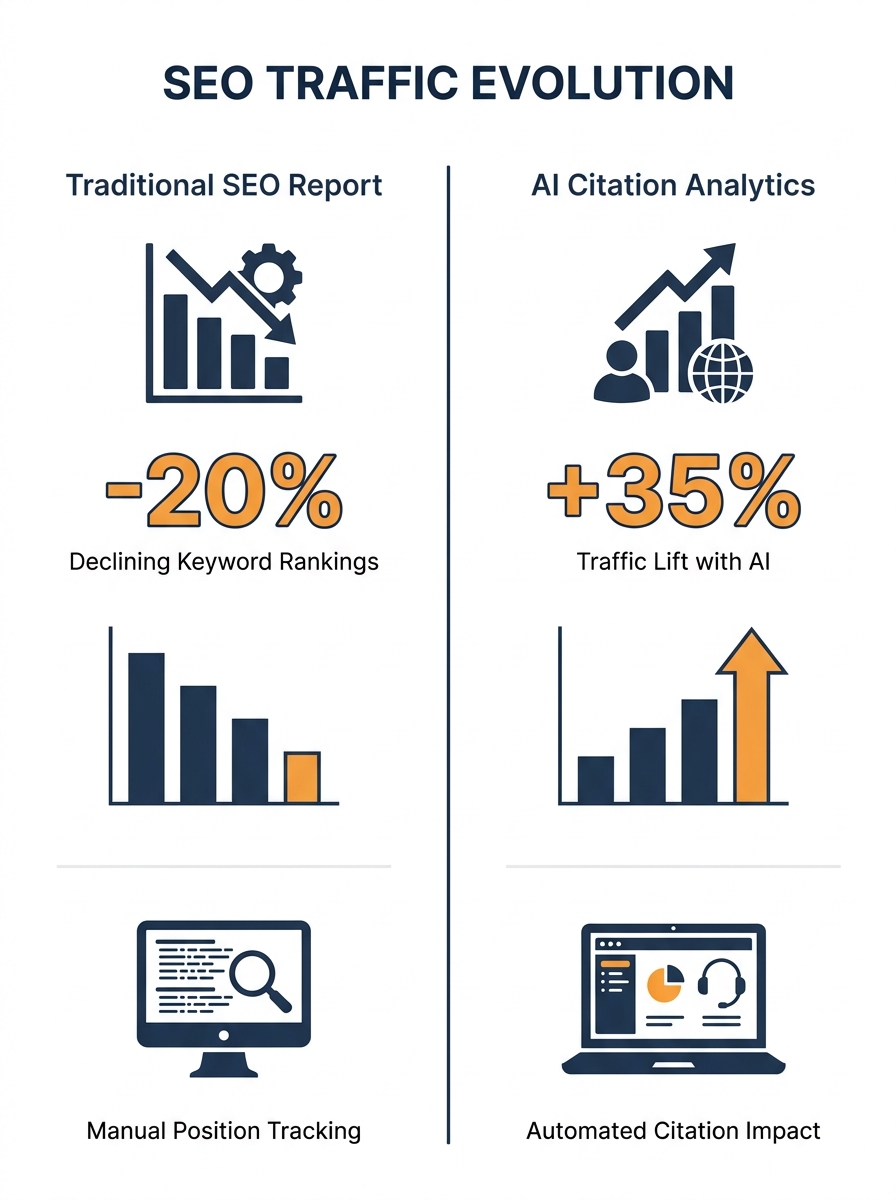
Sites cited within an AI Overview capture 35% more organic clicks and 91% more paid clicks than non-cited competitors on identical queries, Search Engine Journal reported May 23. Matt Thompson, VP of partnerships at Scrunch, told TechCrunch’s Equity podcast this week that existing SEO strategies “are optimized for a search engine that no longer exists.”
The work that earns citations, original research, expert commentary with entity markup, structured data parseable by Gemini, requires editorial judgment and strategic hours. AI tools that compressed content briefs, technical audits, and keyword clustering from 15-20 hours to 5-8 hours monthly can’t accelerate citation-earning deliverables. Offshore providers billing for keyword-position reports and monthly blog-post counts are measuring output Google’s interface no longer prioritizes.
Google’s March 27 through April 8 core update explicitly filtered pages synthesizing existing information without original analysis. Content pipelines optimized for volume over originality now drag domain-wide rankings. Buyers paying $3,000 monthly for 200 keyword reports and 8 blog posts are purchasing a 2023 service model in a 2026 search environment where short-tail keyword targeting doesn’t map to conversational, multimodal queries pulling from user Gmail, Photos, and browsing context.
Hourly Billing Model Breaks Under AI-Compressed Workflows
The standard hourly-rate structure for outsourced SEO services creates misaligned incentives when automation cuts billable hours. An offshore team earning revenue from 15 monthly hours loses income when AI tools reduce that workload to 6 hours, forcing them to either pad time sheets or accept unsustainable margins.
The Philippine call center industry already addressed this structural problem. As outcome-based pricing replaced hourly billing when agentic AI compressed average handle times from 18 minutes to single-digit resolution windows, BPO operators shifted payment models to completed outcomes rather than logged hours. The same economic pressure applies to SEO outsourcing.
Outcome-based SEO pricing measures AI Overview citations earned, original data assets published, and entity authority metrics, Knowledge Panel presence, structured data coverage, citation frequency in generative search, rather than keyword movements or traffic deltas that AI Overviews are cannibalizing. The $2,000-$15,000 monthly range accommodates this shift if contracts specify citation-earning deliverables instead of keyword-volume outputs.
Digital marketing outsourcing is growing at an 11.4% compound annual growth rate from 2025 to 2034, but spending flows toward legacy deliverable categories. Companies buying more keyword-position tracking at lower per-unit costs miss the fundamental change: AI Overviews made ranking reports less valuable while making citation-earning content more expensive to produce.
What This Means for US
US SMBs and agencies running offshore digital marketing teams on $3,000-$30,000 monthly budgets need contract audits before Q3. If your SEO deliverables still center on keyword-ranking reports, monthly blog counts, or backlink tallies, you’re paying for metrics Google’s interface is actively replacing. The efficiency gain from AI tools went to the wrong tasks.
Renegotiate scopes around citation-rate KPIs: how many times per month does your content appear inside AI Overviews for target queries? How many first-party data assets, original research, proprietary datasets, expert interviews with proper schema markup, did the team publish? What percentage of your priority entity terms now trigger Knowledge Panels? These outputs cost more per unit because AI can’t compress the strategic work, but they’re the only outputs that still drive organic traffic growth in post-I/O search.
If your provider can’t pivot from hourly billing to outcome measurement, that’s a structural signal the team lacks tooling or editorial capacity to produce citation-worthy content at scale. The work Philippine SEO specialists excel at, technical execution, structured data implementation, content velocity, remains essential, but only when deployed against the new citation-earning playbook rather than the deprecated keyword-ranking model.