
Business process outsourcing (BPO) has become far more than a cost-cutting tactic. In 2026, it serves as a strategic business solution that helps organizations remain competitive in a rapidly evolving global marketplace. Companies today face a wide range of challenges, including rising labor costs, ongoing talent shortages, increasing customer expectations, digital transformation pressures, and economic uncertainty. To overcome these obstacles, many organizations are turning to outsourcing as a way to improve agility, access specialized expertise, and accelerate growth.

The modern business environment demands flexibility. Organizations must be able to scale operations quickly, adopt new technologies efficiently, and respond to changing market conditions without significantly increasing operational expenses. Building large in-house teams for every business function is no longer practical for many companies, especially small and medium-sized businesses that need to maximize resources while maintaining profitability.
This is where outsourcing delivers tremendous value. By partnering with experienced service providers, businesses gain access to skilled professionals, proven processes, and advanced technologies that would otherwise require substantial investments of time and capital. Whether outsourcing customer support, accounting VAs, IT services, digital marketing, human resources, or back-office operations, companies can streamline workflows while allowing internal teams to focus on strategic initiatives.
Another reason outsourcing continues to grow is the rise of global talent networks. Organizations are no longer restricted to hiring within their local markets. Instead, they can tap into highly skilled professionals from around the world, often gaining access to expertise that may be difficult to find domestically. This ability to build high-performing teams without geographical limitations has become a significant competitive advantage.
As business leaders look toward sustainable growth, outsourcing remains one of the most effective ways to improve efficiency, reduce costs, enhance service quality, and increase operational flexibility. In this guide, we explore the top 10 drivers of business process outsourcing in 2026 and explain why organizations across industries continue to invest in strategic outsourcing partnerships.
Financial Drivers of Outsourcing
1. Cost Reduction

Cost reduction remains one of the most widely recognized drivers of business process outsourcing. While outsourcing has evolved into a strategic growth tool, the financial benefits continue to be compelling for organizations of all sizes.
Hiring and maintaining an in-house workforce involves significantly more than salaries alone. Employers must also account for employee benefits, payroll taxes, office facilities, equipment, software subscriptions, recruitment costs, onboarding expenses, management oversight, and ongoing training programs. These costs can quickly accumulate and place pressure on budgets, particularly for growing businesses.
Outsourcing providers operate with economies of scale. Because they serve multiple clients simultaneously, they can distribute operational expenses across a larger customer base. This allows them to deliver high-quality services at a lower cost than many businesses could achieve internally.
For example, a company that outsources customer service operations to an experienced BPO provider may eliminate expenses associated with recruiting, training, and managing support staff. The organization can gain access to trained professionals, established workflows, and performance monitoring systems without making substantial internal investments.
Technology companies frequently outsource software development projects to specialized teams in global markets where technical talent is abundant. This approach often enables organizations to complete projects faster while maintaining budget control. Similarly, accounting firms, healthcare providers, eCommerce businesses, and financial institutions regularly outsource administrative functions to reduce overhead costs and improve profitability.
Depending on the business function and outsourcing destination, organizations may achieve cost savings ranging from 30% to 70%. These savings can then be redirected toward strategic initiatives such as product development, market expansion, research and development, or customer acquisition efforts.
More importantly, reducing operational costs creates financial flexibility. Businesses can invest in innovation and growth opportunities rather than allocating resources to routine administrative activities. In an increasingly competitive marketplace, this flexibility can become a significant competitive advantage.
2. Cost Predictability

Beyond lowering expenses, outsourcing helps organizations achieve greater financial stability through predictable operating costs.
One of the biggest challenges facing business leaders is managing unexpected expenses. Employee turnover, overtime requirements, recruitment costs, equipment upgrades, and software investments can create budget fluctuations that impact profitability. These variables make long-term planning more difficult and often force organizations to divert resources away from strategic initiatives.
Outsourcing addresses this challenge by transforming many variable expenses into predictable monthly costs. Most outsourcing agreements operate under clearly defined service contracts that establish pricing, deliverables, and performance expectations. As a result, businesses can forecast expenses more accurately and develop more reliable budgets.
This predictability is particularly valuable for startups and rapidly growing organizations. Young companies often face uncertainty regarding future staffing requirements and operational demands. Rather than committing to large hiring initiatives, they can leverage outsourcing partnerships to access the resources they need while maintaining financial flexibility.
For example, an eCommerce company experiencing seasonal sales fluctuations may outsource customer support operations through a contract that scales according to demand. During peak periods, the business can increase service capacity without making long-term staffing commitments. During slower periods, expenses remain manageable and aligned with operational requirements.
Predictable costs also improve cash flow management. Business leaders can make more informed investment decisions when they understand their operational expenses with greater certainty. This level of financial visibility contributes to stronger planning, improved resource allocation, and enhanced business resilience.
3. Improved Resource Allocation

Every organization has limited resources. The challenge lies in determining how those resources should be utilized to generate maximum value.
Many businesses discover that highly skilled employees spend considerable time performing routine administrative tasks that do not directly contribute to revenue generation or strategic growth. While these tasks remain necessary, they often distract teams from higher-value activities that drive competitive advantage.
Outsourcing provides a solution by allowing organizations to transfer non-core functions to specialized service providers. As a result, internal teams can focus their attention on innovation, customer relationships, product development, sales growth, and other strategic priorities.
Consider a software company whose developers spend time managing technical support tickets, administrative processes, and system maintenance activities. By outsourcing these functions, the company enables its developers to focus on creating new products and enhancing customer experiences. The result is greater productivity, faster innovation, and improved business performance.
Similarly, a healthcare provider may outsource medical billing and administrative support to reduce the burden on clinical staff. This allows healthcare professionals to devote more time to patient care while maintaining efficient back-office operations.
Resource allocation improvements extend beyond personnel. Outsourcing also reduces the need for internal investments in infrastructure, technology platforms, office space, and management resources. Organizations can redirect these assets toward initiatives that support long-term growth objectives.
In today’s business environment, where efficiency and innovation often determine success, the ability to allocate resources strategically is more important than ever. Outsourcing helps organizations maximize the value of their workforce while ensuring essential business functions continue to operate effectively.
Strategic Growth Drivers
4. Access to Global Talent

One of the most influential outsourcing drivers in 2026 is access to specialized talent. Across industries, organizations continue to struggle with recruiting professionals in areas such as software development, cybersecurity, artificial intelligence, cloud computing, data analytics, digital marketing, customer experience management, and financial services.
The competition for skilled workers has intensified as businesses accelerate digital transformation initiatives and seek new ways to improve operational performance. Unfortunately, local talent pools are often unable to meet growing demand.
Outsourcing eliminates geographical barriers by providing access to global talent networks. Instead of limiting recruitment efforts to a specific city or region, businesses can engage experienced professionals from around the world who possess the exact skills required for their projects.
For example, an eCommerce company looking to strengthen its digital marketing efforts may need SEO specialists, content strategists, paid advertising experts, graphic designers, and marketing analysts. Recruiting this talent internally could take months and require significant financial investment. Through outsourcing, the company can assemble a complete team quickly and begin executing growth initiatives immediately.
Access to global talent also supports business continuity. When local labor markets become highly competitive, outsourcing partners can provide alternative talent sources that help organizations maintain productivity and project momentum.
Perhaps most importantly, outsourcing allows businesses to access expertise that may otherwise be unavailable. This enables organizations to compete more effectively, accelerate innovation, and achieve better business outcomes.
5. Faster Scalability
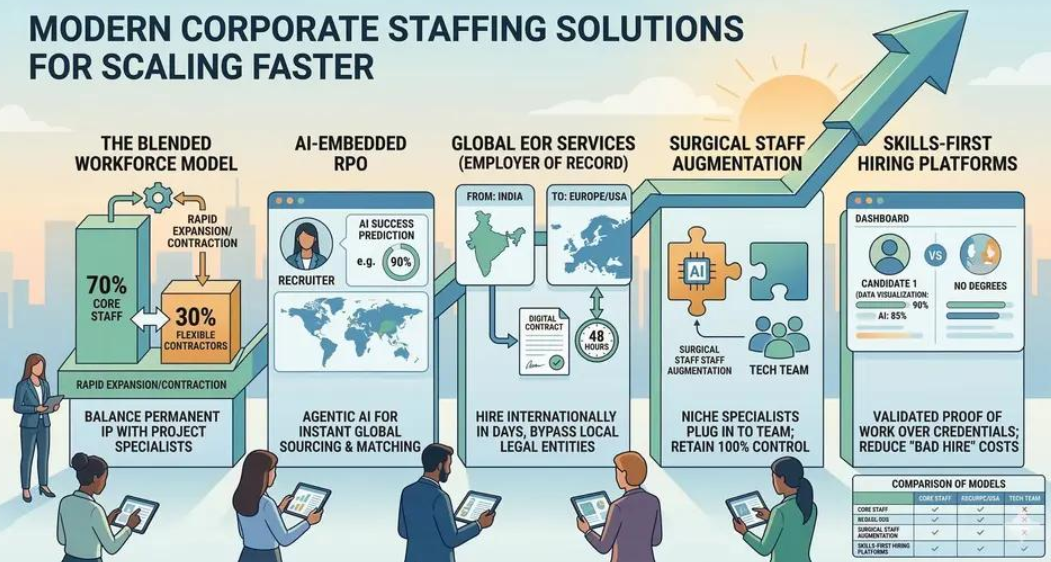
One of the most valuable advantages of business process outsourcing in 2026 is the ability to scale operations quickly and efficiently. In today’s business environment, organizations must be prepared to respond to changing market conditions, customer demands, and growth opportunities at a moment’s notice. Companies that cannot adapt quickly risk losing market share to more agile competitors.
Traditional hiring processes often make rapid scaling difficult. Recruiting, interviewing, onboarding, and training employees can take weeks or even months. During periods of sudden growth, this delay can prevent businesses from meeting customer expectations and capitalizing on new opportunities. Conversely, when demand decreases, maintaining a large in-house workforce can create unnecessary overhead expenses.
Outsourcing offers a more flexible solution. By partnering with an experienced outsourcing provider, organizations can quickly increase or decrease staffing levels based on current business needs. This flexibility allows businesses to remain efficient while avoiding the costs and complexities associated with traditional workforce management.
For example, an online retailer preparing for the holiday shopping season may experience a significant increase in customer inquiries, order processing requirements, and technical support requests. Instead of recruiting and training dozens of temporary employees, the company can leverage its outsourcing partner to rapidly expand customer support capacity. Once the busy season ends, staffing levels can be adjusted accordingly.
Scalability is equally important for businesses entering new markets. Expanding into a new region often requires customer support, marketing assistance, administrative services, and localized expertise. Outsourcing enables organizations to establish operational capabilities quickly without investing heavily in local infrastructure or large internal teams.
Startups also benefit from scalable outsourcing solutions. Young companies frequently experience unpredictable growth patterns and may lack the resources needed to build extensive internal departments. Outsourcing allows them to access professional support services while preserving capital for product development and market expansion.
Technology companies often use outsourcing to scale software development teams during major projects. Instead of committing to permanent hires, they can engage specialized developers, testers, and project managers as needed. This approach accelerates project timelines while maintaining budget flexibility.
Ultimately, scalability provides organizations with a significant competitive advantage. Companies that can rapidly adjust resources to match business demands are better positioned to seize opportunities, respond to market changes, and deliver exceptional customer experiences.
6. Increased Focus on Core Business Functions

Successful organizations understand that long-term growth depends on focusing resources and attention on activities that create the greatest value. Unfortunately, many businesses find themselves distracted by administrative responsibilities and routine operational tasks that consume valuable time and resources.
While functions such as payroll processing, customer support, data entry, bookkeeping, IT support, and human resources administration are essential, they are not typically the primary drivers of competitive advantage. When internal teams spend excessive time managing these activities, they have fewer opportunities to focus on innovation, customer engagement, and strategic growth initiatives.
Outsourcing enables businesses to delegate non-core functions to specialists while concentrating internal efforts on their primary objectives. This shift allows leadership teams to devote more time to strategic planning, product development, customer acquisition, and revenue-generating activities.
Consider a software company whose leadership team spends substantial time managing administrative processes, recruiting support staff, and overseeing routine operations. By outsourcing these functions, executives can redirect their focus toward developing new products, improving customer experiences, and expanding into new markets.
Similarly, a healthcare organization may outsource billing, claims processing, and administrative support services. This allows medical professionals and administrators to focus on patient care, treatment quality, and healthcare outcomes rather than back-office operations.
Manufacturing companies frequently outsource accounting, procurement support, and customer service functions to ensure management teams can concentrate on production efficiency, supply chain optimization, and business development initiatives.
Another advantage of increased focus is improved innovation. Organizations that free internal teams from routine tasks often create more opportunities for creative thinking, research, and experimentation. Employees can dedicate their expertise to solving complex problems, identifying new revenue opportunities, and enhancing customer experiences.
This strategic focus often translates into measurable business results. Companies become more productive, more responsive to customer needs, and better equipped to achieve long-term growth objectives. In highly competitive industries, maintaining focus on core competencies can be the difference between market leadership and stagnation.
Operational Performance Drivers
7. Improved Efficiency and Productivity

Efficiency and productivity are critical factors in organizational success. Businesses that can accomplish more with fewer resources gain a significant advantage in today’s increasingly competitive marketplace.
Outsourcing providers specialize in specific business functions and develop highly optimized processes for delivering services efficiently. Because they serve multiple clients, they gain extensive experience and expertise that many internal departments may struggle to replicate.
Specialization allows outsourcing providers to streamline workflows, eliminate inefficiencies, and implement best practices that improve performance. These improvements often result in faster turnaround times, greater accuracy, and more consistent service delivery.
For example, an outsourcing company specializing in finance and accounting may utilize standardized procedures, automated workflows, and advanced reporting systems that significantly reduce invoice processing times. Tasks that previously required days to complete can often be handled within hours while maintaining high levels of accuracy.
Customer support outsourcing providers frequently implement sophisticated workforce management systems that optimize scheduling, monitor performance metrics, and improve response times. These capabilities help businesses provide better customer experiences while increasing operational efficiency.
Outsourcing also reduces management burdens. Internal teams no longer need to spend time recruiting, training, supervising, and evaluating employees responsible for outsourced functions. Instead, these responsibilities are handled by the service provider, allowing managers to focus on higher-value activities.
Additionally, outsourcing providers often invest heavily in continuous improvement initiatives. They regularly analyze performance data, refine processes, and implement operational enhancements designed to maximize efficiency. Businesses benefit from these improvements without having to dedicate internal resources to process optimization efforts.
The result is a more productive organization that can deliver higher-quality outcomes while utilizing resources more effectively.
8. Access to Advanced Technology

Technology continues to play a central role in business success, but acquiring and maintaining cutting-edge solutions can be expensive and complex. Small and mid-sized businesses, in particular, often struggle to keep pace with rapidly evolving technology requirements.
Outsourcing provides access to advanced technologies without requiring significant capital investments. Leading service providers continuously invest in software platforms, automation tools, cybersecurity systems, cloud infrastructure, analytics solutions, and artificial intelligence technologies to improve service delivery and operational performance.
By partnering with these providers, businesses gain immediate access to tools and capabilities that might otherwise be beyond their financial reach.
For example, customer service outsourcing firms often utilize sophisticated contact center platforms equipped with AI-powered chatbots, omnichannel communication tools, real-time analytics dashboards, and customer relationship management systems. These technologies enable businesses to provide faster, more personalized support experiences.
Finance and accounting outsourcing providers may employ automated bookkeeping systems, predictive analytics tools, and advanced reporting platforms that improve financial visibility and decision-making capabilities.
Cybersecurity is another area where outsourcing can provide significant value. Maintaining a robust cybersecurity infrastructure requires specialized expertise and ongoing investments. Many outsourcing providers offer access to advanced security solutions and experienced professionals who help protect sensitive business information.
Artificial intelligence and automation technologies are becoming increasingly important across industries. Outsourcing allows organizations to leverage these innovations without building expensive internal technology teams. This enables businesses to improve efficiency, reduce manual workloads, and enhance customer experiences while maintaining cost-effectiveness.
Access to advanced technology not only improves operational performance but also positions organizations for future growth and digital transformation initiatives.
9. Enhanced Service Quality

Service quality is a major factor influencing customer satisfaction, brand reputation, and long-term business success. Organizations that consistently deliver exceptional service are more likely to retain customers, generate referrals, and strengthen their market position.
Leading outsourcing providers place significant emphasis on quality assurance and performance management. Their success depends on meeting client expectations and maintaining high service standards, making quality improvement a top priority.
Most outsourcing firms establish detailed service-level agreements that define performance metrics, response times, accuracy requirements, and customer satisfaction goals. These agreements create accountability and ensure consistent service delivery.
Providers typically employ dedicated quality assurance teams responsible for monitoring interactions, evaluating performance, identifying improvement opportunities, and delivering ongoing coaching. This level of oversight often exceeds what many organizations can provide internally.
Customer support outsourcing providers, for example, frequently offer multilingual capabilities, extended operating hours, and 24/7 coverage. These advantages enable businesses to serve customers more effectively across different regions and time zones.
Training programs also contribute to improved service quality. Outsourcing firms invest heavily in employee development to ensure team members possess the knowledge and skills necessary to perform effectively. Continuous training helps maintain service consistency and adapt to changing business requirements.
Enhanced service quality ultimately leads to stronger customer relationships, increased loyalty, and improved business outcomes.
Risk and Competitive Drivers
10. Business Continuity and Competitive Advantage
In an increasingly unpredictable business environment, resilience has become a critical organizational capability. Businesses must be prepared to navigate economic uncertainty, labor shortages, cybersecurity threats, natural disasters, and other disruptions that can impact operations.
Outsourcing supports business continuity by diversifying operational resources and reducing dependence on a single location or workforce. Many providers maintain geographically distributed teams, redundant systems, and comprehensive disaster recovery plans that help ensure uninterrupted service delivery.
For example, if a regional disruption affects one operational center, work can often be transferred seamlessly to another location. This redundancy minimizes downtime and helps organizations maintain productivity during unexpected events.
Beyond risk mitigation, outsourcing also creates significant competitive advantages. Companies that leverage outsourcing effectively can launch new initiatives faster, enter new markets more efficiently, and adapt more quickly to changing customer expectations.
Access to specialized expertise, scalable resources, advanced technologies, and efficient processes allows organizations to move faster than competitors that rely exclusively on internal capabilities.
In highly competitive industries, speed and agility are often decisive advantages. Businesses that can rapidly respond to opportunities, improve customer experiences, and optimize operations are more likely to achieve sustainable growth.
Conclusion
The drivers behind business process outsourcing have evolved significantly over the past decade. While cost reduction remains an important consideration, modern organizations increasingly view outsourcing as a strategic business tool that supports growth, innovation, operational excellence, and competitive advantage.
In 2026, companies face unprecedented pressure to control costs, attract specialized talent, improve efficiency, and adapt to rapidly changing market conditions. Outsourcing provides a practical and scalable solution that addresses these challenges while enabling businesses to remain focused on their long-term objectives.
From reducing operational expenses and improving resource allocation to accessing advanced technologies and enhancing service quality, outsourcing offers benefits that extend far beyond traditional cost savings. Organizations can build more resilient operations, accelerate growth initiatives, and improve customer experiences while maintaining financial flexibility.
As competition continues to intensify across industries, businesses that embrace strategic outsourcing partnerships will be better positioned to innovate, scale, and succeed. By selecting experienced providers and aligning outsourcing initiatives with organizational goals, companies can unlock sustainable value and create a strong foundation for future growth.
Looking for a Cost-Effective Way to Grow?
Outsourcing can help you reduce costs, access top global talent, and scale faster without the risks of traditional hiring. Speak with a 365Outsource specialist today to discover the right solution for your business. Contact us for a free consultation and customized outsourcing strategy.